Go ahead, Take a Picture Why Don’t Ya!

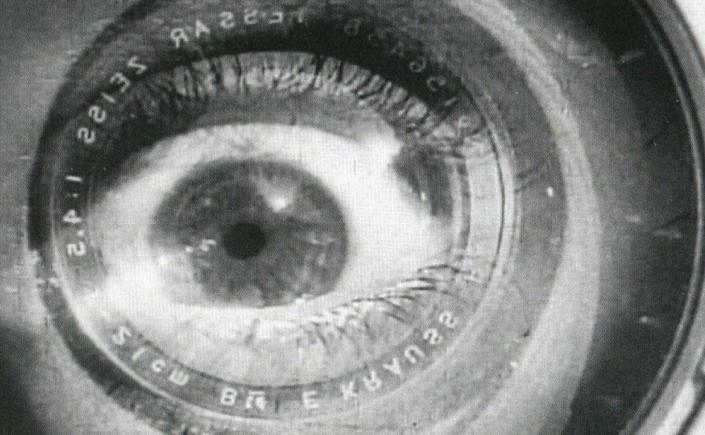
…or don’t. Is there perhaps something sinister about that phrase: take a picture? I was thinking about this today as I went for a run by the river, and passed a man taking a photo. As I’m wont to do, I imagined a situation in which he complained that I got in the way of his photo, and I fired back that he could easily wait a few seconds to take his photo, whereas it would interrupt my rhythm to stop for him. I soon realised that to really win this imaginary argument I’d have to know the correct translation of take a photo in French. I thought it might be faire une photo, but checked when I got home, and found that while that’s possible, prendre une photo (basically a direct translation of to take a photo) is better. Continue reading

Never Mind the Bollocks

What English could really benefit from is a standard diminutive form. Many other languages have at least one common way to transform a noun into a dimunitive form, usually by adding a suffix. In French you can add -ette or -ot, Spanish often uses -ina or -ino, Portuguese the similar -inha or -inho, and Italian has a variety such as -etta/-etto and -ino/-ina.

Of course, English borrows some diminutive words from Latin languages, such as featurette, operetta, caipirinha, and duckling/gosling (from Norse). And many specific forms of English feature unique diminutive forms. Scots for example, has quite a few, mainly from older forms of English and Scottish Gaelic. Some words used in Ireland are influenced by the Irish Gaelic diminutive -ín. It’s fairly common for a male baby to be described as a cute little maneen. A country lane might be called a boreen, from the word bóithrín (from bóthair [road] + –ín).

English used to have standard diminutive forms, evidence of which we can still see today. Continue reading

You Don’t Know Jack

Why does the name Jack features in so many words and phrases? Continue reading

Beards

Beards are in at the moment. Or at they were in somewhat recently. Even if they’re not in anymore, there are still a lot more of them around than there were a few years ago. For a humble bit of facial hair, the beard has inspired a surprising number of words in the English language, though not as much as people think… Continue reading

Doing Dutch with Duolingo: “Excuse me, I am an apple”

A little update on my Dutch-learning adventure.

Things are still going fairly well. I can safely say that I know more Dutch than last week. If If I’m ever called upon to identify someone as a man, woman, girl, boy, or child, and whether they’re eating or drinking bread, rice, water, milk, or juice, I should be able to perform admirably.

First a look at what Duolingo does well: Continue reading

Ahoy-hoy?

Continuing yesterday’s musings about the telephone, I have a question: what do you say when you answer the phone, and don’t know who’s calling? Continue reading

What Phone do You Have?

A pretty easy answer for most of us nowadays, but one that’s obviously changed over time. In fact, a lot of devices which were originally called telephones might not be recognisable as such by today’s standards. Continue reading