Commonly-Misspelled Words

Spelling is hard. We’re usually gradually eased into it. We pick up words first by hearing them, and then at home (hopefully) and at school we’re exposed to written words, usually pretty simple ones that look as you might imagine from hearing them. Dog, cat, hat etc. Then the more we read, the more we get used to words with less phonetic spellings. That’s how you spell laugh? And though? Ok, if that’s the way it is. Sometimes, we’ll come across words we’ve heard, but whose spelling we don’t recognise. Usually at some point we’ll figure out through context that this strange-looking word is actually a common one we’re familiar with, but that can take a long time in some cases.

But despite all that, there are some words, which either through their length and complexity, or sheer counter-intuitiveness, prove quite difficult to spell. Here are some of the most-commonly misspelled words: Continue reading

“I see you took the name of the town. What was your father’s name? “

Following on from yesterday’s look at mispronunciations (and “mispronunciations”) by native speakers, I want to look specifically at how we often pronounce surnames differently, specifically surnames from other languages. I thought about this after watching The Godfather Part II recently, and noticing the way the character Senator Geary pronounces the surname Corleone*. Notice how it changes in the clip below (contains salty language!): Continue reading

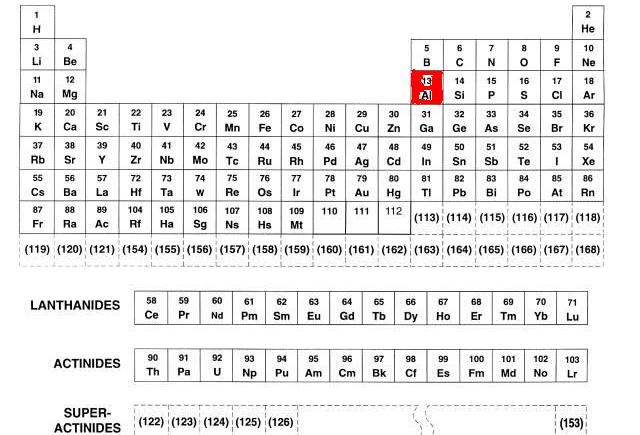
Aluminum or Aluminium?

Continuing the themes of the last two days, pronunciation and names, I want to shift focus slightly from issues with pronunciation in a second language, to those native English speakers have with their own tongue. If you search for something like “most annoying mispronunciations,” you’ll find plenty of people venting their frustration. Sometimes, it’s understandable. As I’ve mentioned before, we seem to have an inbuilt resistance to anyone using language differently from us, regardless of which one of us, if either is correct. Other times though, it says more about the person complaining. Here are some of the more common complaints: Continue reading

Worst. Sentence. Ever!

If they wouldn’t have been released, I don’t know when I would have ended up seeing Star Wars, and if I wouldn’t have seen Star Wars when I did, I don’t think my life and career would be what it is now.

Yeesh, just look at that. Ok, maybe it’s not necessarily the worst sentence ever, but it’s an unwieldy beast to say the least. A little context: I came across this in an online article about the theatrical release of the “Special Editions” of the Star Wars films in 1997, and this sentence was a quote from someone asked about the impact the films had on her.

And that person chose to use a hypothetical situation, therefore all-but ensuring the presence of an if and a would, and making the sentence a little complex. Fair enough, but still! It’s longer that it need be. And look at all those would‘s. Every time I read it, knowing the meaning, it still has no rhythm to it at all. Really, just look at all those would‘s in there! Apart from how it reads in your head, there’s also the issue of meaning. The sentence gets so weighed down by the different conditions and outcomes contained within it that it’s hard to parse the intended meaning.

How to improve it then? Continue reading

Redundant Words and Phrases

I’ve often written about the great flexibility of English, and the wide range of options it affords those who use it. The downside to that, however, is that sometimes people’s English can get too complex and confusing. There are a few reasons for this. Sometimes, the point someone wants to make is quite complex and requires long and complex structures to be expressed. At other times, one might simply want to show off their vocabulary, or indulge in a little purple prose.

So even though English allows for a variety of registers in how one uses it, I firmly believe that one should keep one’s language as simple as possible.

Occasionally though, even the best of us can indulge ourselves, and one of the common results of this is the use of redundant words or phrases, though this can also be due to honest mistakes. Here are a few of the more common redundancies in English: Continue reading

A Date with Destiny

-You there, boy! What date is it today!?

-Today!? Why it’s 05/08/16!!

-Wait… so is it August or May?

Why do Americans write the date differently from the rest of the world? Not that I’m really complaining, but, well, it can be annoyingly confusing at times, especially in cases like above where the day of the month is the 12th or lower. Of course I’m just used to the European format, but I do also think it’s more logical, moving from the smallest unit to the largest. Continue reading

Zed’s Dead Baby; Zed’s Dead.

How do you pronounce the letter Z?

Chances are that if you’re American, or learnt American English, you pronounce it as zee. For the rest of us, it’s zed. Why the difference? Continue reading