
While watching the news yesterday, I was suddenly struck with an epiphany about the etymology of the word parliament.
A Parliament of Owls
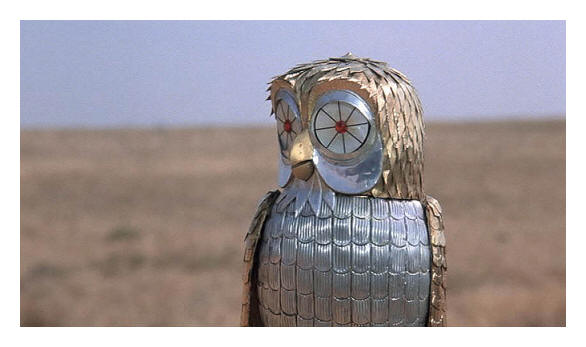
While watching the news yesterday, I was suddenly struck with an epiphany about the etymology of the word parliament.
While writing about social media yesterday, a thought occurred: what’s the etymology of the name Instagram? The Insta- part seemed pretty obvious, but I was curious about the –gram part. Luckily, when you want to find out about the etymology of the names of social media, you don’t have to do too much digging…
When writing about James Joyce last month, I got to thinking about the word hero. Two things made me think about it: the fact that an early draft of A Portrait of the Artist as a Young Man was known as Stephen Hero, and how often I referred to Leopold Bloom as the hero of the novel Ulysses.
On the surface, it seems like a fairly straightforward word. You can think of its meaning pretty easily, I’m sure: someone brave, with exceptional abilities. Someone we can look up to. And this has always been the meaning of the word. It comes from the Greek ἥρως (hērōs), meaning protector or defender, and was often specifically used in Ancient Greek myths to refer to heroes of divine ancestry such as Heracles. So, not so different from how we use it today. Except, as I alluded to in the first paragraph, when we use it as a literary term.

Look at Daisy up there, simply enjoying the warmth of the sun, as only a dog really can. What a life of simple joys a dog lives, one we can all be envious of. Seeing her like that yesterday made me think of the phrase the dog days of summer. A lot of people assume that it refers to the hottest period of the summer, in which dogs are too tired to do anything else but lie in the afternoon heat. I can see the logic in that, but as I’d never looked into the origin of the phrase, I thought now was as good a time as any to do so.

You might know the story of the word Eureka. Or at least that it involves an old man in a bath. The ancient Greek scholar Archimedes reportedly stepped into his bath, noticed the water level rose. Realising that the water displaced must be equal to the volume of his foot, and that he had figured out a way to accurately measure the volume of irregular objects (which was a big deal at the time), he exclaimed Eureka! twice.

Beards are in at the moment. Or at they were in somewhat recently. Even if they’re not in anymore, there are still a lot more of them around than there were a few years ago. For a humble bit of facial hair, the beard has inspired a surprising number of words in the English language, though not as much as people think… Continue reading

Marathon!
A fine word. Most of us know it as a noun, referring to a run of 26 miles, or 42.195 kilometres. It can also be an adverb of course, indicating that something took an exceptionally long time, as would be the case for most of us running a marathon. Politicians might have a marathon session in parliament to discuss a controversial proposed law. One could also use the noun in this way as well; for example: Continue reading
 English-Language Thoughts