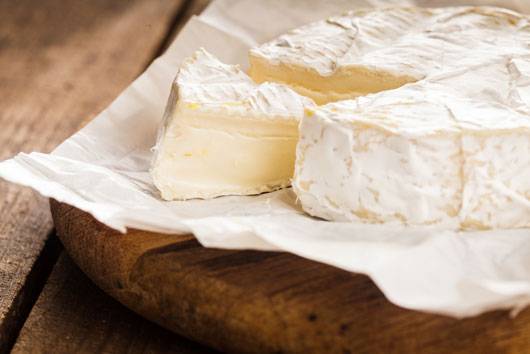
Daily Prompt: Pungent

via Daily Prompt: Pungent

Even if you didn’t know the meaning of the word pungent, you might have an idea that it describes something strong, powerful, and possibly unpleasant.

Oxford English Dictionary: Having a sharply strong taste or smell.

Why is it that the word seems to match its definition so well (for me anyway, this can be subjective, and the word might have strong associations for you)? It’s what is known as an ideophone, a word which evokes a certain idea, generally strongly associated with the meaning of the word. With a word like pungent, it’s simply due to the sound of the word. The vowel sound /ʌ/ has a soft, lazy sound, and the consonant /ʤ/ sound of the g is soft and squishy, and the two of them together compound each other and create a sense of powerful smelliness.

Similar words are: Continue reading

What a Hot Verb!

How would you explain the meaning of the verb to get to someone? Would you say it means to receive, or to be given something, and perhaps give an example like I got a lot of nice presents for my birthday? If so, well done, that’s a pretty solid combination of definitions and examples. But…

What about: Continue reading

Black Friday

Another Black Friday has come and, depending on where in the world you are, gone again. Did you enjoy it? Did you buy anything?

I must admit that every time I hear the day mentioned, it takes me a moment to remember what it is. In my life it’s quite a new phenomenon. Of course in the United States, it’s long been considered the unofficial beginning of the Christmas shopping period (though why it needs to be such a long period I don’t know: I usually manage to get everything after 20th December!) In Ireland it used to be 8th December, when it was said that all the country folk would come to the nearest large town or city to start their shopping. But now, as with so many things associated with Christmas, the shopping starts earlier, and there are more and more ads for Black-Friday deals. Which seems a little strange. I understand why it exists in America: many people have the day off, they’re starting to think about Christmas, and perhaps need to get away from their family after a day of cabin fever. But in Europe it’s a normal working day, so I don’t know how many people are shopping.

The first case of the day after Thanksgiving being referred to as Black Friday seems to have occurred in 1951 in the pages of the journal Factory Management and Maintenance, to refer to the number of people calling in sick to work. But this is not the only Black Friday, which isn’t really surprising when one thinks about our tendency to mark momentous yet tragic days with a the colour black. Perhaps most famously there was Black Tuesday, the day of the Wall Street Crash in 1929. The term Black Friday has long been used by emergency services and the National Health Service in the UK to refer to the last Friday before Christmas, when the increase of drunken revellers makes them quite busy. It’s also, contrary to a seemingly increasingly popular misconception, nothing to with slavery. Here are some more historical Black Fridays: Continue reading

Happy Thanksgiving!

Happy Thanksgiving to all my American readers! The commemoration of the first Thanksgiving feast between the Wampanoag tribe and the Mayflower pilgrims is obviously an integral part of American culture. And yet, as it’s not celebrated anywhere in Europe, I was always curious about the celebration whenever I was watching an episode of a TV episode set on the holiday. What are they celebrating? Why is it so close to Christmas? Won’t they get sick of having two big turkey dinners in such close proximity?

As I got older and more worldly, I gathered more information and began to understand the origins of the holiday. I began to understand why Americans refer to The Holidays, plural, and I no longer think Thanksgiving is too close to Christmas. It’s actually a nice way to break up the monotony of Autumn/Winter. Though the commemoration of a peaceful feast between pilgrims and Native Americans always seemed strangely melancholy to me, given how things turned out.

Interestingly enough, that wasn’t actually the first Thanksgiving. Continue reading

A Hard Day’s Night Never Knows

A malapropism is a speech error in which a word in a phrase is accidentally replaced by one with a similar sound, usually with comic effect. The term Dogberryism is also sometimes used, after the character in Shakespeare’s “Much Ado about Nothing,” who was quite prone to making them…

Our watch, sir, have indeed comprehended two auspicious persons (Act III, Scene V)

They’re often used in fiction as a comedic device, but are quite common in real life too. Some notable examples: Continue reading

I’m Going to the Bank

Which one?

Huh?

Which bank?

I don’t know, does it matter?

Not really, but why did you say the bank if it doesn’t matter?

I don’t know, that’s just what we say.

Have you ever found yourself saying that you’re going to go to a bank? Of course not, that’d be weird, wouldn’t it? But if you think about it, it doesn’t make sense if you’re from a large town or city. When we say the bank, it sounds like we’re referring to a single, specific bank that the listener knows. Now this is fine if you’re in a smallish town with only one bank. But if you live somewhere with more than one bank it sounds strange to say the bank, as though there were only one bank. We do the same with other phrases like… Continue reading

I Guess That’s Why They Call it The Blues

Why do we associate the colour blue with sadness and depression? You can feel blue, have or sing the blues. The third Monday of January is known as Blue Monday and is claimed to be statistically the saddest day of the year, though the study which first this has been debunked as pseudoscience. What can’t be argued, however, is that it’s also the name of a great New Order song:

Most people suggest we think of blue in this way because it’s calming, and that this effect is psychological, being derived from our association of the colour with the passivity of the sky or the hypnotic rhythms of the sea. And even though depression isn’t always passive or sad, it’s heavily associated with sadness, and we do imagine sadness as being a passive, stagnant state. Continue reading