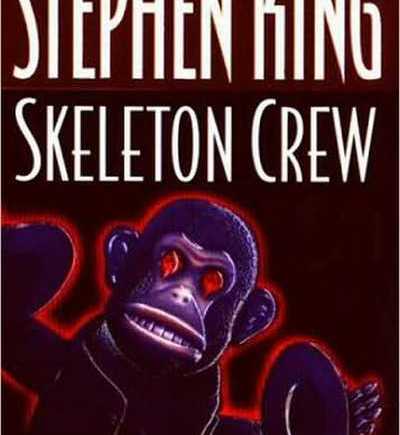
Hallowe’en Reads: “Gramma”

Any list of recommendations for Hallowe’en reading would seem incomplete without an entry from Stephen King. I’ll forego some of the more obvious choices from among his novels though, and instead choose one of his shorter short stories: “Gramma.”

The premise is very simple: 10-year old George Bruckner lives with his 14-year old brother Buddy and their single mother Ruth. Staying with them is Ruth’s ancient, senile, bedridden grandmother. When Buddy breaks his leg playing baseball, Ruth goes to the hospital out of town to see him, leaving George alone to look after Gramma. Continue reading

S: the Story of a Letter

If you’re a native English speaker, you probably don’t think about individual letters too often. Why would you? You use them pretty much automatically. So if I asked you to talk about the letter s, you might not have much to say. But for people who have to learn English, it’s quite important, and can prove to be a tricky little customer.

The first area of confusion is with plurals. Most languages don’t add s to make a plural, like English does, so it can be very hard for speakers of those languages to remember to add the s. Even when some languages do add an s, it’s in a slightly different way. Portuguese and Spanish, for example, often add an s to a noun to make it plural. But, they also add an s to adjectives describing those nouns, leading a lot of Portuguese and Spanish speakers to do the same thing in English. French is similar, but the s is generally silent, meaning that a lot of French speakers don’t pronounce it even if they write it.

But the most common area of error is with third-person singular verbs. That might sound like gibberish, but let me demonstrate: Continue reading

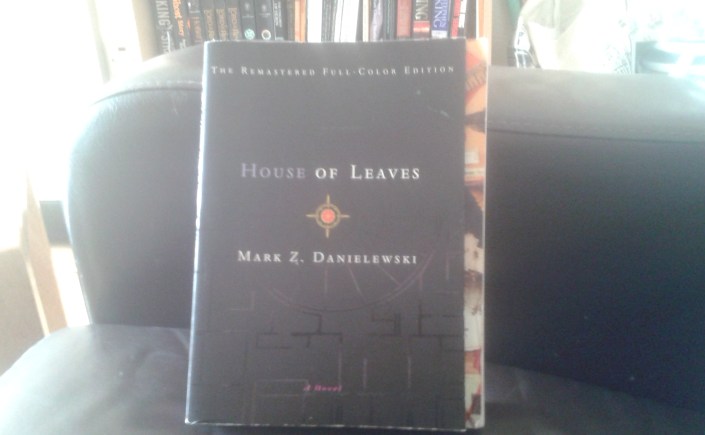
Hallowe’en Reads: House of Leaves

I love Hallowe’en, always have since I was a child. I loved the sense that the barrier between our reality and a mysterious, dangerous plane of existence might be opened for one night a year, and anything could happen. It was terrifying and exciting at the same time. And though now I don’t believe in the supernatural, I still love horror films and stories. So between now and Hallowe’en, I’ll share my thoughts on some of my favourite horror fiction.

I’ll start with House of Leaves, by Mark Z. Danielewski (2000). Continue reading

How to Use Apostrophes

That little  chap there is by far and away the punctuation mark that causes people the most consternation, for a variety of reasons. Some hate it because they have no idea what to do with it, and others hate it because those first people have no idea what to do with it, and it drives them crazy to see it misused or not used at all. Before getting into why people have difficulties with it, and why that infuriates others, let’s look at the basic rules of using the apostrophe. It has three basic functions: Continue reading

Different How?

Any time I’m writing and want to show a difference between two things, I find myself pausing. For example:

Reading a language is very different…

from writing it?

to writing it?

than writing it?

They all sound ok, but in the end I usually plump for from, as it sounds more natural, but I’m never quite satisfied, as the other two still sound basically ok too… Continue reading

My Left Hand: a Sinister Tale

I hope you appreciate how lucky you are to be right-handed. Of course you might actually be left-handed, in which case my apologies for the assumption, but statistically you’re probably right-handed. You’re also probably right-footed (90% of right-handers are also right-footed, and about 50% of left-footers). You might not have been aware that footedness is a thing. If sports involving kicking balls don’t occupy a position of any importance in your life, the concept may not have occurred to you. If you’re not sure which is your dominant foot, go kick the nearest person in the shin with each foot (not simultaneously, you don’t want to get hurt) and see which one hurts them more.

I’m entirely lopsided: both left-handed and left-footed. I was quite proud of this when I was a child. I felt it made me stand out. As a football fan, I was impressed by how left-footed players like Ryan Giggs always seemed to be so quick and dynamic and creative. My footballing career did not quite follow his trajectory, mind you. But mostly I just liked being different from everyone else. And I still do. But as I got older, I began to realise that it wasn’t so easy being left-handed… Continue reading

Ambulance Chasing

An ambulance passed me by yesterday, and as I was looking at the word written on the side, I got to thinking about its etymology. Ambulance: surely there’s some association with walking in its history, considering similar words derived from the Latin verb ambulare (to walk) still exist today. To amble is an obvious one, but also the adjective ambulatory (associated with walking) Less obvious is pram (stroller or baby carriage in American English), a short form of the now outdated perambulator. Continue reading