An Irish type of English

It might surprise some people to notice how common the surname English is in Ireland.  But there is a logic to it. The surname, in a variety of forms, was actually quite common around different areas of the modern-day United Kingdom, being recorded as far back as the 12th century. With the variety of different tribes and ethnic groups in these islands, and Europe in general, the name English was given to someone to denote that they were of Anglo-Saxon origin, particularly in border regions where lots of mingling would be expected.

The more common surname Walsh has a similar history. This may be less surprising when one considers how it’s still often pronounced in the west of Ireland: Welsh. And of course there’s Scott too!

Another surname with a seemingly similar origin is Ffrench. Yes, there are two f‘s, that’s not a typo. It’s not so common, but is to be found around my hometown of Galway, being the name of one of the 14 historically powerful and wealthy families of the city, who were known as The Tribes of Galway. At first I assumed it simply meant, well, French. Given the extent to which Norman culture influenced Ireland after the invasion of 1169, it wouldn’t be surprising. That influence is still evident in many Irish names. Burke comes from the Irish De Búrca, which in turn comes from the Norman De Burgo. Any name with Fitz is of Norman origin, with the prefix meaning son of. So Fitzgerald, for example means son of Gerald. And yet, while Ffrench is French in origin, it doesn’t actually mean French. It comes from the old Norman Irish name Defraine, which has been anglicised in many forms such as Frayne, Freyne, Freeney, French, and Ffrench. Defraine originally comes from the French word Frêne, meaning place with ash trees.

I love how surnames developed simply as a means to give us information about someone, like what their job was or where they were from. In your country and language, do people have surnames which come from nearby nationalities?
Punctual to a Point

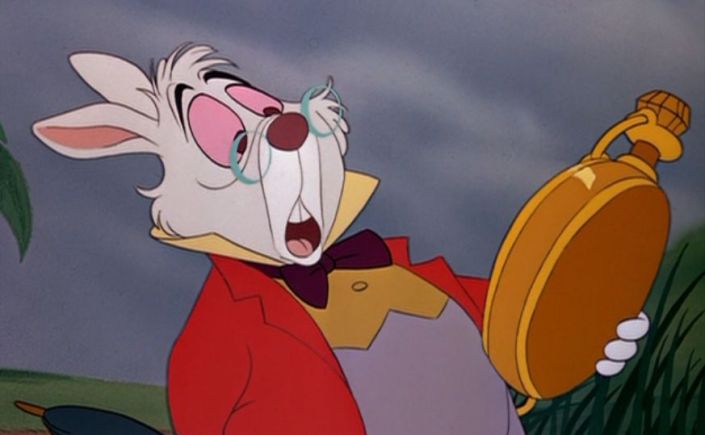
While thinking about the word punctuation today (which is the kind of thing I do), I considered how similar the word punctuality is to it. I wondered what the link could be. It seemed to me that the concept they share is exactitude. Punctuation allows one to be precise in their meaning in a sentence, and if one is extremely punctual, one allows arrive at the exact moment one should.

And unsurprisingly, both come from the same root word: punctus, the Latin word for point. Which makes a lot of sense. Punctuality, though is an interesting concept. Of course it’s a positive one that we value, overall. We hate if our friends are late when meeting up (if we’re normal).  But do we ever admire it? Like the person who never misses a day off work through sickness, are we really impressed by someone who’s never late? Or does it annoy us? Do we think they’re too perfect, too punctilious? I think is why punctuality is often invoked as a kind of back-handed compliment in that great bastion of reading-between-the-lines: the job reference. Continue reading

The Heat is on

It’s that time again, as every four years we’re glued to the TV to watch the Olympics. I always loved it, especially the track and field events. But one word that I’ve always found a little strange is: heat. As in, a qualifying race for a final. Where does it come from?

It seems that the word was first recorded with this meaning in the 17th century, then being used to refer to a run to prepare a horse for a race. Or warm it up, if you will.

For a lot of the more elite athletes, it pretty much has the same meaning: to warm up, generate some heat, for the final.

I hope you’re all enjoying the Olympics: I’ll be spending most of time trying to figure out the name of the exact shade of green the diving pool has turned.

The Country that’s also an Acronym

An acronym is a word formed whereby each letter represents the first letter(s) of a word. For example:

radar (radio detection and ranging)

laser (light amplification by stimulated emission of radiation)

and… Pakistan. You might not expect the name of a country to be an acronym, but such is the case with Pakistan. While the name means Land of the Pure in Urdu and Persian, it was first coined by Choudhry Rahmat Ali, a Pakistan Movement activist advocating for the creation of an independent state from India’s Muslim-majority regions.

The name was derived from the names of the five northern regions of the British Raj: Punjab, Afghania, Kashmir, Sindh, and Baluchistan. The i was added for ease of pronunciation. Sometimes there’s an interesting history behind a name of a place we don’t think too much about, and it can tell us a lot about a country.

Seal

The English language has an incredibly rich vocabulary. For every situation one can imagine, there seems to be a variety of words and phrases available to choose from, each with their own subtle inflections of meaning.

And yet at other times, the language seems curiously economical, using one word for a variety of meanings. Take seal, for example. Your first instinct when you think of this word will probably be to picture the marine mammal. And why not, they’re cute, especially the pups. Continue reading

100

First, let me say a big thank you to every one of you reading this. Yesterday I got a lovely notification to tell me I that reached gained 100 followers on WordPress. Which was a lovely surprise. As I’m writing about quite an uncool, niche topic, and just sharing my own thoughts every day, without really planning things, I didn’t expect to attract too many followers. And yesterday was also my first time with over 100 views, which was a nice little instance of serendipity. These numbers may not be so big in the grand scheme of things, but I appreciate everyone who takes the time to read blog, so I’m delighted for every single person who follows me.

So if you’re reading this, and enjoying it, thank you so much, and I hope to keep your mind occupied with mindless trivia about this beautiful language. Continue reading

Profound

Being a response to the Daily Prompt: https://dailypost.wordpress.com/prompts/249091/

Profound, and its more common synonym deep, are quite versatile words. There’s the literal sense of the words, measuring how far down something goes. Though we tend to use just deep for that. You’re hardly going to go to the profound end of a swimming pool, perhaps to discuss Proust and the films of Ingmar Bergman.

And then there’s the more abstract meaning of the words, to describe something with an important, valuable intense meaning. Someone can be a very deep person, or a novel can have a very profound meaning. You can feel something, deep down in your heart. We tend to use profound more often in this sense though. You might make a profound statement, or have a profoundly inspiring experience. What makes profound so special that we reserve it for when things are so, well… profound? Continue reading