Ambulance Chasing

An ambulance passed me by yesterday, and as I was looking at the word written on the side, I got to thinking about its etymology. Ambulance: surely there’s some association with walking in its history, considering similar words derived from the Latin verb ambulare (to walk) still exist today. To amble is an obvious one, but also the adjective ambulatory (associated with walking) Less obvious is pram (stroller or baby carriage in American English), a short form of the now outdated perambulator. Continue reading

Campaign Supernova

I’ve encountered the word campaign so often later (generally preceded by presidential), and then, last week, I found myself camping for a few days. And I wondered: camp/campaign: are they related somehow? And how was it that the word campaign is so similar to words for countryside like campagna (Italian) campagne (French, and no Autocorrect, I didn’t mean champagne)? An investigation was in order, so down the etymology rabbit hole I went… Continue reading

An Irish type of English

It might surprise some people to notice how common the surname English is in Ireland.  But there is a logic to it. The surname, in a variety of forms, was actually quite common around different areas of the modern-day United Kingdom, being recorded as far back as the 12th century. With the variety of different tribes and ethnic groups in these islands, and Europe in general, the name English was given to someone to denote that they were of Anglo-Saxon origin, particularly in border regions where lots of mingling would be expected.

The more common surname Walsh has a similar history. This may be less surprising when one considers how it’s still often pronounced in the west of Ireland: Welsh. And of course there’s Scott too!

Another surname with a seemingly similar origin is Ffrench. Yes, there are two f‘s, that’s not a typo. It’s not so common, but is to be found around my hometown of Galway, being the name of one of the 14 historically powerful and wealthy families of the city, who were known as The Tribes of Galway. At first I assumed it simply meant, well, French. Given the extent to which Norman culture influenced Ireland after the invasion of 1169, it wouldn’t be surprising. That influence is still evident in many Irish names. Burke comes from the Irish De Búrca, which in turn comes from the Norman De Burgo. Any name with Fitz is of Norman origin, with the prefix meaning son of. So Fitzgerald, for example means son of Gerald. And yet, while Ffrench is French in origin, it doesn’t actually mean French. It comes from the old Norman Irish name Defraine, which has been anglicised in many forms such as Frayne, Freyne, Freeney, French, and Ffrench. Defraine originally comes from the French word Frêne, meaning place with ash trees.

I love how surnames developed simply as a means to give us information about someone, like what their job was or where they were from. In your country and language, do people have surnames which come from nearby nationalities?

My Day in Words

I hope you’ve had a nice, relaxing Sunday. Mine was quite nice, and I while reflecting on it just now I was struck by the variety of interesting words involved in my day.

I took my little old Ford Fiesta to a lovely town in County Clare called Killaloe. There I was going to have a panini in a café before deciding on a steak sandwich instead. I then did some kayaking on the River Shannon and on Lough Derg Continue reading

Ooh La La!

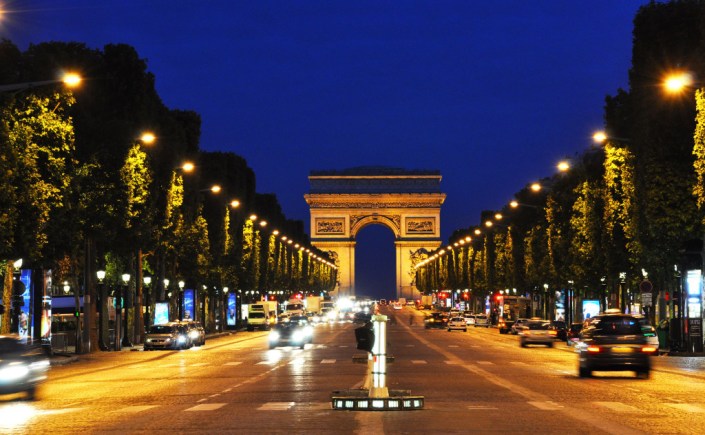
In honour of the European Championships being held in France, and specifically the Ireland vs France second-round match this afternoon, I want to look a little bit at the influence of the French language on English. A whole history of this would be exhaustive and exhausting, as there has been a lot of exchange between the languages over the centuries. After the Norman conquest of Britain in 1066, French became the language of the royal court and politics, and remained so for about 300 years, so it’s not surprising that a lot of French words entered the English language.

I’m more interested in words that we’ve taken directly from French, and what they say about our attitudes towards the language as well as French people. The long, long history of antagonism and outright war between England and France in the last couple of millennia has, I think, led to some conflicting feelings about French evident in the way that English uses some of its words. We’ve always had conflicting stereotypes about the French: romantic, sophisticated, with great food and drink, but also rude and arrogant (I’ll just restate that these are stereotypes and not my opinions).

And so we tend to feel that the French language sounds beautiful, elegant and sophisticated, and the areas in which we most commonly use French words reveal a lot about our positive stereotypes about the French. Continue reading

Capital Idea

One of the most common corrections an English-language teacher has to make is when a student uses a lower-case letter instead of a capital letter.

For a language you need to use a capital letter.

When you’re talking about a nationality you need to use a capital letter.

A person’s name always begins with a capital letter.

You have to start a sentence with…etc. etc.

Mistakes with capital letters are common and understandable.

Continue reading