From Ireland to Jamaica

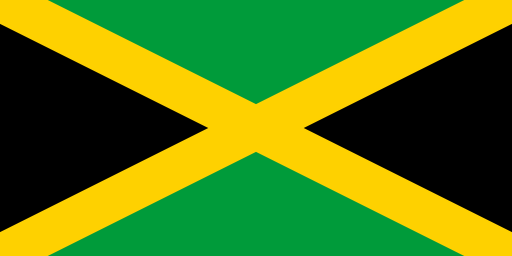
The English language has an amazing variety of accents, not just internationally, but within different regions of countries. One of the most recognisable, and oft-imitated, is the Jamaican accent. And of course people often imitate it badly. And when they do, a common remark is that they sound more Irish than Jamaican. Well, that’s no coincidence… Continue reading

Talking about Language

One of the interesting things about learning to become a language teacher is just how much your vocabulary improves. There’s a lot of jargon related to different aspects of language that one doesn’t ordinarily come across in life. So here’s a fairly random sprinkling of some of the more interesting (to me!) words we language teachers learn to use: Continue reading

Daily Prompt: Original

via Daily Prompt: Original

Hhm, his work is just so… original!

The new album’s pretty good, but I prefer their early stuff. It was much more original.

He’s fantastic, a true original!

Original: the word for when you like something and know that it’s not slightly left of centre, but can’t quite explain how.

Only, when I was young, I didn’t consider it such a positive word. To me it was boring and banal, synonymous with ordinary, plain, common, everyday. Because of course, I was being influenced by so many different snacks with ORIGINAL FLAVOUR on their packaging. I couldn’t understand why anyone would want original flavour of anything! When you could get something like bacon, barbeque, salt & vinegar, sour cream & onion, why would you want plain old original flavour!? Continue reading

Time is Money

Time is money.

Such an ugly phrase, isn’t it? Only the most obnoxious, boorish oaf would use it without a trace of irony. What a perfect representation of the greedy arrogance of our late-capitalist society (i before e after c), of the desire to just make more and more money, or at least not to lose any of it.

But maybe we shouldn’t dismiss it so easily. Maybe using it isn’t just the preserve of the greedy. Look at how we talk about both time and money: Continue reading

How to Disappear Completely

21st June 1997, Dublin, Ireland:

Touring their hit album OK Computer, Radiohead play in front of 33,000 fans at the RDS arena. Terrified at having never played in front of such a big crowd before, lead singer Thom Yorke later has a nightmare in which he imagines himself naked, floating down the River Liffey and being pursued by a tidal wave. This dream inspires the song “How to Disappear Completely,” which appeared on their following album, 2000’s Kid A. The song is a slow, melancholy, beautiful one, and very personal, dealing with the mental breakdown Yorke suffered after the critical and commercial success of Ok Computer. It directly refers to Thom’s dream in the opening verse: Continue reading

I Before E, Except…

i before e, except after c.

Most native English speakers are familiar with this rule of thumb. It’s quite handy, isn’t it? With words that have i and e together in the middle of them, it can be hard to remember what order they should be in. How marvellous then, to have a rule that’s not only easy to remember, but rhymes too! But if you’ve learned English, you’ve probably grown to mistrust anyone who claims that a rule is 100% airtight… Continue reading

Daily Prompt: Border

via Daily Prompt: Border

Borders are inherently interesting, as places where two different cultures meet and, usually, blend together. Of course this is often especially true of languages, as can be seen in areas where nations with two different languages share a border. Take Catalan, for example. It’s much more similar to French than Castilian Spanish is, due to Catalonia’s proximity to France, and history of cultural exchange.

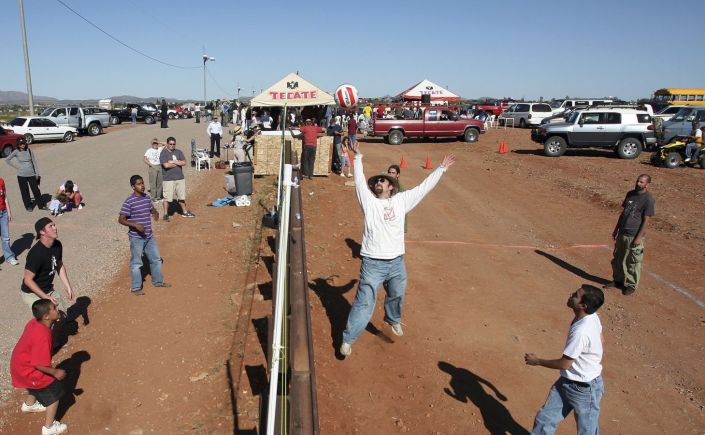
English, being so widely-spoken, has picked up many words from other languages, both from indigenous languages of English-speaking countries, and the languages of immigrants. I could spend hours writing about that, but what the prompt made me realise is that the United States is the only English-speaking country to share a border with a country with another first language (and there is also of course the Vermont-Quebec border in the north). Continue reading