Hello

How’s it going?

What’s the story?

Hey!

How are you?

Hi!

What’s up?

How do you do?

What’s the craic?

We have so many ways to say hello, and they vary around the world. We were talking about this in class today (I had one of my infrequent teaching mornings) and it made me think again of the fact that though we have so many ways to greet someone, we actually don’t say hello very often. Continue reading

Revert Back to Me

This phrase is one that’s become increasingly common in business emails in the last couple of years. Basically, it just means get back to me or reply to me. For example:

Revert back to me when you’ve finished the report.

Find out what time they want to have the meeting, then revert back to me when it’s been organised.

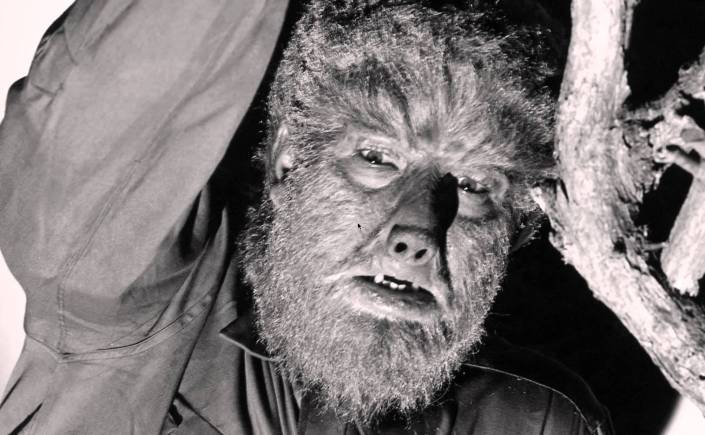
It’s part of the strange new world of business jargon: blue-sky thinking, move the needle etc. And while a lot of these short-lived buzzwords can be annoying, revert back to me tends to be the focus of particular anger. The main reason for that is because the word is basically being used incorrectly. Revert means to change to a previous state or action. So for example, someone might revert to a childlike state after a traumatic incident. A werewolf, with the passing of the full moon, might revert to its human state. It’s basically similar to return, but is more specifically similar to transform back. So what someone’s saying when they use revert back to me is transform back into me. Well, I never actually was you in the first place, so that’d be pretty hard! Continue reading

Ooh La La!

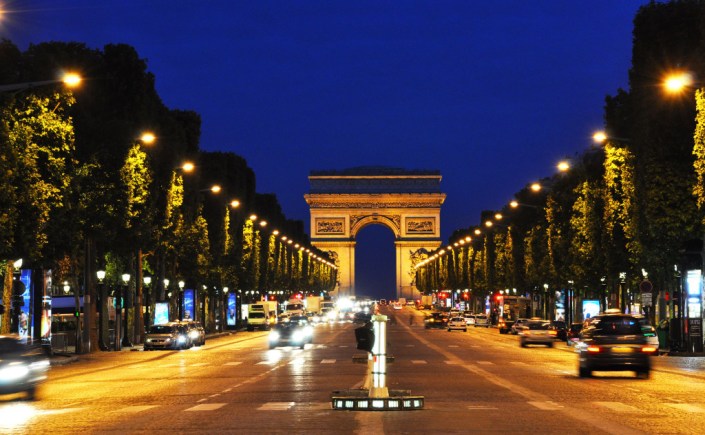
In honour of the European Championships being held in France, and specifically the Ireland vs France second-round match this afternoon, I want to look a little bit at the influence of the French language on English. A whole history of this would be exhaustive and exhausting, as there has been a lot of exchange between the languages over the centuries. After the Norman conquest of Britain in 1066, French became the language of the royal court and politics, and remained so for about 300 years, so it’s not surprising that a lot of French words entered the English language.

I’m more interested in words that we’ve taken directly from French, and what they say about our attitudes towards the language as well as French people. The long, long history of antagonism and outright war between England and France in the last couple of millennia has, I think, led to some conflicting feelings about French evident in the way that English uses some of its words. We’ve always had conflicting stereotypes about the French: romantic, sophisticated, with great food and drink, but also rude and arrogant (I’ll just restate that these are stereotypes and not my opinions).

And so we tend to feel that the French language sounds beautiful, elegant and sophisticated, and the areas in which we most commonly use French words reveal a lot about our positive stereotypes about the French. Continue reading

The Oxford Comma

I’ve visited France, Germany and Spain this year.

I’ve visited France, Germany, and Spain this year.

You probably don’t see any difference between the above pair of sentences. But what about this pair:

On Twitter I’m following my friends, Stephen Fry, and Miley Cyrus.

On Twitter I’m following my friends, Stephen Fry and Miley Cyrus.

The second sentence is quite ambiguous. Do I mean that I follow my friends on Twitter, in addition to the celebrities Stephen Fry and Miley Cyrus? Or do I mean to say that Stephen Fry and Miley Cyrus are my friends, and I follow them on Twitter? The latter would probably make for some interesting dinner-party conversations, but that’s probably not what I meant, is it?

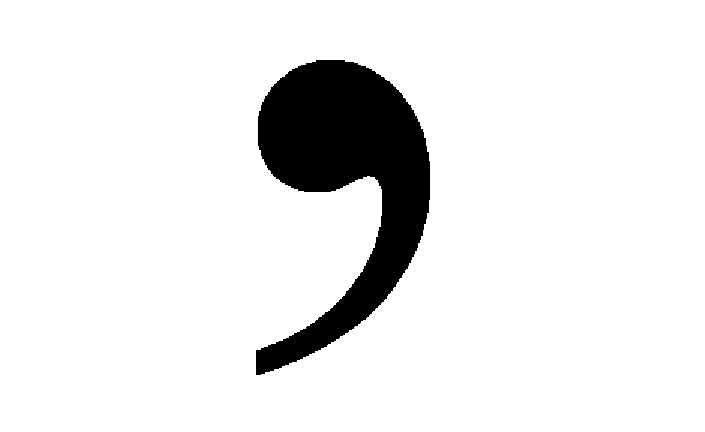
Still, just to be sure my meaning is clear, I can use the first sentence, with the comma between Stephen Fry and Miley Cyrus. A comma like this, before the last item in a list of three or more items, is known as the Oxford comma, as it’s an element of the house style of Oxford University Press. There’s quite a bit of debate about whether or not to use the Oxford comma, and it has its strong supporters as well as determined detractors. Some style guides recommend its use, some suggest avoiding it, and others don’t mention it at all.

Why use it? As we see above, it can resolve ambiguity in cases where the first item in a list might seem like it’s referring to the second and third items. More generally, it can avoid ambiguity when two words in a list could be joined together as one item, or could be separate items. For example: Continue reading

Brexit: A Political Portmanteau

I won’t spend too much time on my thoughts about the UK’s referendum. I’ll just say I’m sad. Sad because I have an idealistic belief in nations working together for their mutual benefit. Because I think that the British people who’ve suffered and been ignored in recent years were lied to by the rich and powerful into voting against their own interests.

So tonight I’ll try not to think too much about what’s going to happen to the UK, to the EU, and to me (I’d better remember to bring my passport if I want to drive to Belfast!)

Instead, I want to look at that word: Brexit. Continue reading

Down and Out in Paris and London

I’d probably say George Orwell was my favourite author, if you made me choose, and Down and Out in Paris and London (1933) is certainly among his best works. It’s a perfect example of his zeal for social justice and his compassion for his fellow man, regardless of his position in society.

As the title suggests, the book is a memoir divided into two parts, his time spent working as a dishwasher in a Parisian hotel, and a later period spent tramping around England in order to gain a sense of the perspective of the men who lived on the streets. A little context here before I continue: nowadays tramp has a negative connotation, but from the end of the 19th century until about the 1940s it was a general word for a long-term homeless person who travelled from place to place, looking for work, shelter, or food. It was relatively common for people to choose this lifestyle, and the image of the cheerful worriless tramp was a common one. Indeed, Orwell acknowledges part of the appeal of the lifestyle:

It is a feeling of relief, almost of pleasure, at knowing yourself at last genuinely down and out. You have talked so often of going to the dogs – and well, here are the dogs, and you have reached them, and you can stand it. It takes off a lot of anxiety.

Orwell’s sharp eye for detail though, ensures that the reader isn’t spared the true degradation of the life of the poor. It’s this focus on the everyday details of their life that truly makes one feel what it must really be like to be destitute. What struck me most about the latter half of the book were his descriptions of the banal but ultimately terrible suffering that the homeless endured. The agony of constant hunger and the sheer boredom of being homeless: that’s what I always remember first about this book.

It might seem trivial to write about how awful boredom can be, but Orwell really captures the drudgery of having nowhere to go and nothing to do, day after day, and how this could grind a person down. In a world where men in particular placed so much of their self-worth in their work, and an Englishman’s home was his castle, being idle and homeless could make one feel entirely worthless and demoralised.

Like so much of Orwell’s work, this book still feels sadly relevant today. When I reread the following…

It is curious how people take it for granted that they have a right to preach at you and pray over you as soon as your income falls below a certain level.

…I realised how it could apply to so many today who blame the poor and homeless for their situation, and not the systems that exclude them, and preach to them about how to change their lives.

Some have criticised Orwell for being something of a “champagne socialist” as he came from a relatively comfortable middle-class background and was “slumming it” by living and working among the poor. But I defy anyone who’s actually read the book not to feel his genuine compassion for the poor souls he spent time with. To him they’re not merely interesting subjects for some essays and maybe a book if a publisher were interested. They’re all people just the same as him, or you and I, and he’s acutely aware of their suffering. And as in most of his works, his anger at the injustice of the world which let them get to their position and made it so difficult to get out of it positively leaps from the page.

And yet, the book is filled with the humour, hope and philosophy of the people he met. No matter how oppressive and inhumane the world might become, Orwell always seemed to believe in and find that essential part of the human spirit that can’t be extinguished.

I’ll leave the final word to Bozo, a London pavement artist and former amateur astronomer who had fallen on hard times:

The stars are a free show; it don’t cost anything to use your eyes.

What Yacht?

Just  a short post tonight as it’s late, I’ve had three pints of delicious local Buried at Sea chocolate stout, and I’m quite tired after watching Ireland dramatically beat Italy in the European Championships to qualify for the next round.

I think those last two might be related actually…

Also, well done to Wales, Northern Ireland and England for also qualifying. And well done to Italy and my Italian friends who might be reading this: you still finished top of the group, though I’m not sure playing Spain is a fair reward for that!

Anyway, less football, more English. These last few days, there’s been quite a nice yacht in Galway docks and out sailing in the bay. Apparently it’s a superyacht, according to Google. Well. it’s certainly very nice. Seeing its mast over the rooftops of the Claddagh as I’ve walked to work in the mornings has made think again about how strange the word yacht is.

Yacht.

Look at it there, with a silent ch and not caring who knows about it! It’s the only modern English word with a silent ch.

Pronouncing ch as the old Greek /k/ as in charisma, character and psyche? No problem.

Or with a soft, swishy French /ʃ/ as in machine, chef or machete? Oui, bien sûr!

But a silent ch!? It takes a really special word to get away with that. A word like yacht. Continue reading