All You Need is…

Ti voglio bene.

This great Italian phrase is quite revealing of how we talk about love differently across different languages. If you were to translate it directly into English, it would be I want you well, but that doesn’t capture the meaning. The closest would be I love you, but even then that’s not exactly the same. In English, we tend to reserve I love you only for our most intimate romantic partners, and not for anyone else.

Continue reading

Ba Ba Ba Ba Baaa…

I’m loving it!

Is this incorrect? Should we insist that one can only say I love it?

Going by what the grammar books say, then yes, I love it is strictly the correct form. To love is a stative verb, which means it  cannot be used in a continuous sense, (e.g. I love, I’ve loved and I loved are all fine, but never I’m loving or I was loving). Some other common stative verbs include to know, like, want, believe, agree, hate and understand. Try putting I’m before them and an -ing at the end and see if it sounds strange.

Continue reading

Orange is the new Norange

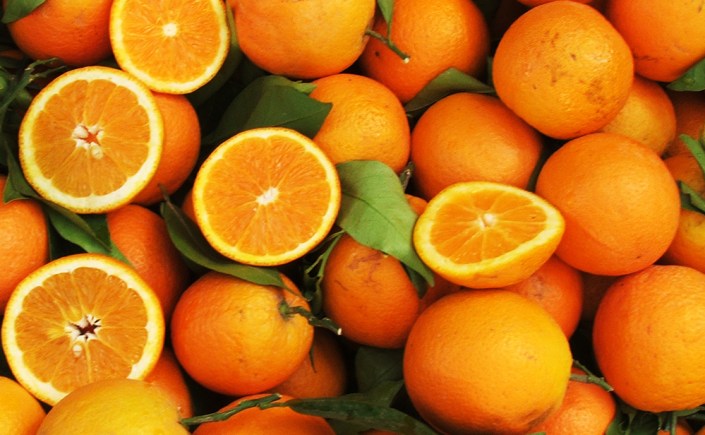
Orange – a versatile word, with the honour of representing both a colour and a fruit.

Which came first? The fruit, after which the colour was named. The story of how the fruit got its name is an interesting one. Most likely, the word derives from the Sanskrit नारङ्ग nāraṅga, meaning orange tree. You can still see similarities to this word in many modern languages: naranja in Spanish, for example.

Why don’t we say norange then? Continue reading

How Soon is Next?

Monday morning 4th July, you’ve just bumped into an old friend, and the conversation is coming to an end:

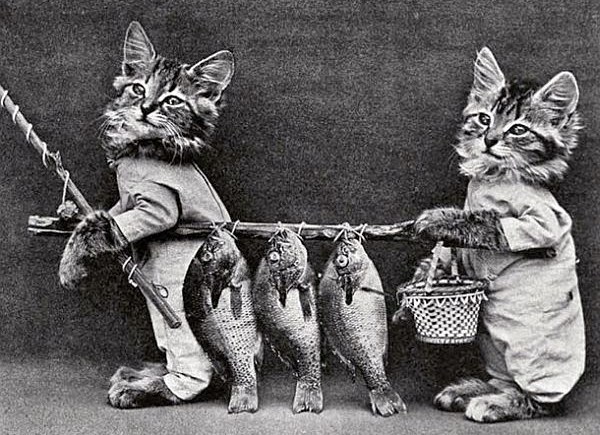
“Great to see you, we should meet up again soon. How about going fishing next Saturday?”

“Sounds good, but wait, I don’t think I’m free on the 16th.”

“Yeah, but that’s ok, it’s not next week, it’s next Saturday.”

“But next Saturday is next week. You mean this Saturday.”

“Exactly, next Saturday, this Saturday coming.”

“But hang on, how can it be next Saturday and…”

“Just forget it, now I remember why I haven’t seen you in years!!”

This post is inspired by an argument I came across elsewhere on the internet, about when exactly next Saturday is: this week or next week?

For me it’s always been straightforward: Continue reading

I amn’t, am I?

 I am not  I’m not  I’m not  Am I not?  Aren’t I?
 You are not  You’re not  You aren’t  Are you not?  Aren’t you?
 (S)he is not  (S)he’s not  (S)he isn’t  Is (s)he not?  Isn’t (s)he?
 We are not  We’re not  We aren’t  Are we not?  Aren’t we?
 You are not  You’re not  You aren’t  Are you not?  Aren’t you?
 They are not  They’re not  They aren’t  Are they not?  Aren’t they?

Spot the odd ones out?

I’ll give you a little time… Continue reading

Awfully Kind of You Old Chap

terror.png

Figure 20 for Charles Darwin’s The Expression of the Emotions in Man and Animals (1872). Caption reads “FIG. 2. – Terror, from a photograph by Dr. Duchenne.”


If someone gave us a choice between having an awful meal or an awesome one, we probably wouldn’t hesitate in making our decision. 300 years ago, however, we may have taken our time. While the difference between the two in modern-day English is immediately evident, things were not so clear-cut in the past. The root word for both awesome and awful is awe, which is now generally considered to be a positive condition, but was until relatively recently more flexible. Awe was a concept much considered by the Gothic and Romantic writers of the late 18th and 19th century. It was defined as a feeling or reverence, admiration or fear, or a combination of the above in the face of the sublime: that which is so elevated beyond the ordinary, so transcendent, that the only natural response is awe.

Continue reading

Riding the Nightmare

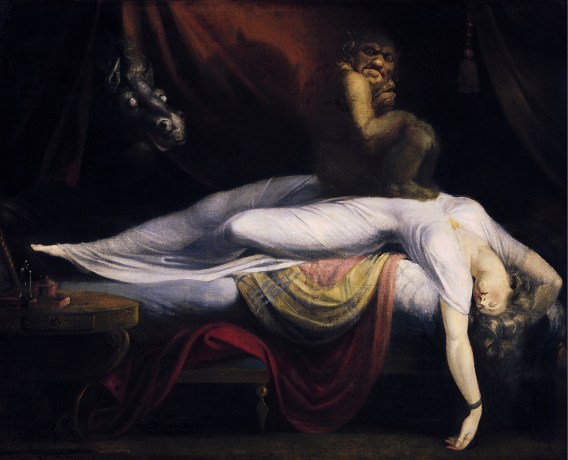
John_Henry_Fuseli_-_The_Nightmare.jpg

The Nightmare Henry Fuseli 1781


How many nightmares can you spot in the famous painting above?

Nightmare is quite an everyday word. It has the most common meaning of a bad dream. But a situation or a task can be a nightmare, and many a footballer’s ‘ad a ‘mare on the pitch.

If you compare it to dream, it’s a rather strange-sounding and looking relative. The origins of the word are interesting. Night explains itself, but the mare part comes from the old English word mære meaning incubus, anevil female spirit afflicting sleepers with a feeling of suffocation.” (1) Continue reading