
Can you think of an English word, not borrowed from another language, that has an accent or other diacritic? (a diacritic is simply any glyph added to a letter: see here for examples).
A Touch of Diaeresis

Can you think of an English word, not borrowed from another language, that has an accent or other diacritic? (a diacritic is simply any glyph added to a letter: see here for examples).

Emmanuel Macron will be inaugurated as French president today, so congratulations to him. We’ll be hearing his name a lot over the next five years, and perhaps more, but we probably won’t be hearing it pronounced exactly the same way.

I imagine that you would have no trouble identifying the sound of the letter T, if I asked you. Or any other letter of the alphabet, for that matter. If you’re young enough, you might still remember the chart on the wall of your primary-school classroom, which perhaps said T for Teddy Bear, or Train. But take a moment to say a few words to yourself featuring the letter T. Not only that, include a variety of words with T at the beginning, middle, and end. I’m quite confident that one or two of those sounds didn’t quite sound like the classic T sound you imagined at the beginning.
Let’s look at the following sentence: Continue reading
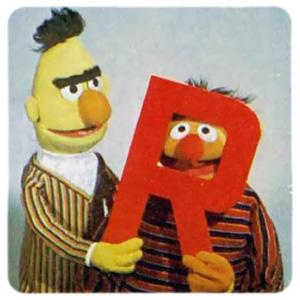
Obviously it’s quite clear that there are many different English-speaking accents. But what are the practical elements that distinguish these accents? One of the most important is rhoticity. If you’re not sure if you have a rhotic or non-rhotic accent, simply say the following words and phrases out loud:
car, flower, computer, pasta and pizza, Georgia Allenby
If you pronounce the r sounds in the first three words, you have a rhotic accent.
If you don’t pronounce them, but add an r sound to the end of pasta and Georgia, then you have a non-rhotic accent. Continue reading
 English-Language Thoughts