Eleven

One of the first things most people do when learning a new language is to learn the numbers from 1 to 10, and shortly after that, from 11 to 20. And it’s generally quite easy to remember them in the case of European languages, as they’re somewhat similar to their English counterparts. Look at French, for example:

Un, deux, trois, quatre, cinq, six, sept, huit, neuf, dix.

Not necessarily all obvious individually, but seen all together, they’re clearly the first ten numbers. The same goes, I think, for 11 to 19:

Onze, douze, treize, quatorze, quinze, seize, dix-sept, dix-huit, dix-neuf.

Clearly a combination of ten and the relevant number, and the same applies to English (eighteen = eight + ten, for example). Except, that’s not quite true in every case, is it? What about 11 and 12? Continue reading

Worst. Sentence. Ever!

If they wouldn’t have been released, I don’t know when I would have ended up seeing Star Wars, and if I wouldn’t have seen Star Wars when I did, I don’t think my life and career would be what it is now.

Yeesh, just look at that. Ok, maybe it’s not necessarily the worst sentence ever, but it’s an unwieldy beast to say the least. A little context: I came across this in an online article about the theatrical release of the “Special Editions” of the Star Wars films in 1997, and this sentence was a quote from someone asked about the impact the films had on her.

And that person chose to use a hypothetical situation, therefore all-but ensuring the presence of an if and a would, and making the sentence a little complex. Fair enough, but still! It’s longer that it need be. And look at all those would‘s. Every time I read it, knowing the meaning, it still has no rhythm to it at all. Really, just look at all those would‘s in there! Apart from how it reads in your head, there’s also the issue of meaning. The sentence gets so weighed down by the different conditions and outcomes contained within it that it’s hard to parse the intended meaning.

How to improve it then? Continue reading

Note Well!

Latin, as I’ve probably mentioned quite a few times by now, has been very generous to the English language. We have many words which have evolved quite directly from Latin, as well as many other words which haven’t changed at all. Sometimes though, Latin phrases just sound too archaic, but still, they serve a very useful function. So we compromise, and abbreviate them. More specifically, we usually turn them into initialisms, like e.g. or i.e. that we use regularly. Let’s have a look at what these stand for, and what they mean… Continue reading

What’s in a Name? Part II

As it’s been a while since I did a post like this, and lately I’ve been thinking about some interesting names, I decided that once more I wanted to look at the meaning and origins of some common English-language names. So then…

… what’s in a name?

Continue reading

Hey! You!

Yeah, you.

It’s a strange word, you, when you think about it for too long.

You.

It’s the only personal pronoun to be both a subject pronoun and an object pronoun. You can say You talked to him and He talked to you, but never Him talked to you and You talked to he.

It’s also used as both a singular and plural pronoun, in standard English at least. Because it’s sometimes confusing when someone says you and we don’t know if they’re talking to us alone or to as part of a group, colloquial plural forms of you do exist around the world.

Continue reading

A Marathon by any other Name…

via Daily Prompt: Marathon

Marathon!

A fine word. Most of us know it as a noun, referring to a run of 26 miles, or 42.195 kilometres. It can also be an adverb of course, indicating that something took an exceptionally long time, as would be the case for most of us running a marathon. Politicians might have a marathon session in parliament to discuss a controversial proposed law. One could also use the noun in this way as well; for example: Continue reading

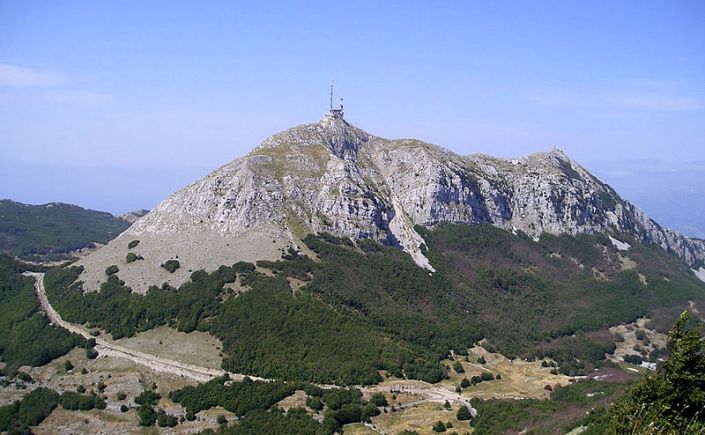
Montenegro

Just a short post today, as it’s Sunday and I fancy a rest, but I think I’ll complement it with a reblog of one of my earlier posts.

I’m always amazed at the number of different countries you all hail from. I love looking at that little map on the stats page, and am proud and humbled to have had visitors from every continent. Yesterday I had my first visitor from Montenegro, or at least someone in Montenegro at the time (thank you, whoever you are!). In many ways, Montenegro is similar to Luxembourg: a small country with a complex history and an interesting name… Continue reading