How do you Say That?

Pronouncing names correctly, whether they be first names or surnames, is something most of us are understandably concerned about. This is especially the case if you’re in a situation in which you’re with people with surnames which aren’t familiar to you, like being in front of a class of people learning English. It can be tricky, because other languages often have different pronunciations of letters. And, from experience, our knowledge of those differences can vary.

A common example is Spanish names with J, such as José. The classic mistake is to pronounce the J exactly as it’s normally pronounced in English, as in juice or jam. But you might know that in Spanish, it’s usually more like the letter h in English. So, being very culturally sensitive, you pronounce the J like an H, but then, it’s not exactly as simple as that, is it? It’s a little more strongly pronounced, a little throatier than in English, and the o is more emphasised. But then if we try to pronounce it exactly as a Spanish speaker would, it’s embarrassing. Why is that? Continue reading


What’s Your Name?

What’s your name?

Not a particularly difficult question, generally speaking. In English, when we say name, we usually mean a person’s given, or first, name. Things can be a little more confusing when you have to switch to dealing with French though. I’m currently living in Belgium, and routinely get momentarily confused by forms which ask first for nom, and then prénom. My instinct is to write my first name in the space for nom, until I remember that in French, nom means surname, and prénom means first name. Continue reading

To Whom it Concerns…

When do I use who, and when can I use whom?

It’s a common question, especially for people who find themselves in a situation where they have to use formal written English, such as a job application, letter of complaint or academic essay. When people find themselves in such situations, especially if they’re unaccustomed to them, replacing who and while with whom and whilst respectively are often seen as convenient shortcuts to formality. And while it is possible to always replace while with whilst, the same is not true of who and whom, and there are specific situations in which we can use whom.

Before figuring it out, I want to look at two incorrect uses of whom, as that’s usually more instructive: Continue reading

Look, but Don’t Watch

I’d like to continue on the theme of difficulties students can have in learning English. Only the difficulty I want to look at today is one that’s shared by teachers, in a way, though in a different way. Something we’re not usually conscious of is how many verbs in our native language are very similar. We don’t have to think about the subtleties of difference between them, because we grow up absorbing how to use them correctly. But for learners, it can be extremely difficult to figure out exactly how and when to use them.

For example, think about the verbs, to talk, to speak, to say, and to tell. Take a moment to think about how you’d explain them to someone who’s unfamiliar with how to use them. Not easy, I’ll bet. Now I’ll try to make the differences clear. Continue reading

Teacher, can I say…?

This is the beginning of one of the most common questions English teachers get asked. And the answer is usually, Well, it’s technically correct, but we never actually say that in English. Which in turn is usually met by frustrated sighs. For all the language’s flexibility, we often fix on only one of the many possible ways to express an idea. This is often a tremendous source of frustration for learners, especially if they’re feeling pleased about using a certain grammar form, only for their teacher to tell them what they’re saying doesn’t really sound natural.

Often, this stems from direct translation from one’s mother tongue. In French for example, it’s standard to use nouns to refer to feelings. For example: Continue reading

Way Cool!

There are two quite contrasting, yet equally fascinating aspects of the English language. One, is the sheer variety of words and phrases one can use to refer to the same thing, each adding a slight difference in meaning or tone. And the other is the sheer utility of some words, which can be used with a variety of meanings. Some of these words are so common that we don’t even think of how many ways in which we use them.

Take the word way, for example. Continue reading

Burns Night!

I’ve just realised it’s Burns Night!

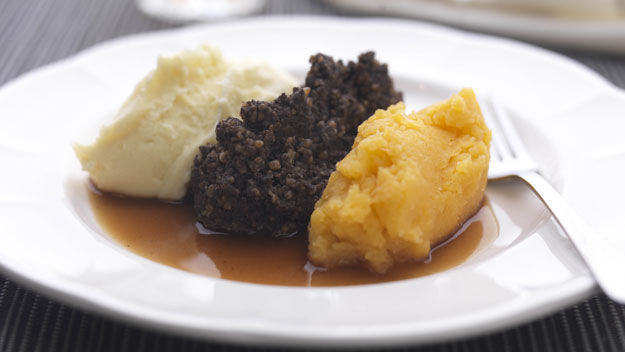
If you’re unfamiliar with it, it’s a Scottish celebration of the poet Rabbie Burns, whose best-known is probably the song Auld Lang Syne. The night involves the Burns Supper, which can be quite an elaborate affair, and invariably involves a meal of haggis, neeps (turnips), and tatties (potatoes). Before it’s served there’s the Piping of the Haggis. Bagpipers play as the delicious dish is brought in, and the host or a guest then recites Burn’s Address to a Haggis:  Continue reading