How Very Odd…

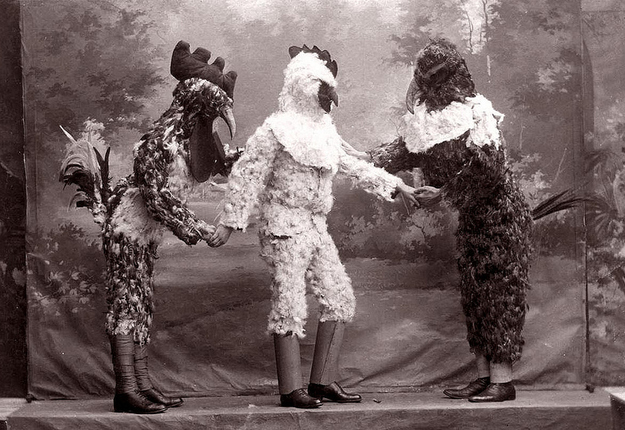
Odd is, in many ways, an odd word. It’s the opposite of even, referring to a number not divisible by two. But it can also mean strange. As well as those two common meanings, in some dialects of English it can mean occasional or infrequent. Consider the Australian Vietnam-War movie The Odd Angry Shot. In Ireland, we might say something like I only go to the cinema the odd time now, because it’s so expensive. These disparate meanings are all interconnected though. Continue reading

WTF!?

The F word.

F***

F**k

F*ck

To give you fair warning, if you’re of a sensitive nature regarding swearing, that I’m going to type the full word in a few lines. And a few more times after that. You may want to give this one a miss. Continue reading

Shut the Gate

No-one would ever accuse the average tabloid writer of a great love for the breadth of the English language. They go for a particular sensationalist and informal tone, with a specific vocabulary, and stick with it. Unlike broadsheet journalists, who tend to play it down the middle or go highbrow, they have a particular house style. This is even more true for tabloid sub-editors, who write the headlines, except for the odd occasion when they go above and beyond the call of duty.

I’m thinking of a specific journalistic trend, which, in fairness, isn’t restricted to tabloid journalism. And that trend is the tendency to add the suffix -gate to a word to refer to any manner of scandal. Some notable recent examples include Continue reading

The Best Words

I don’t like to get too overtly political in this blog. While I think everyone should be conscious of what’s going on around them, ultimately this blog is language-focussed, and I prefer to keep it that way. And while it’s hard not to avoid politics at the moment, I want to take a brief look at Donald John Trump, President of the United States of America, but specifically the words he uses. Continue reading

Eleven

One of the first things most people do when learning a new language is to learn the numbers from 1 to 10, and shortly after that, from 11 to 20. And it’s generally quite easy to remember them in the case of European languages, as they’re somewhat similar to their English counterparts. Look at French, for example:

Un, deux, trois, quatre, cinq, six, sept, huit, neuf, dix.

Not necessarily all obvious individually, but seen all together, they’re clearly the first ten numbers. The same goes, I think, for 11 to 19:

Onze, douze, treize, quatorze, quinze, seize, dix-sept, dix-huit, dix-neuf.

Clearly a combination of ten and the relevant number, and the same applies to English (eighteen = eight + ten, for example). Except, that’s not quite true in every case, is it? What about 11 and 12? Continue reading

Worst. Sentence. Ever!

If they wouldn’t have been released, I don’t know when I would have ended up seeing Star Wars, and if I wouldn’t have seen Star Wars when I did, I don’t think my life and career would be what it is now.

Yeesh, just look at that. Ok, maybe it’s not necessarily the worst sentence ever, but it’s an unwieldy beast to say the least. A little context: I came across this in an online article about the theatrical release of the “Special Editions” of the Star Wars films in 1997, and this sentence was a quote from someone asked about the impact the films had on her.

And that person chose to use a hypothetical situation, therefore all-but ensuring the presence of an if and a would, and making the sentence a little complex. Fair enough, but still! It’s longer that it need be. And look at all those would‘s. Every time I read it, knowing the meaning, it still has no rhythm to it at all. Really, just look at all those would‘s in there! Apart from how it reads in your head, there’s also the issue of meaning. The sentence gets so weighed down by the different conditions and outcomes contained within it that it’s hard to parse the intended meaning.

How to improve it then? Continue reading

Note Well!

Latin, as I’ve probably mentioned quite a few times by now, has been very generous to the English language. We have many words which have evolved quite directly from Latin, as well as many other words which haven’t changed at all. Sometimes though, Latin phrases just sound too archaic, but still, they serve a very useful function. So we compromise, and abbreviate them. More specifically, we usually turn them into initialisms, like e.g. or i.e. that we use regularly. Let’s have a look at what these stand for, and what they mean… Continue reading