
Have you ever thought about your surname? Do you know where it comes from, what it means? Many English-language surnames are derived from jobs: Continue reading
Surnames

Have you ever thought about your surname? Do you know where it comes from, what it means? Many English-language surnames are derived from jobs: Continue reading

We all have a store of words that we come across again and again as we read, but we never actually hear spoken. So we then either:
a) have a moment of surprise when we hear it for the first time…
b) hear it spoken aloud, but never associate that sound with its spelling, thinking of them as two separate words (this was the case for me with the word epitome for a long time), or…
c) we go our whole lives never hearing them.
Here are some of the most common words people have this struggle with: Continue reading

Orwellian has become the go-to adjective to describe any situation of seemingly heavy-handed government surveillance or intervention. In a way it’s kind of a compliment, that you produced a work so evocative, so incisive that it comes to be seen as an ideal summation of a specific notion. A part of me also thinks that it’s a shame that those things we usually describe as Orwellian are really only relevant to Nineteen Eighty-Four, and not Orwell’s quite varied body of work.
Kafkaesque is another literary proper adjective (an adjective derived from a proper noun), which is more fitting, as much of Franz Kafka’s work has that sense of an individual dwarfed and alone in a world of uncaring, overwhelming bureaucracy that the adjective describes. If you’re a psychologist you might describe yourself as a Freudian or a Jungian. Much has recently been made of Donald Trump’s Keynesian economic policies. Continue reading

Ireland’s industry
There’s a bathroom on the right
Excuse while I kiss this guy
What do these statements have in common? They’re all mondegreens. What’s a mondegreen, you ask? Let me show you…
Ireland’s industry – Islands in the stream (Islands in the Stream, Dolly Parton & Kenny Rogers)
There’s a bathroom on the right – There’s a bad moon on the rise (Bad Moon Rising, Creedence Clearwater Revival)
Excuse me while I kiss this guy – Excuse me While I Kiss the Sky (Purple Haze, Jimi Hendrix)
A mondegreen is a misheard song lyric. The unusual-sounding word was coined by American writer Sylvia Wright in 1954 when she wrote about how she misheard the line …and laid him on the green from the 17th-century Scottish ballad “The Bonnie Earl of Moray” as …and Lady Mondegreen.
I’m quite fond of mondegreens, simply because they can be very funny, but they’re also a great leveller. No matter your mastery of the English language, the rhythms of song lyrics and the accompanying make it often quite hard to heard lines correctly. Plus, we tend to expect language to follow familiar patterns, so it makes more sense to our brains to kiss a guy than kiss the sky. (It’s also only fair to point out that in normal conversational connected speech, Excuse me while I kiss this guy and Excuse me while I kiss the sky sound identical.)
We all have our own mondegreens. The one I always remember from my youth is Prefab Sprout’s “The King of Rock n’ Roll.” I always thought the line Hot dog, jumping frog, Albuquerque was actually Hot dog, jump in fire, how about turkey? Which I think works equally well. I also thought the Transformers jingle proclaimed them to be robots in the skies, as opposed to in disguise. It never made sense to me, because only some of them could fly.
I was surprised to discover that the most-commonly misheard line, according to a British survey was Call me if you try to wake her up from R.E.M’s “Sidewinder Sleeps Tonite,” which people mishear as Calling Jamaica. It kind of fits I suppose, but you really need to stretch it! I would have thought Haddaway’s “What is Love” (When You Don’t Hurt Me instead of Baby Don’t Hurt Me) would be more common, or Abba’s “Waterloo” (How does it feel to have won the war? instead of I was defeated, you won the war).
What are some of your mondegreens?

Is there a word as commonly misused as literally? The Oxford English Dictionary defines it as:
In a literal manner or sense; exactly:
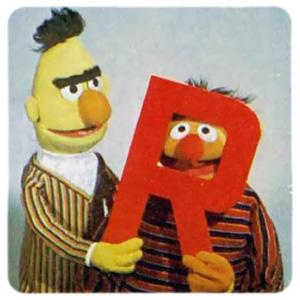
Obviously it’s quite clear that there are many different English-speaking accents. But what are the practical elements that distinguish these accents? One of the most important is rhoticity. If you’re not sure if you have a rhotic or non-rhotic accent, simply say the following words and phrases out loud:
car, flower, computer, pasta and pizza, Georgia Allenby
If you pronounce the r sounds in the first three words, you have a rhotic accent.
If you don’t pronounce them, but add an r sound to the end of pasta and Georgia, then you have a non-rhotic accent. Continue reading

All the feels.
#AlltheFeels
Your Facebook or Twitter feed no doubt features a few occurrences of this phrase. And you know, it’s fine, in the right place. A picture of two otters holding hands. A baby and a puppy playing. Manipulative, schmaltzy John Lewis Christmas adverts (I haven’t seen the latest one, but I gather it’s about a family buying a dog a trampoline for Christmas). Those situations which give you a nice warm feeling inside for a brief time.
As I’ve noticed it being used more and more though, I tried a little experiment. I searched for “All the feels” on Facebook (that’s about the extent of my social-media penetration), and the first five public posts brought up the following: Continue reading
 English-Language Thoughts