Poetry from the Horse’s Mouth

I’m always fascinated by writers’ voices. I’m always curious to hear them, because that’s the voice they hear in their head as they write (well, it’s similar to it, because as anyone who’s heard a recording of their own voice attest, what we hear and what others hear is quite different).

I’m particularly curious to hear poets, because rhythm and tone are so crucial to poetry. So one imagines that the way a poet reads their work is, ideally, exactly how they imagine the poem should sound. Though of course, what’s in the writer’s head might not be exactly translated by their tongue.

Here’s W.B Yeats reading “The Lake Isle of Innisfree” in his later years. To be honest, it might be a little spooky to hear this in the middle of the night, but I like the fragility of his voice, which adds a poignancy to the poem’s desire for a simple pastoral peacefulness. Continue reading

Totes Abbrv.

When you hear the word abbreviation, you tend to think of something like FBI or UFO. And it’s true that both of those are abbreviations. But the term abbreviation is actually a much broader one than many people realise, encompassing any kind of shortening of a word. Let’s look at some of the different types: Continue reading

Rebel Rebel

I’ve just realised that’s another one: rebel.

As in (to explain myself slightly), rebel with the first syllable emphasised, is a noun, and rebel (with the second syllable emphasised) is a verb. I think being exposed to so much about the new Star Wars film has made me notice that.

Anway, may the Force be with you.

Force, of course, is also a verb and a noun, but with it being monosyllabic, you don’t need to worry about its pronunciation.

A Robot? Doesn’t Look Like Anything to Me…

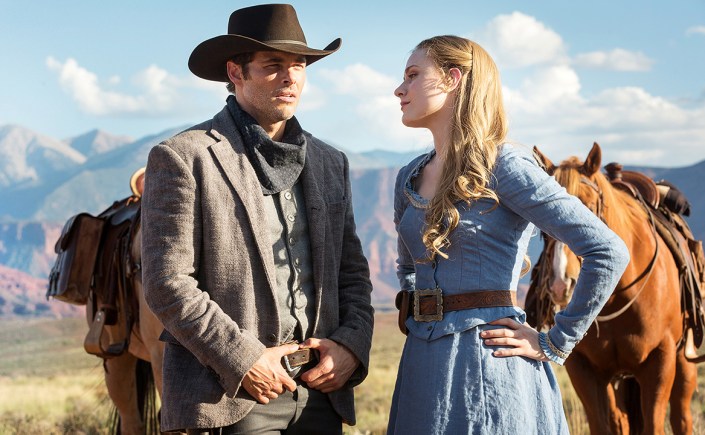
Did you watch Westworld? Enjoy all the twists, and the accompanying guesswork about who might secretly be a…. host? I wanted to write robot there, but a few episodes into the series I noticed that none of the characters seemed to have used the word robot, and I guessed that over the course of the season none of them would (I wasn’t paying very close attention to see if anyone did or not, but I don’t recall noticing the word). Which might seem a little odd, because it’s a series all about robots. Cowboy robots. Most of the characters we see are robots. And they meet the criteria according to the two definitions in the OED:

  • A machine capable of carrying out a complex series of actions automatically, especially one programmable by a computer
  • (especially in science fiction) a machine resembling a human being and able to replicate certain human movements and functions automatically

But they’re always referred to as hosts. But then, that doesn’t really seem that odd. Because it’s prestige television, and robot isn’t really a prestige word, is it? And I don’t mean to be critical of the producers’ attitude, because I understand their aversion to the word. Because robot just sounds a bit silly, doesn’t it?

It shouldn’t, because it’s a perfectly legitimate word that describes real-life machines that make a lot of our favourite products. But when you hear the word robot, you probably don’t picture this: Continue reading

Only the Winningest

There are many clear differences between American and British English, particularly in terms of spelling and vocabulary. It’s natural enough, and I’m loath to say that one is better than the other. They both work for the people who use them, and that’s what matters. Recently though, I’ve been thinking about one area in which British and American English are very different: sport.

Even that word itself shows the beginning of the division: if you’re American you probably use sports when referring to the general concept of sport(s) (when I hear the word I always hear Homer Simpson’s final line from this clip:) Continue reading

A Bit of a Do

I’ll be getting ready for my office Christmas party soon.

And by getting ready I mean probably changing my clothes.

it reminded me of a now probably old-fashioned Irishism, which is to refer to any kind of social gathering on a larger scale and more  than simply going to the pub as a do.

Sorry, I can’t go out tonight, we’re having our work Christmas do.

We’re having a bit of a do next week, if you want to come.

I’ve been invited to the mass, but I won’t be able to make it, so I’m just going to the evening do. Were you at their engagement do? Continue reading

Practice Makes Perfect. Or is that “Practise…”

This post is something of a companion piece to yesterday’s.

Up until early February 2008, I never gave much thought to the spelling of the word practice. Or practise, for that matter. What happened then, in the last depths of winter, to change that?

I wrote my lesson plan for my first teaching practice on my teacher-training course, that’s what happened. Somewhere within that incredibly detailed plan, I wrote something along the lines of Students practice using the target language. Continue reading