
Sibling Rivalry

Sibling is an interesting word. It’s quite useful for the lazy among us. If you don’t want to say I have 2 brother and 1 sister, you can simply say I have 3 siblings. Easy! It’s understandable why we have separate words for brothers and sisters, as they’re obviously fairly distinct from each other. But it also makes a lot of sense that we have the word sibling, as it’s a quite distinct concept in its own right, and it’s not hard to see what a brother and sister share in common.

Curiously though, sibling is a difficult word to translate into other languages. Continue reading
Gorilla Warfare

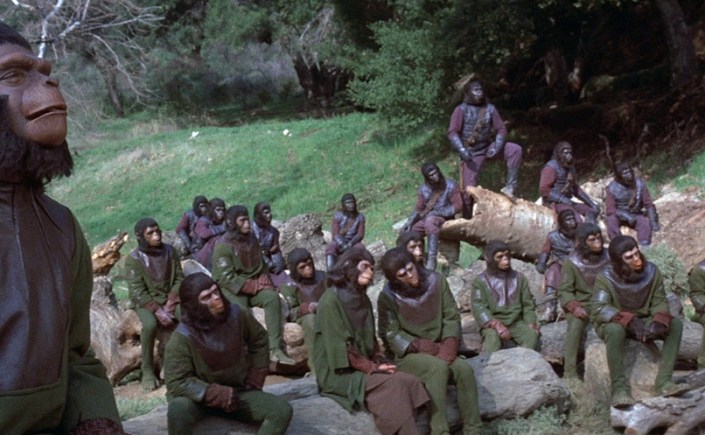
I’m probably not alone in having been intensely curious as a child about what I assumed was called gorilla warfare on the news in the 80s. I think I was always sensible enough to know that it wasn’t war waged by great apes, as much I wished that were something that existed. I think at some point I thought it might have involved the massacre of gorillas, possibly around the release of Gorillas in the Mist. But I think it realised pretty soon that it was very human warfare, especially as they always showed human soldiers or jungles on the news (I imagine that gorilla warfare would be quite visible and thus provide some great footage). I still never knew quite what it was though, and never considered that the word I was hearing wasn’t actually gorilla. Continue reading

“Een boterham, alsjeblieft!”

I’ve been busy  the last few days, but I just want to share a quick thought about an interesting Dutch word I learned back at the beginning of my grand Duolingo (my brain always wants to call it Duolinguo) experiment. This word is… Continue reading

Never Mind the Bollocks

What English could really benefit from is a standard diminutive form. Many other languages have at least one common way to transform a noun into a dimunitive form, usually by adding a suffix. In French you can add -ette or -ot, Spanish often uses -ina or -ino, Portuguese the similar -inha or -inho, and Italian has a variety such as -etta/-etto and -ino/-ina.

Of course, English borrows some diminutive words from Latin languages, such as featurette, operetta, caipirinha, and duckling/gosling (from Norse). And many specific forms of English feature unique diminutive forms. Scots for example, has quite a few, mainly from older forms of English and Scottish Gaelic. Some words used in Ireland are influenced by the Irish Gaelic diminutive -ín. It’s fairly common for a male baby to be described as a cute little maneen. A country lane might be called a boreen, from the word bóithrín (from bóthair [road] + –ín).

English used to have standard diminutive forms, evidence of which we can still see today. Continue reading

You Don’t Know Jack

Why does the name Jack features in so many words and phrases? Continue reading

Beards

Beards are in at the moment. Or at they were in somewhat recently. Even if they’re not in anymore, there are still a lot more of them around than there were a few years ago. For a humble bit of facial hair, the beard has inspired a surprising number of words in the English language, though not as much as people think… Continue reading

What Have I Become?: The Story of Come and Become

Have you ever thought about the similarity between the words come and become? It’s something I’ve considered from time to time, as students occasionally get them confused. It struck me again recently, when I considered the similarity between the French translations of I come (Je viens) and I become (Je deviens). Other European languages demonstrate similar, uh, similarities, though not quite so… similar. This strengthened my opinion that there might be a conceptual link between the two. Continue reading