Dank Memes

If you’re young and hip like me, you’ll have come across the term dank meme, and know that a dank meme is a cool image or video that becomes popular. Goes viral, if you will.

Though the word meme is strongly associated with internet culture, it’s got a longer history than you might imagine. The term was coined by Richard Dawkins in his 1976 work on evolutionary biology, The Selfish Gene. It referred to an idea, behaviour, or style that spreads between individuals within a culture. A particular fashion or popular opinion that spreads quickly, like a virus, could be considered a meme. Dawkins came up with the theory of the meme in a book on evolution, as he considered that ideas could be under the same pressures to adapt and replicate as biological organisms. Continue reading

Surnames

Have you ever thought about your surname? Do you know where it comes from, what it means? Many English-language surnames are derived from jobs: Continue reading

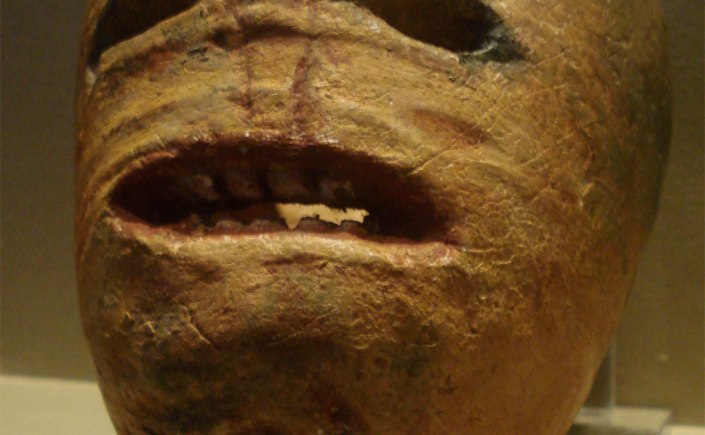
Happy Hallowe’en!

I hope you have an enjoyable and suitably spooky day today, whether you’re dressing up, trick or treating, or staying in with some horror movies. To celebrate, I’m going to have a look at some of the words we associate with this day. Continue reading

Ambulance Chasing

An ambulance passed me by yesterday, and as I was looking at the word written on the side, I got to thinking about its etymology. Ambulance: surely there’s some association with walking in its history, considering similar words derived from the Latin verb ambulare (to walk) still exist today. To amble is an obvious one, but also the adjective ambulatory (associated with walking) Less obvious is pram (stroller or baby carriage in American English), a short form of the now outdated perambulator. Continue reading

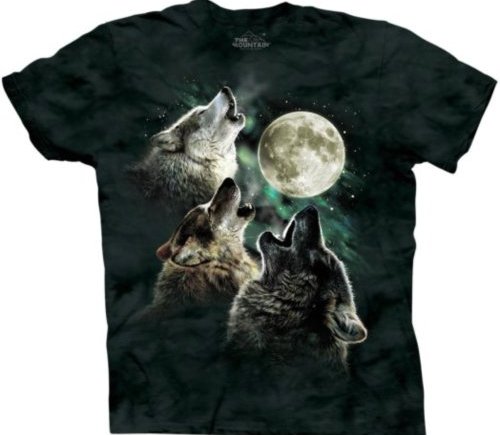
The T-Shirt, the Shepherd, and the Wardrobe

One day, maybe only 10 years ago, I was flicking through some manner of catalogue, and my eye was momentarily drawn to a t-shirt. Seeing it laid out flat, I idly thought to myself That really looks like a lower-case t. After a few moments, it hit me: that’s why they’re called t-shirts! I was amazed, but also immediately annoyed with myself. How had I not noticed it before? It was so obvious! Even worse, how had I not even wondered why it was called a t-shirt before? I’d gone my whole life never thinking about this strange name. For someone who likes to think of himself as alert and conscious of how language works, it was embarrassing. Continue reading

Hooligans, the Lot of Them!

Hooligan‘s a great word, isn’t it? The sound of it really matches what it represents. Now the word is mainly associated with troublemakers at football games, but it’s been around for quite a long time. It first appeared in British police reports in 1898, and seems to have been based on the surname Houlihan. Coming from the original Gaelic surname Ó hUallacháin, it came to be used to represent a stereotypical comic Irish figure in music-hall shows in the late 19th century.

Given the stereotypes of Irish people in cities like New York and London at the time, it’s not such a surprise that the name became a synonym for an angry, violent, and probably drunk, individual. The word was also quickly absorbed into Russian as khuligan, to refer to violent young men harassing people on the streets, and political dissenters. Continue reading

By the Light of the Silvery Moon

Ah, the moon! Just look at it up there, glowing in the sky, casting its beautiful silvery light all around. It’s always inspired us. I think that’s because it’s a little bit more mysterious than the sun. During the day people probably looked up and thought: Well, I don’t really know what that thing up there is, but it clearly provides light and heat, so it’s ok.

But the moon? Continue reading