Black Friday

Another Black Friday has come and, depending on where in the world you are, gone again. Did you enjoy it? Did you buy anything?

I must admit that every time I hear the day mentioned, it takes me a moment to remember what it is. In my life it’s quite a new phenomenon. Of course in the United States, it’s long been considered the unofficial beginning of the Christmas shopping period (though why it needs to be such a long period I don’t know: I usually manage to get everything after 20th December!) In Ireland it used to be 8th December, when it was said that all the country folk would come to the nearest large town or city to start their shopping. But now, as with so many things associated with Christmas, the shopping starts earlier, and there are more and more ads for Black-Friday deals. Which seems a little strange. I understand why it exists in America: many people have the day off, they’re starting to think about Christmas, and perhaps need to get away from their family after a day of cabin fever. But in Europe it’s a normal working day, so I don’t know how many people are shopping.

The first case of the day after Thanksgiving being referred to as Black Friday seems to have occurred in 1951 in the pages of the journal Factory Management and Maintenance, to refer to the number of people calling in sick to work. But this is not the only Black Friday, which isn’t really surprising when one thinks about our tendency to mark momentous yet tragic days with a the colour black. Perhaps most famously there was Black Tuesday, the day of the Wall Street Crash in 1929. The term Black Friday has long been used by emergency services and the National Health Service in the UK to refer to the last Friday before Christmas, when the increase of drunken revellers makes them quite busy. It’s also, contrary to a seemingly increasingly popular misconception, nothing to with slavery. Here are some more historical Black Fridays: Continue reading

S: the Story of a Letter

If you’re a native English speaker, you probably don’t think about individual letters too often. Why would you? You use them pretty much automatically. So if I asked you to talk about the letter s, you might not have much to say. But for people who have to learn English, it’s quite important, and can prove to be a tricky little customer.

The first area of confusion is with plurals. Most languages don’t add s to make a plural, like English does, so it can be very hard for speakers of those languages to remember to add the s. Even when some languages do add an s, it’s in a slightly different way. Portuguese and Spanish, for example, often add an s to a noun to make it plural. But, they also add an s to adjectives describing those nouns, leading a lot of Portuguese and Spanish speakers to do the same thing in English. French is similar, but the s is generally silent, meaning that a lot of French speakers don’t pronounce it even if they write it.

But the most common area of error is with third-person singular verbs. That might sound like gibberish, but let me demonstrate: Continue reading

The Price is not Right

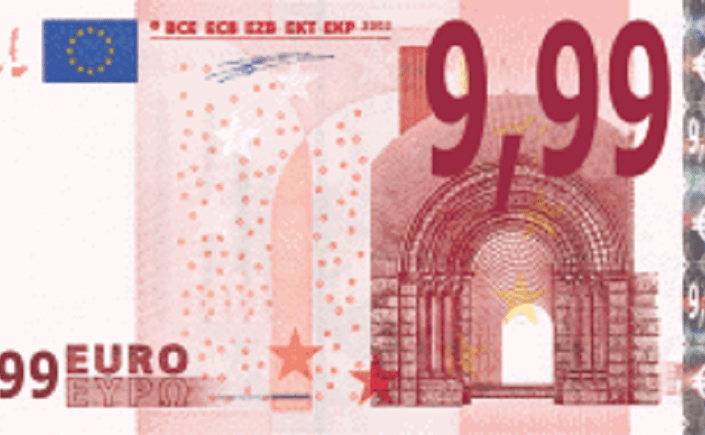
You’re on holiday, maybe in Spain or Italy, and you want to buy something in a shop. No problem, you have a few basic phrases to survive in that situation. So you go find it on the shelf, but before you take it to the counter you check the price because you know the prices can be different from home. And what’s this? It costs…

€15,99!!?? Continue reading

Barcelona

I’ll be beginning a well-earned break from work today, and spending a few days in Barcelona. It’s my first time there, so I’m very excited to see it. Like many European cities, Barcelona is bilingual, with most of its citizens speaking Spanish and Catalan. So in honour of Barcelona, I thought I’d see if there were any common English words that were derived from Catalan. Words such as: Continue reading

Brexit: A Political Portmanteau

I won’t spend too much time on my thoughts about the UK’s referendum. I’ll just say I’m sad. Sad because I have an idealistic belief in nations working together for their mutual benefit. Because I think that the British people who’ve suffered and been ignored in recent years were lied to by the rich and powerful into voting against their own interests.

So tonight I’ll try not to think too much about what’s going to happen to the UK, to the EU, and to me (I’d better remember to bring my passport if I want to drive to Belfast!)

Instead, I want to look at that word: Brexit. Continue reading