Restored to Your Former Glory

You may know the feeling: you’re on holiday and you’ve been walking around sightseeing all day. You’re tired, you’re hungry, and need to stop to eat. So, you pop into a little restaurant, and you feel satisfied and re-energised. Restored. And it’s no surprise really, because that’s what a restaurant’s for. Continue reading

“Een boterham, alsjeblieft!”

I’ve been busy  the last few days, but I just want to share a quick thought about an interesting Dutch word I learned back at the beginning of my grand Duolingo (my brain always wants to call it Duolinguo) experiment. This word is… Continue reading

Chicken – The People’s Food

Cow – Beef

Calf – Veal

Pig – Pork

Deer – Venison

Sheep – Mutton

Chicken – Chicken

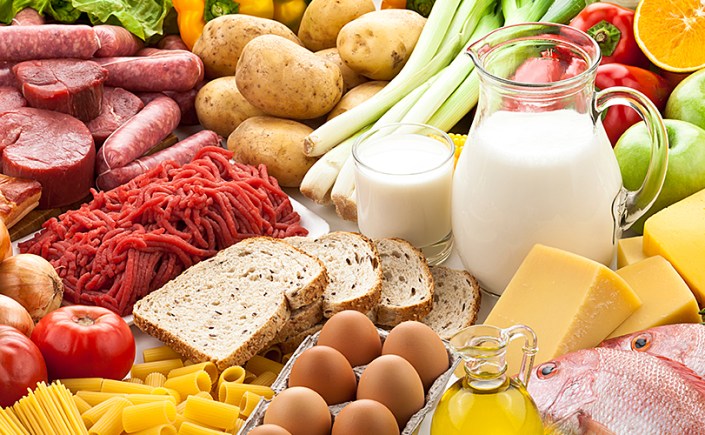
Not hard to spot the odd one out, eh? Forgetting about chicken for a moment, have you ever noticed that in English, we have special names for the most-commonly consumed meats, separate from the names of the animals themselves? Continue reading

Craft

via Daily Prompt: Craft

Craft is a word that has long been a noun and a verb. One worked on one’s craft, and a craftsman crafts various objects. In recent years though, it has become commonly used as an adjective, particularly to refer to craft beer. Whatever your feelings about craft beer (either pretentious, over-priced, bitter stuff, or refreshing, lovingly-crafted independent alternative to the big breweries’ fare), it’s hard to deny that it’s become quite popular. And now it’s quite common to find many other craft food and drinks.

Why have craft food and drinks taken off so? Continue reading

Happy Thanksgiving!

Happy Thanksgiving to all my American readers! The commemoration of the first Thanksgiving feast between the Wampanoag tribe and the Mayflower pilgrims is obviously an integral part of American culture. And yet, as it’s not celebrated anywhere in Europe, I was always curious about the celebration whenever I was watching an episode of a TV episode set on the holiday. What are they celebrating? Why is it so close to Christmas? Won’t they get sick of having two big turkey dinners in such close proximity?

As I got older and more worldly, I gathered more information and began to understand the origins of the holiday. I began to understand why Americans refer to The Holidays, plural, and I no longer think Thanksgiving is too close to Christmas. It’s actually a nice way to break up the monotony of Autumn/Winter. Though the commemoration of a peaceful feast between pilgrims and Native Americans always seemed strangely melancholy to me, given how things turned out.

Interestingly enough, that wasn’t actually the first Thanksgiving. Continue reading

Eat, Drink, Have

Imagine the situation:

An English-School classroom, with a Beginner or Elementary class. The teacher has put a picture of someone with a glass of water to their lips.

—What is she doing?

—She is… drinking the water.

—Yes, very good! Now, next…

The teacher now displays an image of someone sitting down to a meal.

—Ok, now can somebody tell me what this person is doing?

—Eating.

—Yes, very good! So, we eat…

—food.

—Yes, and we drink…

—uh, drinks.

—Yes, excellent!

That might seem pretty logical. To eat and To drink are two very common, basic verbs, and students need to understand exactly what they mean and how to use them, don’t they? Well, yes, but how do we really use these two verbs? How often do we really use them? Continue reading

Ooh La La!

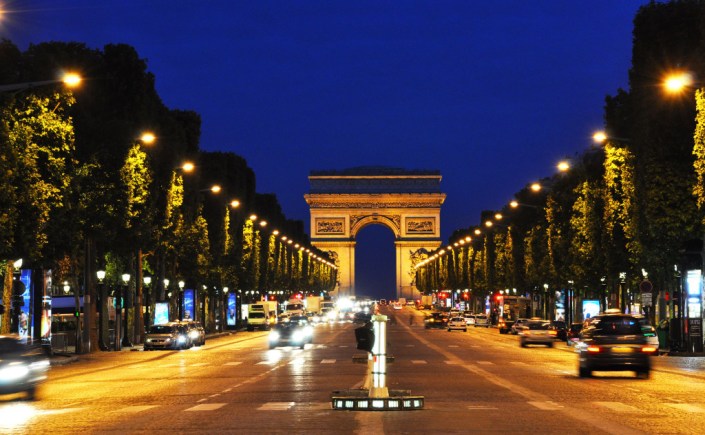
In honour of the European Championships being held in France, and specifically the Ireland vs France second-round match this afternoon, I want to look a little bit at the influence of the French language on English. A whole history of this would be exhaustive and exhausting, as there has been a lot of exchange between the languages over the centuries. After the Norman conquest of Britain in 1066, French became the language of the royal court and politics, and remained so for about 300 years, so it’s not surprising that a lot of French words entered the English language.

I’m more interested in words that we’ve taken directly from French, and what they say about our attitudes towards the language as well as French people. The long, long history of antagonism and outright war between England and France in the last couple of millennia has, I think, led to some conflicting feelings about French evident in the way that English uses some of its words. We’ve always had conflicting stereotypes about the French: romantic, sophisticated, with great food and drink, but also rude and arrogant (I’ll just restate that these are stereotypes and not my opinions).

And so we tend to feel that the French language sounds beautiful, elegant and sophisticated, and the areas in which we most commonly use French words reveal a lot about our positive stereotypes about the French. Continue reading