
Yes, it’s Hallowe’en again! Time to have a look at an appropriately spooky word. But first, a challenge:
Don’t be Afraid…
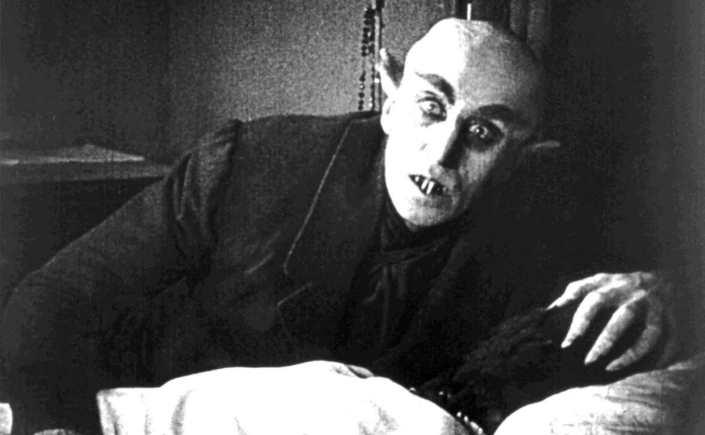
Yes, it’s Hallowe’en again! Time to have a look at an appropriately spooky word. But first, a challenge:

A quick thought to start your week. If someone looks exactly another person, we can that they’re the spitting image of that person. Why on earth would we use such a disgusting phrase?
Before I looked into it, I thought this might be a simple case of some old Proto-Germanic word sounding like spitting, but having nothing to do with the actual practice.
That’s not the case however, and the original meaning is all about spit! The original phrase was the spit and image of him/her, and referred to the notion that a child looked so like one of their parents that it was though they’d been spat out by them and formed from their spit. This evolved into the spit of…, and then the spitting image of.
So yes, a bit disgusting. But it probably didn’t seem so bad 400 years ago when people were generally dirtier than now. And people used to believe lots of disgusting things, like flies were born from rotting carcasses, or that artificial humans (homunculi) could be created by mixing human sexual material with earth and various filthy substances.
And you could say that the idea of a child being created from its parents’ spit is an example of people having a vague grasp of genetics before we’d really pinned the science down.
Pretty impressive, but still, pretty disgusting too.

I saw IT last week, only it was actually Ça, considering I saw it in a cinema in Liège. English-language films are generally dubbed here, but as it was a somewhat arty cinema, they were proud to offer the VO (version originale) with French and Dutch subtitles. Having two sets of subtitles taking up space on the screen is quite distracting, but it’s an interesting opportunity to compare English, French, and Dutch at the same time.
Watching a film with subtitles in a language you know is always a little odd, as they never translate things exactly, largely because such a thing is basically impossible. Even so, there are always one or two choices the subtitler makes which boggle the mind. I don’t recall anything like that in this case, but there was one necessary difference in translation that intrigued me.

If you have a spare four hours or so, have a look at all parts of this ITV documentary The Adventure of English. Or the first part of it anyway: Continue reading

Which one?
Huh?
Which bank?
I don’t know, does it matter?
Not really, but why did you say the bank if it doesn’t matter?
I don’t know, that’s just what we say.
Have you ever found yourself saying that you’re going to go to a bank? Of course not, that’d be weird, wouldn’t it? But if you think about it, it doesn’t make sense if you’re from a large town or city. When we say the bank, it sounds like we’re referring to a single, specific bank that the listener knows. Now this is fine if you’re in a smallish town with only one bank. But if you live somewhere with more than one bank it sounds strange to say the bank, as though there were only one bank. We do the same with other phrases like… Continue reading
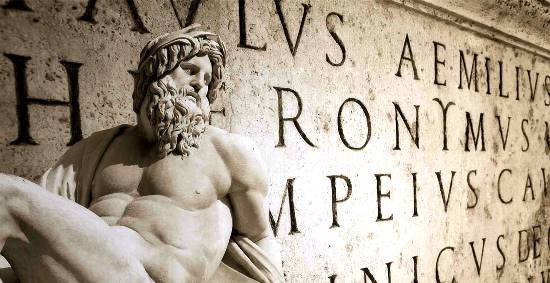
There are a lot of stadia in this city, aren’t there? Do you think there are any octopi in the sea? I’m also curious about the cacti around here: in fact, I’m interested in all the flora and fauna!
You may not find much wrong with the above. Well, hopefully you’ll think “Who on Earth would actually say that!?” But in terms of grammar and vocabulary, it wouldn’t raise too many eyebrows.
What about this though: Continue reading
 English-Language Thoughts