
I hope today finds you well.
Yesterday I mentioned that well is quite a common filler in English, used to give us a moment to think, or even for no particular reason at all. After I finished writing, I asked myself, Why well?

I hope today finds you well.
Yesterday I mentioned that well is quite a common filler in English, used to give us a moment to think, or even for no particular reason at all. After I finished writing, I asked myself, Why well?

I passed a poster for an event called Pandemonium this morning (I’m not sure what the event was, so I guess it’s not a very effective poster). That’s not a word I’ve given much attention to in the past, I thought, but looking at it now, does it mean what I think it means?
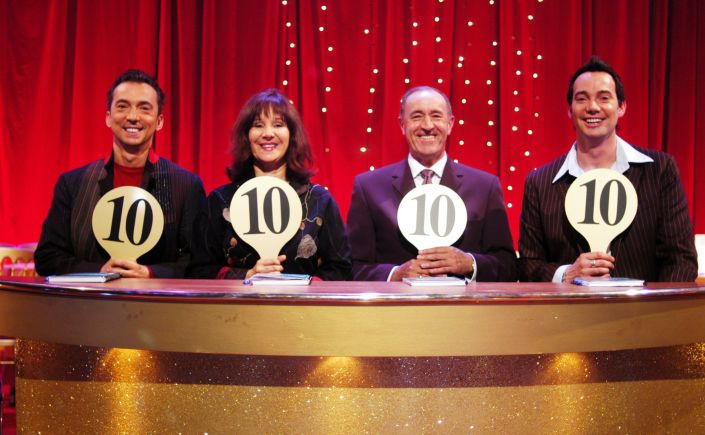
No, I didn’t, sorry, I never watch it.
I’m referring here of course to popular BBC Saturday-evening dance programme Strictly Come Dancing (translated into American English as Dancing with the Stars). It’s often referred to simply as Strictly, but if you step back and think about it, isn’t that a little odd?

Both are correct, regardless of whether you’re speaking British or American English. If that’s all you wanted to know, you can now go about enjoying your Sunday. But if you want to know how goats, Greek, a sign of the Zodiac, and stuffed animals fit into the equation, then please, read on.
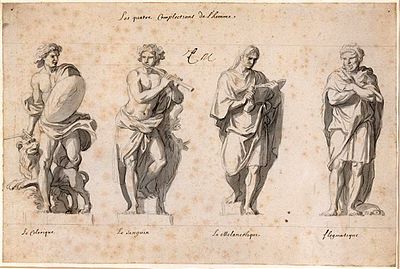
Are you in good humour at the moment? You are? Good! If I’d asked you that question a few hundred years ago though, it would’ve had a somewhat different meaning.

I saw IT last week, only it was actually Ça, considering I saw it in a cinema in Liège. English-language films are generally dubbed here, but as it was a somewhat arty cinema, they were proud to offer the VO (version originale) with French and Dutch subtitles. Having two sets of subtitles taking up space on the screen is quite distracting, but it’s an interesting opportunity to compare English, French, and Dutch at the same time.
Watching a film with subtitles in a language you know is always a little odd, as they never translate things exactly, largely because such a thing is basically impossible. Even so, there are always one or two choices the subtitler makes which boggle the mind. I don’t recall anything like that in this case, but there was one necessary difference in translation that intrigued me.

What do you do?
That used to be an easy question: a simple icebreaker when meeting new people. Now though, it’s more complicated.
First of all, since the economic crisis, people are understandably wary about asking the question, as we’re more aware of the fact that the answer might be nothing.
Second, for a lot of people who do have something that they do, it can be a hard to specify exactly what it is.
 English-Language Thoughts