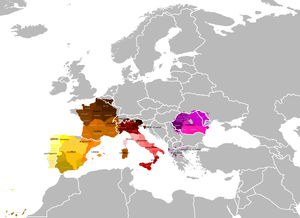
Why are they Called Romance Languages?

You’ve probably noticed that I talk a lot about Romance languages here. These are languages largely derived from Latin. Currently there are five main Romance languages: Spanish, Portuguese, French, Italian, and Romanian.

Continue reading

An Albatross Round your Neck

“God save thee, ancient Mariner!

From the fiends, that plague thee thus!-

Why looks’t thou so?”-With my cross-bow

I shot the ALBATROSS.

This is one of the more unusual English idioms. It means a very heavy, psychological burden.

But why an albatross?

Continue reading

Right to the Heart

Affairs of the heart are always complex; I think that goes without saying. The English language has a few words which demonstrate this complexity. Bittersweet is a fairly straightforward, literal one. Another similar word is poignant, meaning evoking a keen sadness and regret. Even that definition doesn’t quite convey all of its connotations, as it refers to a nostalgic, gentle kind of sadness. It’s not exactly positive, but it’s a soft, contemplative type of sadness. Continue reading

Awfully Kind of You Old Chap

terror.png

Figure 20 for Charles Darwin’s The Expression of the Emotions in Man and Animals (1872). Caption reads “FIG. 2. – Terror, from a photograph by Dr. Duchenne.”


If someone gave us a choice between having an awful meal or an awesome one, we probably wouldn’t hesitate in making our decision. 300 years ago, however, we may have taken our time. While the difference between the two in modern-day English is immediately evident, things were not so clear-cut in the past. The root word for both awesome and awful is awe, which is now generally considered to be a positive condition, but was until relatively recently more flexible. Awe was a concept much considered by the Gothic and Romantic writers of the late 18th and 19th century. It was defined as a feeling or reverence, admiration or fear, or a combination of the above in the face of the sublime: that which is so elevated beyond the ordinary, so transcendent, that the only natural response is awe.

Continue reading