Happy Fourth of July!

Happy Fourth of July to all of my American readers (about 50% of all my lovely readers)! I hope you’re enjoying celebrating your independence, and I certainly hope that you appreciate that I’m publishing a second article today just for you. You see, I’ve got into a habit of writing articles in the evening (it’s currently 8PM GMT summertime), but scheduling them to be published the following morning, so I don’t have the pressure of having to finish it quickly that evening. That’s why I published an article about Wimbledon on the second day of the tournament. But I thought I couldn’t possibly publish an article about the Fourth of July on the fifth, so here we are.

I originally thought about writing about some uniquely American words, or American English more generally, but I’ve already written about that, and there’s not much to be said there that you don’t already know about. But then at some point this afternoon, I was struck by a thought: why do Americans call it the Fourth of July, when normally they use the other format to refer to dates? Why not July Fourth?

Continue reading

Anyone for Tennis?

The beginning of Wimbledon always feels like the real start of the summer to me, regardless of how rainy and windy it is outside. I used to enjoy playing tennis in the summer as a child, and it was always enjoyable to play in the morning and then come inside when it started to rain and watch the professionals play on TV. I think I also enjoyed the aesthetics of Wimbledon, all those nice bright whites and greens, though now I’m a little put off by the whole poshness of it all. I mean, curtsying? Really? Anyway, even if I’m too busy to watch it during the day anymore, I like to keep half an eye on how things are progressing in the tournament. Did you ever notice though, that there’s one strange thing about tennis in general: why do they use such strange words for the scores? Continue reading

I’ll Leave it in Your Inbox

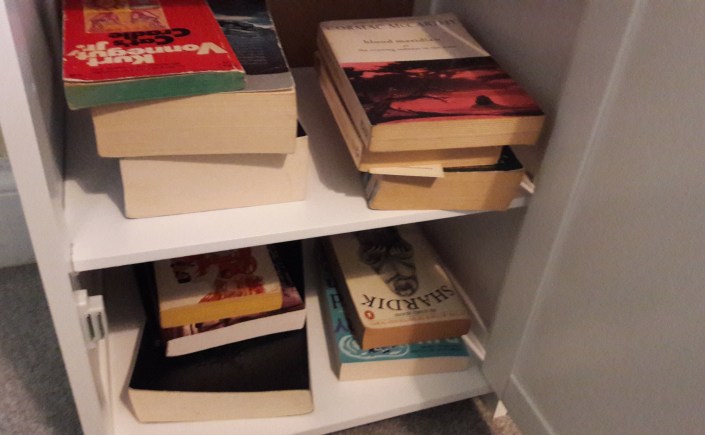
I was thinking today about the books I’ve bought but have yet to read, and about how to describe those books. My instinct was to refer to them as my to-do list, but then I decided that that didn’t really work, because they’re not a list. This is the point where most people would stop thinking about it, because it wasn’t even part of a conversation anyway. Nevertheless, I persisted, and thought about the word inbox as a possibility. Yes, that made sense. I get them, put them in the imaginary inbox until I take one, read it, and then transfer it to my imaginary outbox. Good, so the pile of books beside my bed (and the others in the other room: there are a lot of them) is my inbox. Not that I stopped thinking there though.

Continue reading

Why it’s Normal to Talk to Your Dog

Not that I’ve ever doubted that it’s normal, but it was nice to have it confirmed by this article I read today. I’ve spoken to three dogs so far today, on a variety of different topics. I spoke to one in particular more than the others, as we spent a good part of the day together. I variously asked about his logic behind marking his territory as frequently as he did, indicated the dangers inherent in crossing the road, explained to him where I was going when I left and gave him a rough indication of when I’d return, and generally enquired as to his wellbeing. And I still feel pretty normal. This also applies, by the way, to talking to cats and other pets; plants; and inanimate objects.

Continue reading

10-ish Things that Annoy Me about the Way People Use English (and 10 Things I’m Just Fine With)

Look at that, a list! Such clickbait. But I’m not sure how much of a list it’ll be: at the moment I can only think of three or four things to put on it, though perhaps I’ll think of more as I write. Because you see, I’m not sure there are so many things that really annoy me about the way native speakers use English. I’ve been thinking about this recently while looking round the internet to see what other people are writing about the English language. And there’s a lot of interesting stuff out there, but I noticed that a lot of people like to write about things that annoy them about the way people use English. Reading what they wrote, I realised that I don’t seem to get so annoyed about things like that. Maybe it’s because I’m a teacher so I’m used to understanding the reason behind a mistake. Maybe I’m just curious about why people say things the way they do.

I understood why these people got annoyed of course, and I know why we naturally don’t like when people say something differently from how we do. So I thought to myself: Are there things that annoy me? Let’s see what I can come up with…

Continue reading

Sunshine Blogger Award

Well, I know I said I’d write something about grammar or etymology, but then, how can one turn down the Sunshine Blogger Award? And there are plenty of more days ahead in which to indulge myself in the riches of English, so why not have a little break, eh, to enjoy a little sunshine? I probably won’t have to use so many italics on this one, and formatting all of those can be tiring.

So, I have to say a big thank you to Parvathy Sarat for her nomination. It’s an honour, and I strongly recommend you check out her blog, Trust Me, You’re Alive. How could you resist such a fascinating variety of topics as written by a scribbler, dancer, dog-lover, and an overthinker? Certainly three of those four describe me (I’ll let you decide which), so obviously her posts are great reading.

Let’s do this then.

Continue reading

“Besides” and “Anyway:” a Teacher’s Nightmare

This post is inspired by the moment I noticed that I finished a recent post with a sentence beginning with besides, and ending with anyway. Not so unusual, but it brought back some painful memories…

Quite a few years ago, I was teaching an IELTS class (IELTS is a tough Academic-English exam). The lesson was a vocabulary one, about using linking words in writing. Quite straightforward for me at that stage, as I’d been teaching for some time. I had a quick look at the main exercises (I’d like to say I wasn’t provided with much time to prepare the lesson, but I’m pretty sure my quick look at the materials was solely due to my overconfidence), and was satisfied: Ok, there’s furthermore, however, although, despite, in addition to… yeah, that’s easy, I’ve time to relax for a bit.

Into the lesson then, and everything was going ok. Ok, until I had a look at the exercise I’d just had the students start. It was pretty straightforward, the students had a text with gaps, and had to choose which words to put into the gaps. Normally, I’d get the answers from them afterwards, and get them to explain what they meant. Which would normally be fine, until I spotted that one of the words to be used was besides, and it was supposed to fit in the last gap. And I asked myself: What the hell does besides actually mean!?

Continue reading