The Error of our Ways

After doing my shopping today, I was approached by a young couple. They were from Argentina, and were travelling round Ireland as part of their journey across Europe. They were looking for the apartment they were couchsurfing in (I hate giving directions in Galway, as there are too many small, non-parallel streets, and no-one in Galway knows streetnames apart from the best-known ones).

I spoke with them for a bit and was impressed by their level of English. I knew immediately that they were Spanish speakers, but they spoke quite fluently, and were very easy to understand. Of course they made some tiny errors, none of which affected my ability to understand them, and I probably didn’t notice some other errors. That can actually be a drawback to teaching English: you get so used to some of the more common errors that you stop noticing them. Continue reading
Stop the Monkey Planet, I Want to Get Off

Have you seen the new Monkey Planet film?

The what?

Monkey Planet! You know the ones with the talking monkeys. That guy’s in this one, what’s his name, James Franco. It’s pretty good.

Monkey Planet!?

Yeah, you know the first one, it’s from the 60s, with the astronauts and they crash land on a planet with talking monkeys!

Are you ok?

Monkey Planet, it’s a classic, how do you not know it!

You’re talking nonsense, I’m leaving!

Monkey Planet!! Ah, putain, attend, en anglais c’est Planet of the Apes!

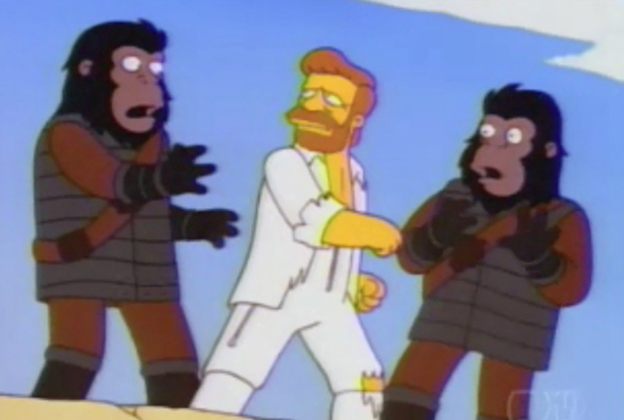
Monkey Planet. Beneath the Monkey Planet. Escape from the Monkey Planet. Conquest of the Monkey Planet. Battle for the Monkey Planet. Tim Burton’s ill-advised Monkey Planet remake. Rise of the Monkey Planet. Dawn of the Monkey Planet. Untitled Monkey Planet Sequel.

How many of these films would you like to see (Battle for the Monkey Planet sounds like it could be good fun to be honest)?

They might all sound like fun, but aren’t they lacking the grativas of the title Planet of the Apes? It’s a good thing that the film’s producers went with that title then. But that wasn’t always the case… Continue reading

Rain, Rain, Go Away

This was the view from my bus seat at about 7pm last night, somewhere in the midlands of Ireland. It’s not an uncommon sight in Ireland, especially here in the west. What’s always seemed strange to me is that we appear to be surprised when it rains here, even though it happens most of the year round (and I include myself in that we). Any morning when I wake up and see it’s raining I’m disappointed, even if it’s been raining for five or six days in a row. Maybe it’s that morning optimism that makes me hope it might be nice!

Regardless of whether we’re surprised or not, we do like to talk about the weather, but I suppose that’s pretty universal. It’s a useful topic for small talk with someone we don’t know: it’s never controversial and it’s easy to talk about. Continue reading

Pass Perfect

Are you watching the football?

Many of you living in Europe will hear some variation of this over the next few weeks. Actually, now that I think of it, those of you in the Americas will probably be asked that too, with the Copa América on, but perhaps not so often in the USA!

Football does tend to take people’s lives over during major tournaments. I’ve lost a lot of interest in football in recent years, mainly due to my perception that roughly 99% of professional footballers are arrogant, petulant manchildren, but I do love the atmosphere of major international tournaments.

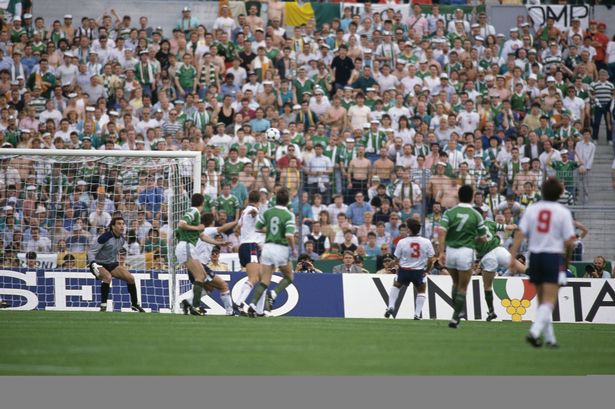
Partly it’s because they signify summer to me, and partly it’s because I’m lucky to have some great formative memories of football tournaments. My first ever sporting memory is of Ireland beating England at Euro ’88 thanks to Ray Houghton’s legendary header. I had no idea what it meant, but I knew it was good!

Continue reading

Orange is the new Norange

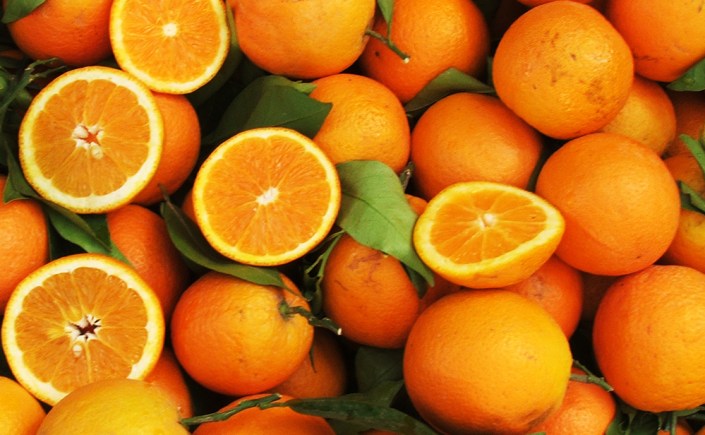
Orange – a versatile word, with the honour of representing both a colour and a fruit.

Which came first? The fruit, after which the colour was named. The story of how the fruit got its name is an interesting one. Most likely, the word derives from the Sanskrit नारङ्ग nāraṅga, meaning orange tree. You can still see similarities to this word in many modern languages: naranja in Spanish, for example.

Why don’t we say norange then? Continue reading