Profound

Being a response to the Daily Prompt: https://dailypost.wordpress.com/prompts/249091/

Profound, and its more common synonym deep, are quite versatile words. There’s the literal sense of the words, measuring how far down something goes. Though we tend to use just deep for that. You’re hardly going to go to the profound end of a swimming pool, perhaps to discuss Proust and the films of Ingmar Bergman.

And then there’s the more abstract meaning of the words, to describe something with an important, valuable intense meaning. Someone can be a very deep person, or a novel can have a very profound meaning. You can feel something, deep down in your heart. We tend to use profound more often in this sense though. You might make a profound statement, or have a profoundly inspiring experience. What makes profound so special that we reserve it for when things are so, well… profound? Continue reading

3 Days 3 Quotes | Day 2

I’ll get straight into today’s post, as part of the 3 Days 3 Quotes Challenge as suggested by Fatma:

https://aminfatma.wordpress.com/


A reminder of the rules of the challenge:

  1. Thank the person who nominated you .
  2. Post a quote for 3 consecutive days ( 1 quote for each day )
  3. Nominate three new bloggers each day.


Today, I really felt like sharing something about books: Continue reading

Wherefore Must Thou Misquote Me?

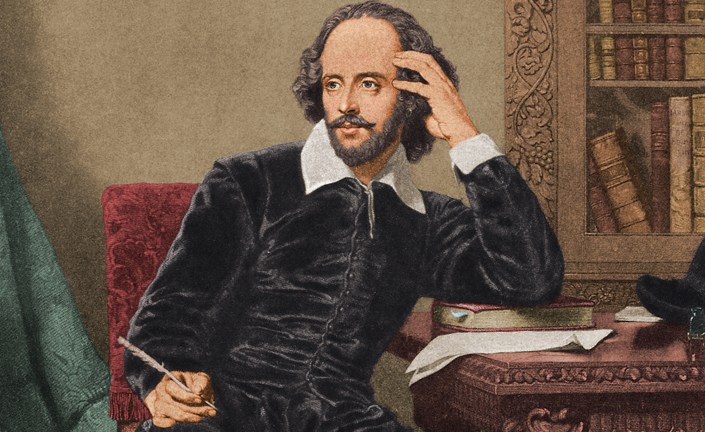
I could write a number of different posts about William Shakespeare, and I probably will end up doing so. Genius is a word that can be thrown around too easily, but I think we can safely apply it to Shakespeare. The number of words he coined, the beauty of his language, and the thematic richness of his works are incomparable to much else. But I won’t write too much about him now. What I’m interested in for the moment is when people get Shakespeare wrong. There are many of his quotations everyone is familiar with, regardless of how much they know about his work. But quite often, we misquote or misinterpret them. For example: Continue reading

3 Days 3 Quotes | Day 1

Hello all. I’ve been nominated for the 3 Days 3 Quotes Challange by the wonderful Fatma at https://aminfatma.wordpress.com/ I highly recommend you visit her blog, where I can guarantee you’ll find something of interest for everyone. Thanks for nominating me, and I hope I’m up for the challenge! The rules are:

  1. Thank the person who nominated you .
  2. Post a quote for 3 consecutive days ( 1 quote for each day )
  3. Nominate three new bloggers each day.

I’ll keep it short and simple and get straight to the quote: Continue reading

Muckanaghederdauhaulia

The above is the longest place name in Ireland, and is obviously quite a mouthful. It’s an Anglicisation of the original Gaelic name Muiceneach idir Dhá Sháile, which, as you all know, means “pig-shaped hill between two seas.” Most modern placenames in Ireland are similar Anglicisations. For example, many Irish towns begin with Bally- or Balli-, coming from the Irish word Baile (town) being part of the original name. A town like Ballycastle would have originally been name Baile an Chaislean (town of the castle).

Such Anglicisation can lead to redundancy. This is often the case with rivers, as many of them begin with Owen-, from the Irish word abhainn, meaning river. So Abhainn Buí, meaning the Yellow River, was translated to the River Owenboy.

Some pretty ordinary sounding placenames have such origins, but some can be a bit of a mouthful due to some clumsy translation: Continue reading

“Ok?” “Okay!”

Ok (or okay) is one of those words (like hiccup/hiccough), wherein I always thought the different spellings could be attributed to one being an older, more formal spelling of the word, and the other a modern abbreviation. I assumed that okay was the original spelling, and ok the modern version, after some clever individual realised that the two letters pronounced one after the other sounded the same as okay. But like hiccough and hiccup, I was wrong to assume so. Continue reading

Unstoppable

A response to the daily prompt: https://dailypost.wordpress.com/prompts/unstoppable/

As anyone who’s had to learn English knows, it can be a frustrating, illogical language at times. It can be hard to find hard and fast rules, and when there are rules, there are always exceptions.

The word unstoppable though, is a nice example of how sometimes thinking logically about English makes sense. Continue reading