The Ten Most Common Words in the English Language

Before finding out what they are, please have a guess at what you think the ten most common words in the English language are (note that by word I mean the main word form, which includes other forms of that word. For example, only dog would appear in the list, not dogs; or have might appear but not has, had or having). So you can’t see the list by mistake, here’s a picture of some puppies. Scroll past them (if you can) for the list. Continue reading

Hallowe’en Reads: M.R James – Collected Ghost Stories

Like humour, horror doesn’t always age well. What we find scary can change over time, largely because surprise is usually one of the main elements of horror. If something comes out of nowhere, and we don’t understand it and could never expect it, it’s scary. The first time we hear of a vampire, and read about them or see them, it’s a terrifying idea. But with repetition, it becomes known. We know what vampires do, know all the rules. So either you need to play around with people’s expectations about vampires, or you do something else.

You can this effect with lots of older ghost stories. I remember quite a few years ago buying an anthology of Victorian ghost stories, and giving up on it after a while. Some of the stories were interesting and undoubtedly well-written, but none of them was scary. Usually they involved someone staying at an old house reading about some old murder, or seeing someone they don’t recognise around the house. Then at the end they see a ghost and that’s it! Just featuring a ghost was novelty enough to shock readers, especially because most of the stories wouldn’t have been initially presented as ghost stories.

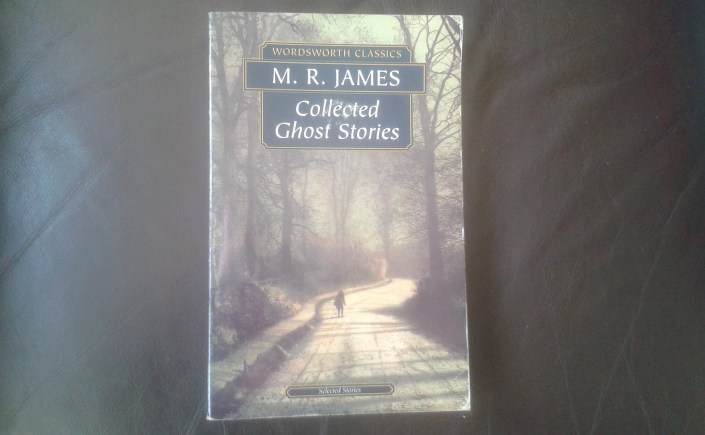
So when I picked up a cheap second-hand copy of M.R James’ Collected Ghost Stories, I wasn’t expecting too much from them. Mostly written in the first 25 years of the 20th century, I thought they would simply be far too polite and gentle to be scary. And beginning the first story, my assumption seemed to be confirmed. Most of his stories involved awkward academics puttering around quaint English villages, searching for old ecclesiastical manuscripts. And yet… Continue reading

Hey Baby!

Baby One More Time

Be My Baby

Baby I Love You

Baby Blue

Baby Baby

Baby It’s You

Baby Boy

Baby Come Back

…and so on. Why is baby (or babe) such a romantic word, that it would be featured in so many song titles like that? We’re so used to it, but if you step back and think about it, it’s a bit strange. There’s no obvious connection. Austrian ethnologist Konrad Lorenz suggested that babies’ cuteness was an evolutionary advantage, providing an incentive for adults to look after them. He believed that men sought similar signs of attraction in women, such as large eyes. Men calling women baby would therefore be a sign of this attraction. That seems a bit too easy though. Even if such an attraction did exist, it would be subconscious, so it would be unlikely that men would consciously refer to women as baby for that reason. And of course now baby is used across genders, though that’s probably more a sign of increased gender equality. Continue reading

I Shall be Released

Browsing the internet yesterday, I noticed an article headlined thus: Marvel’s Dr. Strange has already released in the UK (and here in Ireland too, so I might catch it soon). Nothing  too strange (no pun intended, but gladly accepted) there, you might think. But that has already released… really bothers me. It shouldn’t, but it does. Why? Because every fibre of my pedantic being tells me that it should be:

Marvel’s Dr. Strange has already been released in the UK.

Let’s step back for a moment and look at the grammar behind that feeling. Continue reading

Hallowe’en Reads: “Gramma”

Any list of recommendations for Hallowe’en reading would seem incomplete without an entry from Stephen King. I’ll forego some of the more obvious choices from among his novels though, and instead choose one of his shorter short stories: “Gramma.”

The premise is very simple: 10-year old George Bruckner lives with his 14-year old brother Buddy and their single mother Ruth. Staying with them is Ruth’s ancient, senile, bedridden grandmother. When Buddy breaks his leg playing baseball, Ruth goes to the hospital out of town to see him, leaving George alone to look after Gramma. Continue reading

S: the Story of a Letter

If you’re a native English speaker, you probably don’t think about individual letters too often. Why would you? You use them pretty much automatically. So if I asked you to talk about the letter s, you might not have much to say. But for people who have to learn English, it’s quite important, and can prove to be a tricky little customer.

The first area of confusion is with plurals. Most languages don’t add s to make a plural, like English does, so it can be very hard for speakers of those languages to remember to add the s. Even when some languages do add an s, it’s in a slightly different way. Portuguese and Spanish, for example, often add an s to a noun to make it plural. But, they also add an s to adjectives describing those nouns, leading a lot of Portuguese and Spanish speakers to do the same thing in English. French is similar, but the s is generally silent, meaning that a lot of French speakers don’t pronounce it even if they write it.

But the most common area of error is with third-person singular verbs. That might sound like gibberish, but let me demonstrate: Continue reading

Hallowe’en Reads: House of Leaves

I love Hallowe’en, always have since I was a child. I loved the sense that the barrier between our reality and a mysterious, dangerous plane of existence might be opened for one night a year, and anything could happen. It was terrifying and exciting at the same time. And though now I don’t believe in the supernatural, I still love horror films and stories. So between now and Hallowe’en, I’ll share my thoughts on some of my favourite horror fiction.

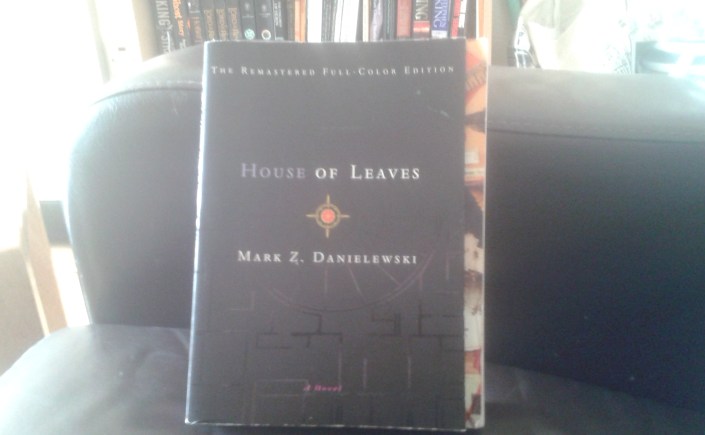
I’ll start with House of Leaves, by Mark Z. Danielewski (2000). Continue reading