Covfefe

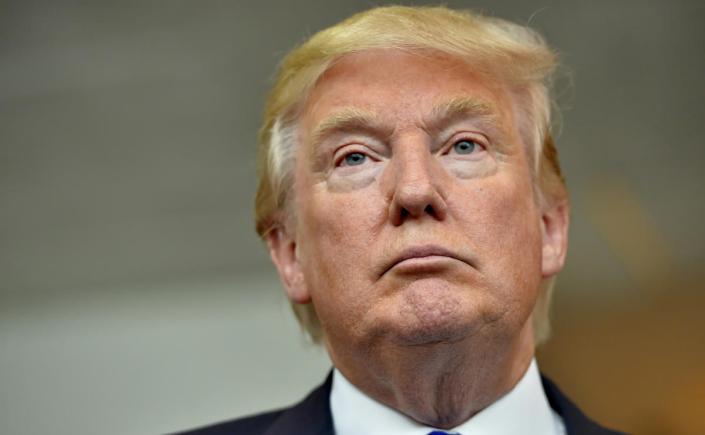
By now you might be aware of Donald Trump’s latest addition to the English language: covfefe. If you haven’t heard yet, at 12:06am Washington time last night, the President of the United States tweeted:

Despite the negative press covfefe

…and that was it! Obviously he was deliberately tantalising us with this new word he’d coined, throwing it out into the world and waiting for us to figure out its meaning based on subtle clues he’s left, while he slept soundly. Here are some of my ideas:
Continue reading

Trump’s Triumph?

So Donald Trump is being hailed in some quarters as “presidential” for his address to Congress last night. And fair enough. Though there didn’t seem to be much substance to it, his tone was noticeably more measured than any of his public appearances to date. Not that that was particularly hard mind you. When you think about it though, describing his as presidential seems like something of a back-handed compliment, and at best damning him with faint praise. The word presidential means like or related to a president, so isn’t that the least that would be expected of him? Surely he should be presidential by default? But I understand people being pleasantly surprised. Regardless of whether you agree with his policies or not, it’s hard to deny that he’s had a very direct, blunt style, in contrast to his predecessors. Continue reading

They’re all racist, aren’t they?

But the Irish are racist, aren’t they? (internet commenter, 2016)

I don’t mean to be racist, but the Poles are the racist f**kers on the planet. (idiot who won’t be named, 2000)

Recently, I came across the first sentence above, somewhere deep in the comments section of an article I’ve long since forgotten about. I was surprised, as I didn’t consider myself to be racist, nor did the majority of my compatriots seem to be. Reading on, things were cleared up a little.

I came to realise that the person was referring to a belief that Irish-Americans are racist. Which let me off the hook, but then I remembered that the article was about an Irish actor, as in, from Ireland, so the person was not only indulging in wild generalisations, but also conflating being Irish-American with being Irish. There was a whole heap of confusion going on. Continue reading

Shut the Gate

No-one would ever accuse the average tabloid writer of a great love for the breadth of the English language. They go for a particular sensationalist and informal tone, with a specific vocabulary, and stick with it. Unlike broadsheet journalists, who tend to play it down the middle or go highbrow, they have a particular house style. This is even more true for tabloid sub-editors, who write the headlines, except for the odd occasion when they go above and beyond the call of duty.

I’m thinking of a specific journalistic trend, which, in fairness, isn’t restricted to tabloid journalism. And that trend is the tendency to add the suffix -gate to a word to refer to any manner of scandal. Some notable recent examples include Continue reading

Turkey: International Bird of Mystery

Since most of us probably won’t be eating it for another 11 or 12 months, I think it’s time to give the turkey its due before we forget about it again.

The word turkey (used to refer to the bird) has a surprisingly convoluted etymology. And no, it’s not a coincidence that it’s also the name of a country… Continue reading

Boxing Day

Today is Boxing Day, traditionally a day of extreme rest for those who celebrate Christmas, due to the exhaustion caused by the previous day’s eating, drinking, and resting. Unless you’re one of those simply awful people who get up at 5am to queue for the stock that clothes shops couldn’t sell during the year, now reduced in price. Then it’s probably quite a tiring day, but that’s your fault, isn’t it? For the rest of us it’s a day for watching Willy Wonka & the Chocolate Factory or Raiders of the Lost Ark, and eating Quality Street and turkey & ham sandwiches. Continue reading

The Many Names of St. Nicholas

Who’s going to be coming down your chimney tomorrow night, sack of gifts in tow? Santa Claus? Santy? St. Nick? Or perhaps Father Christmas?

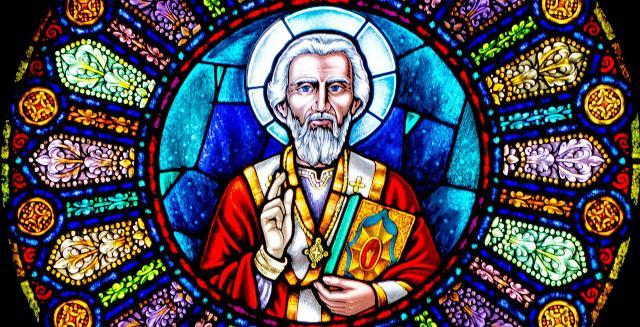
The most common name for the chap is of course Santa Claus, which comes from the Dutch Sinterklaas, in turn derived from St. Nicholas. A Greek bishop working in Asia Minor (modern-day Turkey), he became famous for a secret habit of gift-giving. Also, because of the many miracles associated with him, he also became known as Nikolaos the Wonderworker, and it’s a shame that name hasn’t remained popular. Continue reading