The Heat is on

It’s that time again, as every four years we’re glued to the TV to watch the Olympics. I always loved it, especially the track and field events. But one word that I’ve always found a little strange is: heat. As in, a qualifying race for a final. Where does it come from?

It seems that the word was first recorded with this meaning in the 17th century, then being used to refer to a run to prepare a horse for a race. Or warm it up, if you will.

For a lot of the more elite athletes, it pretty much has the same meaning: to warm up, generate some heat, for the final.

I hope you’re all enjoying the Olympics: I’ll be spending most of time trying to figure out the name of the exact shade of green the diving pool has turned.

Waxing Lyrical

A lot of pop songs tend to wash over us and we don’t really pay attention to the lyrics: I mean, they’re usually not important with pop music anyway, are they!?

It’s interesting to really listen to some songs though, as there’s some strange stuff hidden in there. For example:

If it still seems harmless, let’s have a look at the lyrics: Continue reading

The Country that’s also an Acronym

An acronym is a word formed whereby each letter represents the first letter(s) of a word. For example:

radar (radio detection and ranging)

laser (light amplification by stimulated emission of radiation)

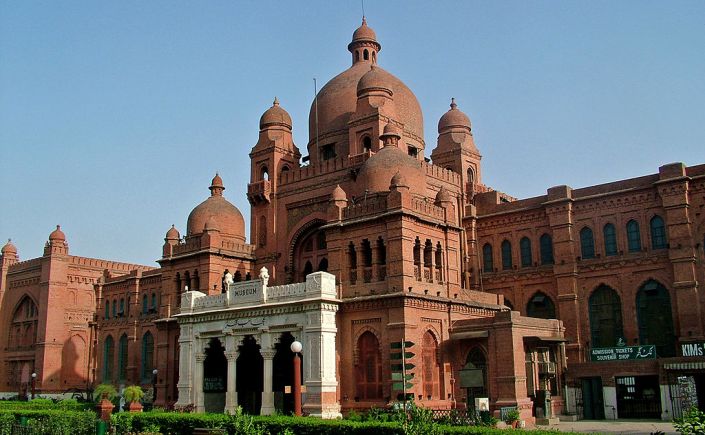
and… Pakistan. You might not expect the name of a country to be an acronym, but such is the case with Pakistan. While the name means Land of the Pure in Urdu and Persian, it was first coined by Choudhry Rahmat Ali, a Pakistan Movement activist advocating for the creation of an independent state from India’s Muslim-majority regions.

The name was derived from the names of the five northern regions of the British Raj: Punjab, Afghania, Kashmir, Sindh, and Baluchistan. The i was added for ease of pronunciation. Sometimes there’s an interesting history behind a name of a place we don’t think too much about, and it can tell us a lot about a country.

Goodbye Norma Jean

Norma Jean Baker, Robert Zimmerman, Reginald Dwight.

or…

Marilyn Monroe, Bob Dylan, and Elton John.

You probably know them better by those names. Many famous artists have chosen to operate under stage names. What makes someone decide to change the name their parents gave them?

Sometimes there’s a fairly understandable logic to it. Fred Astaire’s mother apparently felt that their surname Austerlitz was too reminiscent of The Battle of Austerlitz from the Napoleonic Wars, and didn’t want people to think of such violence when they saw her son (who was already demonstrating great talent at a young age) perform. One always can’t help but wonder if she thought a less “European”-sounding name might make him more popular.

William Henry Pratt is not a name to strike fear into many hearts. But Boris Karloff? Much more menacing and mysterious, appropriately so, for the man who played Frankenstein’s monster and The Mummy, among other horror characters. And in contrast to Fred Astaire’s change, here there was probably a deliberate attempt to sound more more exotic and enigmatic, vaguely Eastern European or Russian.

But in other cases, the stage name is just, well, more showbiz. Few people would argue that Marilyn Monroe sounds more glamorous than Norma Jean Baker. There’s nothing wrong with Norma Jean of course, but there’s something much more seductive about those liquid l’s and r’s, than the more workaday Norma Jean Baker. Also, her name probably makes you think of bakers, and though there’s nothing wrong with bakers, all that flour and those puffy white hats aren’t particularly sexy. Elton John and Bob Dylan both trip off the tongue than Reginald Dwight (still the only case I know of of Dwight being a surname) and Robert Zimmerman.

It’s funny though, that on Candle in the Wind, probably the best-known song on Elton John’s 1973 album Goodbye Yellow Brick Road, refers to Marilyn Monroe as Norma Jean, ostensibly as a mark of respect to her. While the lyrics, like all of Elton John’s songs, were written by Bernie Taupin (real name), I wonder how he felt when he first read them, and if it made him think of any similarities to his own situation, and maybe if in the future someone will write a tribute to Reginald Dwight. At least it’s pretty easy to rhyme with.

Is Good Grammar Necessary?

This is a question that always sparks debate, and we probably all know people whose views fall on opposite sides of this debate. Some are sticklers for grammar, pouncing on any tiny error with relish. Others put less thought into how they use language and make errors without regard to how well they’re understood. And most people fall somewhere in between these two extremes. If you’ve ever been concerned about whether you have good grammar or not, then let me reassure you that your grammar is almost definitely much better than you think. Such is usually the case for most people in terms of their native language. But to know exactly what we mean by having good grammar, first we need to look at what grammar is.

What is grammar? Continue reading

Seal

The English language has an incredibly rich vocabulary. For every situation one can imagine, there seems to be a variety of words and phrases available to choose from, each with their own subtle inflections of meaning.

And yet at other times, the language seems curiously economical, using one word for a variety of meanings. Take seal, for example. Your first instinct when you think of this word will probably be to picture the marine mammal. And why not, they’re cute, especially the pups. Continue reading

Might is Right?

Teacher: Yes, that’s correct: We say “In the future, the planet will be warmer.” So when we’re talking about the future, we use will to…

Student: But teacher you can’t!

Teacher: Excuse me?

Student: You can’t say will because you’re not sure! What if things change? You have to use might, because maybe it won’t be warmer in the future! You can’t be certain!!

Teacher: Ok, tell me: what day will it be tomorrow?

Student: Saturday.

Teacher: Ah, but how can you be sure it’ll be Saturday? What if the world ends this evening? Continue reading