Fata Morgana

I came across this word today while I was online. I’m not sure how I got to it, as my wanderings around the internet can be quite aimless, but something brought me to a list of Werner Herzog films, and seeing mention of his 1971 film reminded me of the term.

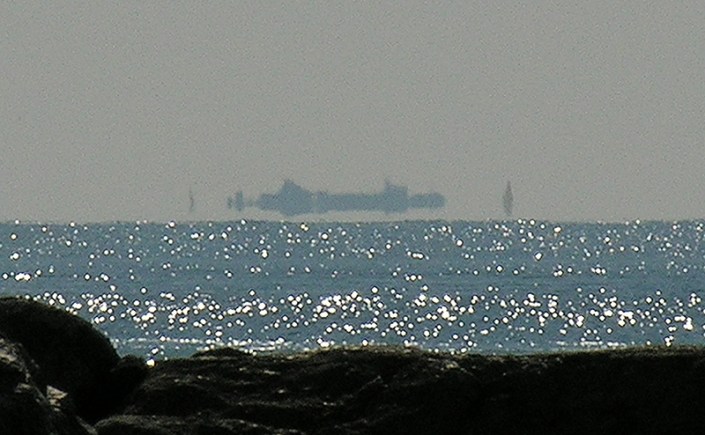
If you’re not familiar with it, it’s simply a fancy way to refer to a mirage. More specifically, it was originally used to refer to a specific type of mirage which can often be observed in the Straits of Messina between Sicily and mainland Italy. The name is the Italian translation of Morgan Le Fay, sorceress/witch/fairy half-sister of King Arthur in British legend. The effect was so named because people believed that the illusions they saw were her castle in the sky. And looking at this recent example from China, you can understand that: Continue reading

The Ten Most Common Words in the English Language

Before finding out what they are, please have a guess at what you think the ten most common words in the English language are (note that by word I mean the main word form, which includes other forms of that word. For example, only dog would appear in the list, not dogs; or have might appear but not has, had or having). So you can’t see the list by mistake, here’s a picture of some puppies. Scroll past them (if you can) for the list. Continue reading

Happy Hallowe’en!

I hope you have an enjoyable and suitably spooky day today, whether you’re dressing up, trick or treating, or staying in with some horror movies. To celebrate, I’m going to have a look at some of the words we associate with this day. Continue reading

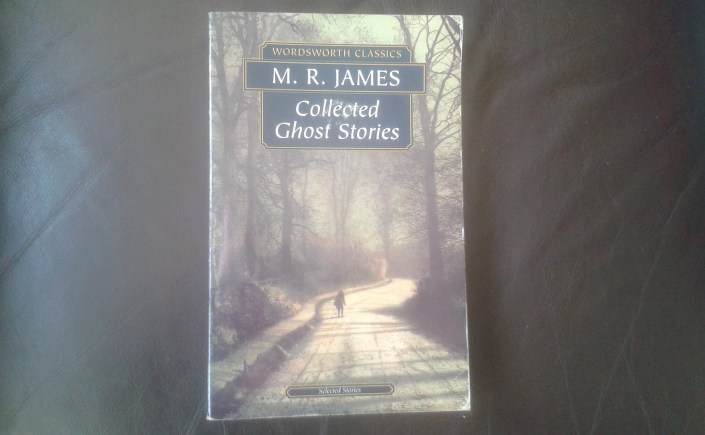
Hallowe’en Reads: M.R James – Collected Ghost Stories

Like humour, horror doesn’t always age well. What we find scary can change over time, largely because surprise is usually one of the main elements of horror. If something comes out of nowhere, and we don’t understand it and could never expect it, it’s scary. The first time we hear of a vampire, and read about them or see them, it’s a terrifying idea. But with repetition, it becomes known. We know what vampires do, know all the rules. So either you need to play around with people’s expectations about vampires, or you do something else.

You can this effect with lots of older ghost stories. I remember quite a few years ago buying an anthology of Victorian ghost stories, and giving up on it after a while. Some of the stories were interesting and undoubtedly well-written, but none of them was scary. Usually they involved someone staying at an old house reading about some old murder, or seeing someone they don’t recognise around the house. Then at the end they see a ghost and that’s it! Just featuring a ghost was novelty enough to shock readers, especially because most of the stories wouldn’t have been initially presented as ghost stories.

So when I picked up a cheap second-hand copy of M.R James’ Collected Ghost Stories, I wasn’t expecting too much from them. Mostly written in the first 25 years of the 20th century, I thought they would simply be far too polite and gentle to be scary. And beginning the first story, my assumption seemed to be confirmed. Most of his stories involved awkward academics puttering around quaint English villages, searching for old ecclesiastical manuscripts. And yet… Continue reading

Hey Baby!

Baby One More Time

Be My Baby

Baby I Love You

Baby Blue

Baby Baby

Baby It’s You

Baby Boy

Baby Come Back

…and so on. Why is baby (or babe) such a romantic word, that it would be featured in so many song titles like that? We’re so used to it, but if you step back and think about it, it’s a bit strange. There’s no obvious connection. Austrian ethnologist Konrad Lorenz suggested that babies’ cuteness was an evolutionary advantage, providing an incentive for adults to look after them. He believed that men sought similar signs of attraction in women, such as large eyes. Men calling women baby would therefore be a sign of this attraction. That seems a bit too easy though. Even if such an attraction did exist, it would be subconscious, so it would be unlikely that men would consciously refer to women as baby for that reason. And of course now baby is used across genders, though that’s probably more a sign of increased gender equality. Continue reading

Hallowe’en Reads: “The Three D’s”

I’m 12 or 13, and it’s Saturday night. I’m reading The 4th Armada Ghost Book, having only recently plucked up the courage to start reading and watching things explicitly identifying themselves as horror. Some of the stories are a little spooky, but I’m disappointed that none of them are as terrifying as I’d expected. Until, I finish reading “The Bus Conductor,” and begin reading “The Three D’s.” I had no idea before I started reading the story that I would be scared out of my wits afterwards… Continue reading

Hallowe’en Reads: The Haunting of Hill House

                               No live organism can continue for long to exist sanely under conditions of absolute reality; even larks and katydids are supposed, by some, to dream. Hill House, not sane, stood by itself against its hills, holding darkness within; it had stood so for eighty years and might stand for eighty more. Within, walls continued upright, bricks met neatly, floors were firm, and doors were sensibly shut; silence lay steadily against the wood and stone of Hill House, and whatever walked there, walked alone.

Well if that’s not an opening paragraph that makes you want to read the rest of the novel, I don’t know what is. Published in 1959 by Shirley Jackson, The Haunting of Hill House is widely regarded as one of the finest horror novels, and, in my opinion, rightly so. Continue reading