The Error of our Ways

After doing my shopping today, I was approached by a young couple. They were from Argentina, and were travelling round Ireland as part of their journey across Europe. They were looking for the apartment they were couchsurfing in (I hate giving directions in Galway, as there are too many small, non-parallel streets, and no-one in Galway knows streetnames apart from the best-known ones).

I spoke with them for a bit and was impressed by their level of English. I knew immediately that they were Spanish speakers, but they spoke quite fluently, and were very easy to understand. Of course they made some tiny errors, none of which affected my ability to understand them, and I probably didn’t notice some other errors. That can actually be a drawback to teaching English: you get so used to some of the more common errors that you stop noticing them. Continue reading

IT

Where would the English language be without this simple two-letter word? Without it we wouldn’t be able to refer to an object that isn’t clearly male or female for a second time, without repeating the whole word. Like any pronoun it makes speech and writing simpler and more fluid.

But it also has its little quirks. Like when we say:

It’s raining.

What’s raining?

Just, it, you know? It’s raining!

See also it’s cold, it’s quiet, it’s five o’clock etc.

The meaning of these sentences wouldn’t cause much difficulty for any students, beyond absolute beginners. Yet some people still get confused by them because they expect it to refer to something concrete. This is another classic case of confusion caused by thinking about what grammatical rules would seem to demand, as opposed to looking at the practical use of language. It might not seem to make sense to use it when it doesn’t refer to a clear object, yet, every English sentence needs a subject, and impersonal verb phrases don’t have an agent doing the action, so let’s just stick It at the beginning of the sentence and not think too much about it. Continue reading

Teaching on TV

9am:

Teacher: Good morning class!

Class: Good morning!

*teacher writes Hello, my name is Niall. on the board*

*teacher points to self, says Hello, my name is Niall*

Teacher: Now Saud, you!

Pedro: Hello, my name is Saud.

Teacher: Very good! Now Anna, you.

Anna: Hello, my name is Anna.

Teacher:Yes Anna, very good! Now Chen, you.

Chen: Hello, my name is Anna.

*everyone laughs*

Teacher: Ha ha, no Chen, your name is Chen!

Chen: Ah sorry! Hello, my name is Chen!

Teacher: Excellent!

9.02am:

*bell rings*

Teacher: Ok everyone, before you go, I want you to write Hello , my name is… 50 times on a suitably blank surface. Class dismissed!

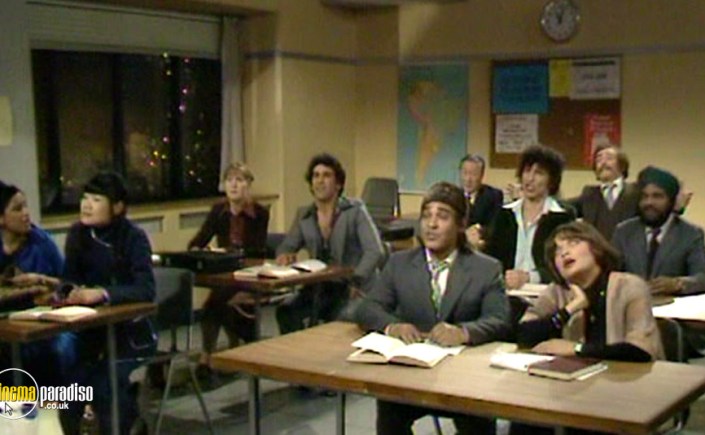
I think the above is pretty representative of most of the depictions of English-language classes I’ve seen in films and TV programmes. I know everyone gets annoyed when their profession is depicted on screen and it’s quite inaccurate. We can’t expect film and TV writers to be experts in a job that might appear briefly in only one scene. But what annoys me about the way English classes are shown is that it’s indicative of a lot of people’s misconceptions of English-language classes.

Let’s look at what’s wrong with the lesson above.

Continue reading

My Baby Don’t Care for Shows…

My love don’t cost a thing.

She don’t love you (like I love you).

If you don’t understand him, an’ he don’t die young, He’ll prob’ly just ride away.

She don’t know.

He don’t deserve you anymore.

She don’t let nobody.

She don’t like the lights.

Your inner (or, indeed, outer) grammar pedant may have cringed at the recurring word in the lyrics and song titles above: don’t.

Doesn’t! that shrill little voice inside shouts, doesn’t!!

Continue reading

Up with This I will not Put!

This is the sort of English up with which I will not put.

– Winston Churchill (probably) on an editor mangling a sentence in his memoirs that had ended in a preposition

Can you end a sentence with a preposition? This has long been a subject of debate in grammar cirlces, though currently most people suggest that it’s fine.

Before we look at whether ending a sentence with a preposition is acceptable or not, we should first ask: what is a preposition? They’re tricky little words such as to, at, in, on, under, with, above etc. Basically they’re like connective tissue, or mortar between bricks. Or little tugboats pulling heavy ocean liners around. They don’t seem to do much on their own, but we need them to join the main concepts of sentences together.

Continue reading

Ba Ba Ba Ba Baaa…

I’m loving it!

Is this incorrect? Should we insist that one can only say I love it?

Going by what the grammar books say, then yes, I love it is strictly the correct form. To love is a stative verb, which means it  cannot be used in a continuous sense, (e.g. I love, I’ve loved and I loved are all fine, but never I’m loving or I was loving). Some other common stative verbs include to know, like, want, believe, agree, hate and understand. Try putting I’m before them and an -ing at the end and see if it sounds strange.

Continue reading

I amn’t, am I?

 I am not  I’m not  I’m not  Am I not?  Aren’t I?
 You are not  You’re not  You aren’t  Are you not?  Aren’t you?
 (S)he is not  (S)he’s not  (S)he isn’t  Is (s)he not?  Isn’t (s)he?
 We are not  We’re not  We aren’t  Are we not?  Aren’t we?
 You are not  You’re not  You aren’t  Are you not?  Aren’t you?
 They are not  They’re not  They aren’t  Are they not?  Aren’t they?

Spot the odd ones out?

I’ll give you a little time… Continue reading