Coat of Arms (Featuring Neither a Coat nor Arms)

Today, you can get an idea of how my “creative” process works. On Saturday morning I was going for a run around the university here, NUI Galway. In order to ensure I met my modest distance target, I went down a little-used path, behind the old quadrangle.

Continue reading

Eureka!

You might know the story of the word Eureka. Or at least that it involves an old man in a bath. The ancient Greek scholar Archimedes reportedly stepped into his bath, noticed the water level rose. Realising that the water displaced must be equal to the volume of his foot, and that he had figured out a way to accurately measure the volume of irregular objects (which was a big deal at the time), he exclaimed Eureka! twice.

Continue reading

Luxembourg

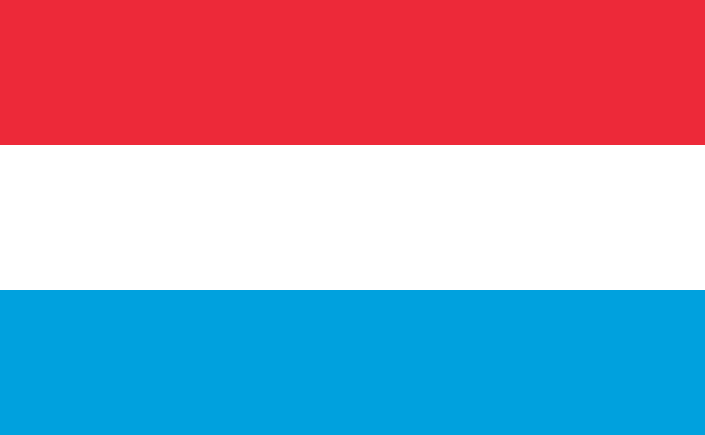
While mentioning Luxembourg yesterday, I was struck by its name: we usually associate the suffix -bourg/burg with towns and cities, and in American English, burg is used as an informal word for town. So why would a country (albeit a tiny one) have a name like a town? I decided to investigate… Continue reading

A Bit of a Do

I’ll be getting ready for my office Christmas party soon.

And by getting ready I mean probably changing my clothes.

it reminded me of a now probably old-fashioned Irishism, which is to refer to any kind of social gathering on a larger scale and more  than simply going to the pub as a do.

Sorry, I can’t go out tonight, we’re having our work Christmas do.

We’re having a bit of a do next week, if you want to come.

I’ve been invited to the mass, but I won’t be able to make it, so I’m just going to the evening do. Were you at their engagement do? Continue reading

Surnames

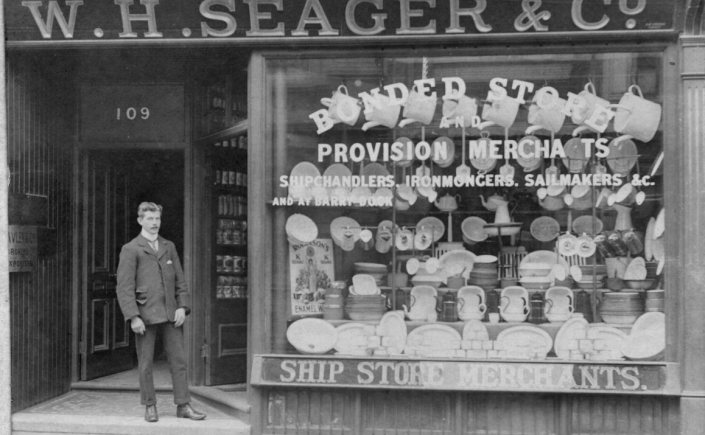
Have you ever thought about your surname? Do you know where it comes from, what it means? Many English-language surnames are derived from jobs: Continue reading

An Irish type of English

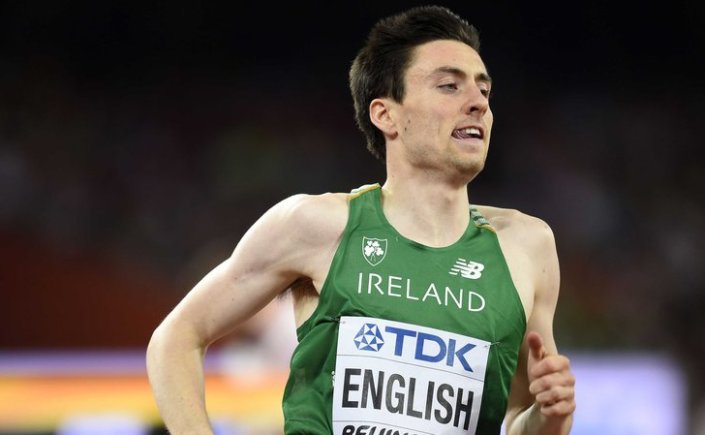
It might surprise some people to notice how common the surname English is in Ireland.  But there is a logic to it. The surname, in a variety of forms, was actually quite common around different areas of the modern-day United Kingdom, being recorded as far back as the 12th century. With the variety of different tribes and ethnic groups in these islands, and Europe in general, the name English was given to someone to denote that they were of Anglo-Saxon origin, particularly in border regions where lots of mingling would be expected.

The more common surname Walsh has a similar history. This may be less surprising when one considers how it’s still often pronounced in the west of Ireland: Welsh. And of course there’s Scott too!

Another surname with a seemingly similar origin is Ffrench. Yes, there are two f‘s, that’s not a typo. It’s not so common, but is to be found around my hometown of Galway, being the name of one of the 14 historically powerful and wealthy families of the city, who were known as The Tribes of Galway. At first I assumed it simply meant, well, French. Given the extent to which Norman culture influenced Ireland after the invasion of 1169, it wouldn’t be surprising. That influence is still evident in many Irish names. Burke comes from the Irish De Búrca, which in turn comes from the Norman De Burgo. Any name with Fitz is of Norman origin, with the prefix meaning son of. So Fitzgerald, for example means son of Gerald. And yet, while Ffrench is French in origin, it doesn’t actually mean French. It comes from the old Norman Irish name Defraine, which has been anglicised in many forms such as Frayne, Freyne, Freeney, French, and Ffrench. Defraine originally comes from the French word Frêne, meaning place with ash trees.

I love how surnames developed simply as a means to give us information about someone, like what their job was or where they were from. In your country and language, do people have surnames which come from nearby nationalities?

What’s in a Name?

I thought today I’d write a short post about some common names, and their origins. I’m always interested in names, where they come from, and the links between names and other names, and words in general. Here are a few of my favourites: Continue reading