Into or In To?

Well, it depends, doesn’t it?

Even if you’ve never thought about it before, it’s perhaps not too surprising that the word into is a combination of the words in and to. If you think about any sentence in which you might use the word, it clearly combines the meaning of both:

He walked into the room.

To is there because there’s movement, and to usually comes after verbs of movement. In is there because he ends up in the room. Easy. But, does this mean we can always replace in to with into?


Continue reading

Write or Wrong

Have you ever wondered why some words like write and wrong begin with a silent W?

Of course you haven’t, but luckily for you, I have.

Continue reading

All Souls’ Day

Or if you prefer, The Day of the Dead. Which is today, because confusingly, yesterday was All Saints’ Day (AKA All Hallows’ Day). Both days are quite different though.

Continue reading

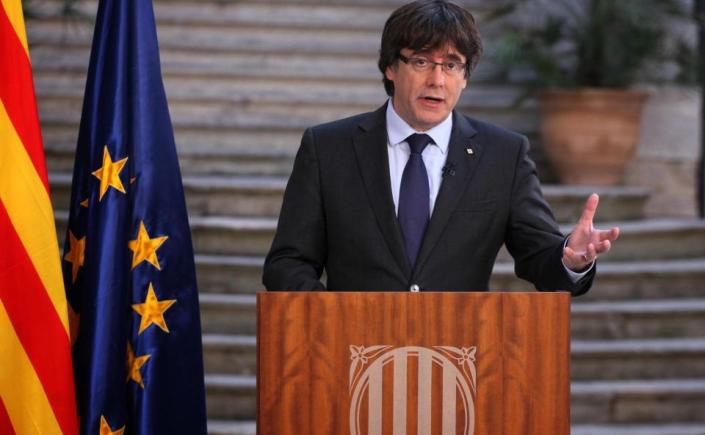
Puigdemont: a Pronunciation Guide

Another couple of weeks, another European leader whose name we need to figure out how to pronounce.

Continue reading

A Touch of Diaeresis

Can you think of an English word, not borrowed from another language, that has an accent or other diacritic? (a diacritic is simply any glyph added to a letter: see here for examples).

Continue reading

Riveting Stuff!

Have you ever noticed that riveting can have two meanings? It can mean fascinating, but also the action of fixing rivets (metal pins) to a surface (I was thinking about this recently after hearing someone talk about the riveters who worked on the Titanic). It might seem odd that it can have these two meanings, but if you think about it, it makes sense.

Continue reading

Less or Fewer?

A pretty simple one today: this is something that many people are curious about. Both are clearly similar, but what’s the difference between them?

Continue reading