The English Alphabet

Carrying on from yesterday’s look at the NATO phonetic alphabet, I thought today I’d spend a little time thinking about the regular English alphabet in general. It’s something we take for granted, but there are plenty of interesting things about it. Continue reading

“‘M!’ As in ‘Mancy!'”

It’s easy to forget that there are other alphabets other than one’s own. Not just languages which use different characters, or languages which use the same Latin alphabet as English, but without some letters or with some additional ones. There are other alphabets which we come across a lot which we don’t think too much about. Like the International Radiotelephony Spelling Alphabet, or as it’s more commonly known, the NATO phonetic alphabet. Continue reading

Knowledge is Power

What does it mean to know something, or someone? To know is such a common verb that we use all the time, but when you really look into it, it becomes quite complex.

Defining it seems fairly straightforward: it means to understand something, or generally have knowledge about something. But consider the two following sentences: Continue reading

May Day!

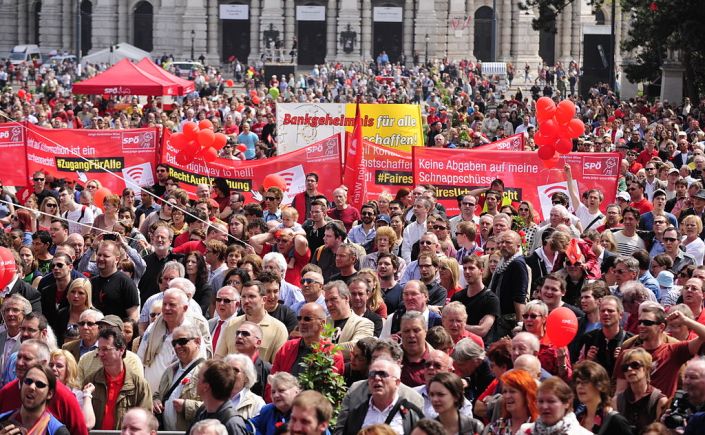
Happy May Day! There’s a good chance that today is a holiday for you (if it’s not, my condolences). Initially a Spring Festival in the Northern Hemisphere, you can still find many celebrations based on old Pagan traditions. In the late-19th century, 1st May was chosen by the Second International as the date for International Workers’ Day, in commemoration of the Haymarket Affair, which took place in Chicago in 1886.

Like the names for the other months, May is Latin in origin. The month was named for Maia, the Roman goddess of the spring and growth.

You may also be aware, by the way, that in addition to being the name of the holiday, Mayday is also used as a distress call in the field of aviation. Though note that in this case, it’s one word with only the M capitalised. This is in contrast to the holiday, which is May Day, because it’s an actual day. You might have heard something of the origin of the term Mayday. When I first heard about it, it sounded like one of those stories that sounds too be cute to be true. But there is in fact some truth to it. Continue reading

Isn’t She Lovely?

Isn’t she wonderful?

The radio seems to be inspiring me a lot at the moment. While listening to the above Stevie Wonder classic this morning, the phrasing of the title struck me as a little odd. It might not initially seem too strange, as all native speakers at least are quite used to it. But performing the slight change of doing away with the contraction, makes it seem quite different:

Is she not lovely? Is she not wonderful?

Is it not a lovely day?

Is that not a great idea?

First of all, it now feels a lot more negative, because we can see and hear the full not. And to me, it seems a lot more like a question. When we use the normal, contracted phrase, it’s technically a question, but of course that’s not what we actually mean. What we’re basically saying is: She’s lovely. She’s wonderful. We don’t really expect disagreement. Why use a question then? And more specifically, why use a negative question? Continue reading

Cover Version

No matter how well you’re learning a language, and how confident you feel in handling the basics, encountering it in a natural context will always throw something at you that you just can’t figure out. You can look at it, try to figure out its meaning from the context, guess at its meaning from its spelling and similarity to other words, but it simply defies understanding. This is of course especially difficult if you hear the word or phrase spoken, when you don’t have the luxury of analysing it to any great degree.

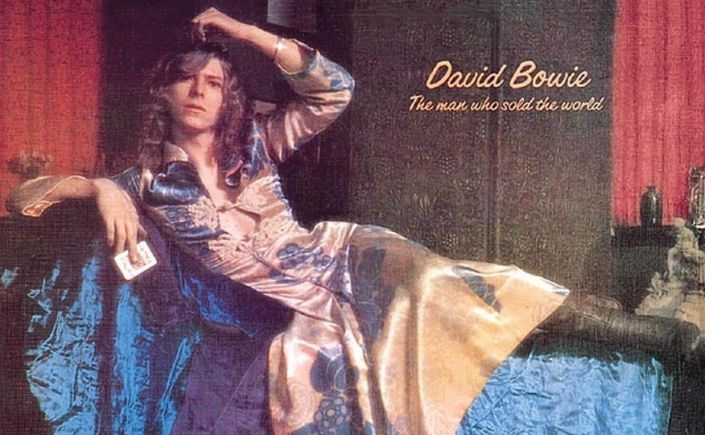
I was thinking about this this morning in the car on the way back from a lesson. I was listening to “The Man Who Sold the World” by David Bowie, and thinking about the fact that the cover version by Nirvana on MTV Unplugged is probably better known. So much so, that people might assume that it’s the original version. In this regards it’s similar to other songs such as “All Along the Watchtower” (Bob Dylan – 1967, The Jimi Hendrix Experience – 1968), and “Tainted Love” (Gloria Jones – 1964, Soft Cell – 1981).

This time though, I didn’t think too much about this. Instead, I was more concerned with that term – cover version. Continue reading

A Blogger’s Style Guide

Following on logically from yesterday, I thought it’d make sense to provide a general style guide for writing blog posts. As I said yesterday, you can feel free to do your own thing, especially as there are different conventions for doing certain things. I just want to write about what works for me, and should produce writing that’s easy to read and intelligible. If you want something more detailed, have a look at the many respected style guides online such as APA, MLA, Chicago, and Oxford (which I think is the one that’s accessible and logical for most people). If you’ve already got used to a particular style guide from university, then of course feel free to stick to that. Continue reading