A Tale of Three Translations

I was watching the news yesterday, and there was a story about the stone in the image above, which features the lyrics of the song “Galway Bay” in English, Latin, Irish, and French. It was erected, appropriately enough, in my hometown of Galway last year, overlooking Galway Bay, as part of a poetry trail featuring similar plaques with translations of works by different Irish writers. Funnily, I wasn’t really aware of the content of the plaque until yesterday, even though for most of last year I lived very close to it, and in fact passed it practically every day. I had seen it alright, but in my defence, I was usually cycling, driving, or running, so never really stopped to look at it, and there are many little cultural markers like that around the city, so you do kind of get used to them.

first.jpg

The offending plaque, as it is now, in storage

Anyway, the issue with the plaque was with the Irish-language translation. A few months after it was erected, An Coimisinéir Teanga (the Language Commissioner) received a complaint about the quality of the Irish translation, which suggested that it didn’t capture the spirit of the original English-language lyrics. In a report, An Coimisinéir stated that there were approximately 40 errors in the 20 lines of the Irish version. I found this quite shocking, so had a look at the lyrics myself.


Continue reading

Twin Peaks

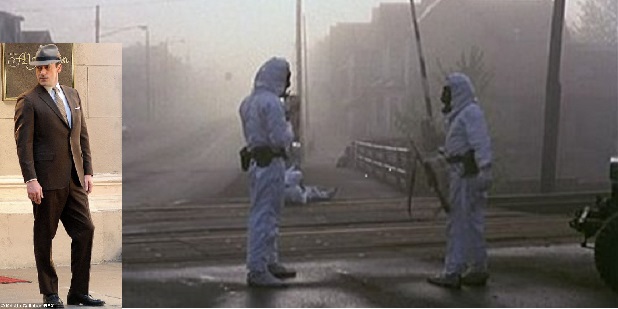
You might be aware that the classic early 90s TV programme Twin Peaks is returning tonight. In an era of so many different viewing choices, in terms of both content and medium, it’s hard to imagine how much it was talked about when it first aired. Even though I was only six at the time, I still remember everybody talking about it, and have never forgotten the image of a bloody and battered Ronette Pulaski walking along the train tracks.

Continue reading

Sibling Rivalry

Sibling is an interesting word. It’s quite useful for the lazy among us. If you don’t want to say I have 2 brother and 1 sister, you can simply say I have 3 siblings. Easy! It’s understandable why we have separate words for brothers and sisters, as they’re obviously fairly distinct from each other. But it also makes a lot of sense that we have the word sibling, as it’s a quite distinct concept in its own right, and it’s not hard to see what a brother and sister share in common.

Curiously though, sibling is a difficult word to translate into other languages. Continue reading

Sokath, His Eyes Uncovered!

One of my favourite fictional examples of communication issues between two people speaking different languages is in the 1991 Star Trek: The Next Generation episode “Darmok.” A quick synopsis: the Federation wants to open dialogue with a secretive race known as the Tamarians, but when they arrive at their planet they run into the slight problem of neither understanding the other’s language. Captain Picard is beamed down to the planet, and together with his Tamarian counterpart, they must find some way to communicate to survive in a harsh environment. Continue reading

Lost in Translation

While browsing through Netflix en français the other day, I saw the thumbnail for the BBC drama Call the Midwife. I was about to continue browsing when I noticed the French title:

SOS sages-femmes.

This struck me a  bit odd. Sure, une sage-femme is the French word for midwife (and quite a cool word too, literally meaning wise woman), but the SOS? In a period drama mixing light soap opera and social-realist representations of the difficulties of working-class East-End London life in the 1950s, it seems out of place. It’s too flippant, making me think of a children’s programme like Paw Patrol. Except with midwives on bicycles instead of puppies, and back-alley abortionists instead of whatever the puppies have to deal with (I’ve never seen Paw Patrol). So while in a literal sense, the title gets the content of the programme across, it doesn’t convey a sense of its tone at all. I appreciate that retitling TV shows and movies from English can be difficult, with titles often being clever plays on words that can’t easily be translated. But in this case, the title is simple and without subtext, so a direct translation (Appelez La Sage-Femme, which was the French title for the book the programme’s based on) would have worked fine. But clearly someone felt it needed to be jazzed up a bit, though I don’t know why they didn’t go all-in and add an exclamation mark at the end.

There are two general approaches to translating a title: Continue reading

Muckanaghederdauhaulia

The above is the longest place name in Ireland, and is obviously quite a mouthful. It’s an Anglicisation of the original Gaelic name Muiceneach idir Dhá Sháile, which, as you all know, means “pig-shaped hill between two seas.” Most modern placenames in Ireland are similar Anglicisations. For example, many Irish towns begin with Bally- or Balli-, coming from the Irish word Baile (town) being part of the original name. A town like Ballycastle would have originally been name Baile an Chaislean (town of the castle).

Such Anglicisation can lead to redundancy. This is often the case with rivers, as many of them begin with Owen-, from the Irish word abhainn, meaning river. So Abhainn Buí, meaning the Yellow River, was translated to the River Owenboy.

Some pretty ordinary sounding placenames have such origins, but some can be a bit of a mouthful due to some clumsy translation: Continue reading

Hypercool

There are many English words which are used commonly in other languages. That’s quite understandable when one considers how widespread the learning and use of English is.

Most of the words are pretty straightforward, everyday words: parking, ok, jeans, dancing camping etc.

Sometimes though, the words used are strictly correct, but the tone doesn’t really translate well. Continue reading