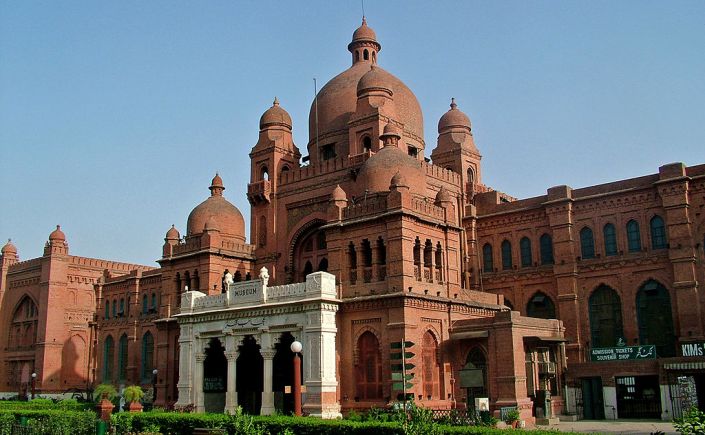
Daily Prompt: Sidewalk

via Daily Prompt: Sidewalk

Sidewalk: at first glance, the words seems like an  excellent to look at the differences between American and British English, with both footpath and pavement being used in British English.

What I’m more interested in though, is the word’s modernity (its first recorded use in the 18th century). I’m always curious about the etymology of words, and the long, meandering histories they can have. I’m fascinated by where words come from, how they evolve over time, and how they’re related to other words. But a modern word like sidewalk might seem to deny me that story. Neologisms like sidewalk require someone or some people to consciously coin a word, rather than it developing naturally over time. Continue reading

Barcelona

I’ll be beginning a well-earned break from work today, and spending a few days in Barcelona. It’s my first time there, so I’m very excited to see it. Like many European cities, Barcelona is bilingual, with most of its citizens speaking Spanish and Catalan. So in honour of Barcelona, I thought I’d see if there were any common English words that were derived from Catalan. Words such as: Continue reading

The Heat is on

It’s that time again, as every four years we’re glued to the TV to watch the Olympics. I always loved it, especially the track and field events. But one word that I’ve always found a little strange is: heat. As in, a qualifying race for a final. Where does it come from?

It seems that the word was first recorded with this meaning in the 17th century, then being used to refer to a run to prepare a horse for a race. Or warm it up, if you will.

For a lot of the more elite athletes, it pretty much has the same meaning: to warm up, generate some heat, for the final.

I hope you’re all enjoying the Olympics: I’ll be spending most of time trying to figure out the name of the exact shade of green the diving pool has turned.

The Country that’s also an Acronym

An acronym is a word formed whereby each letter represents the first letter(s) of a word. For example:

radar (radio detection and ranging)

laser (light amplification by stimulated emission of radiation)

and… Pakistan. You might not expect the name of a country to be an acronym, but such is the case with Pakistan. While the name means Land of the Pure in Urdu and Persian, it was first coined by Choudhry Rahmat Ali, a Pakistan Movement activist advocating for the creation of an independent state from India’s Muslim-majority regions.

The name was derived from the names of the five northern regions of the British Raj: Punjab, Afghania, Kashmir, Sindh, and Baluchistan. The i was added for ease of pronunciation. Sometimes there’s an interesting history behind a name of a place we don’t think too much about, and it can tell us a lot about a country.

Seal

The English language has an incredibly rich vocabulary. For every situation one can imagine, there seems to be a variety of words and phrases available to choose from, each with their own subtle inflections of meaning.

And yet at other times, the language seems curiously economical, using one word for a variety of meanings. Take seal, for example. Your first instinct when you think of this word will probably be to picture the marine mammal. And why not, they’re cute, especially the pups. Continue reading

Profound

Being a response to the Daily Prompt: https://dailypost.wordpress.com/prompts/249091/

Profound, and its more common synonym deep, are quite versatile words. There’s the literal sense of the words, measuring how far down something goes. Though we tend to use just deep for that. You’re hardly going to go to the profound end of a swimming pool, perhaps to discuss Proust and the films of Ingmar Bergman.

And then there’s the more abstract meaning of the words, to describe something with an important, valuable intense meaning. Someone can be a very deep person, or a novel can have a very profound meaning. You can feel something, deep down in your heart. We tend to use profound more often in this sense though. You might make a profound statement, or have a profoundly inspiring experience. What makes profound so special that we reserve it for when things are so, well… profound? Continue reading

“Ok?” “Okay!”

Ok (or okay) is one of those words (like hiccup/hiccough), wherein I always thought the different spellings could be attributed to one being an older, more formal spelling of the word, and the other a modern abbreviation. I assumed that okay was the original spelling, and ok the modern version, after some clever individual realised that the two letters pronounced one after the other sounded the same as okay. But like hiccough and hiccup, I was wrong to assume so. Continue reading