A Decimating Blow

If you’re a regular reader, you might remember me writing about the verb to decimate some time ago. The gist was, to decimate had never been used to mean destroy or reduce by 10% in English, so it was incorrect and unjustified to “correct” people using it to mean to devastate or kill a large proportion of a group of people.

And I still basically stand by that assertion. Basically… Continue reading

The Short and Curlies

You may want to have a quick look at this old post, about the word hedgehog. before reading this one. The main thing to take from it is that urchin originally referred to hedgehogs. Continue reading

Temple

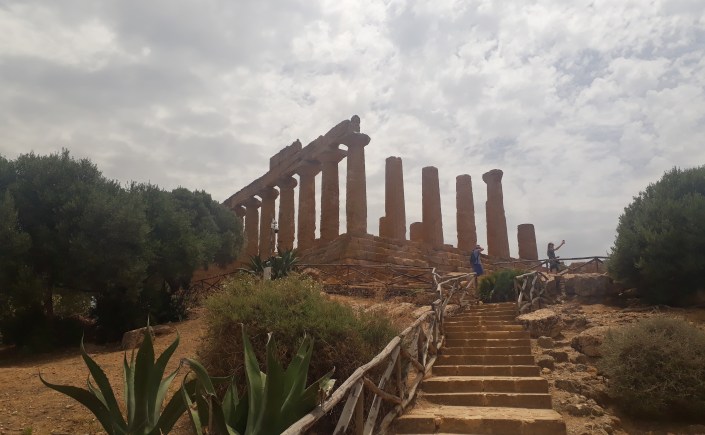
I’ve spent the last two days in Agrigento, a town on the south coast of Sicily, and close to an impressive Ancient Greek temple complex known as the Valley of the Temples. While on my way there, I wondered: why do we call the areas to the side of our forehead temples? Continue reading

Time

I don’t have enough time to finish this project!

What time is it?

I’ve been to France four times.

Three times two is six.

Those four sentences are all pretty simple, aren’t they? They’re the kind of sentences you might use in everyday situations without thinking about them. But look more closely at that word they all have in common: time. Continue reading

Coquette

This morning I passed a touristy apron at a stall here in Palermo. It featured a map of Italy with different regional types of pasta. I spotted the word reginetta (beauty queen/young queen). I’d never seen the word before, but assumed it was a diminuitive form of regina (queen), as the suffix -etta is often used as a (usually) feminine diminuitive form in Italian.

Just like the -ette suffix in English, borrowed from French, and found in words like cigarette, etiquette, majorette, among many others. Just after seeing reginetta though, a particularly interesting example came to mind: coquette. Continue reading

My Genial Friend

I came across an interesting false friend recently, when a student referred to a person as genial. Now, this might seem fine to me, but is was clear from the context that a word like brilliant would have been more appropriate. How can we explain this seemingly strange error, confusing two such obviously different words? Continue reading

Let There Be Light

It’s not at all uncommon to come across homonyms in English: words that are spelled and pronounced identically, but have entirely different meanings. Today though, I thought for the first time about a rather curious example of this: light. Continue reading