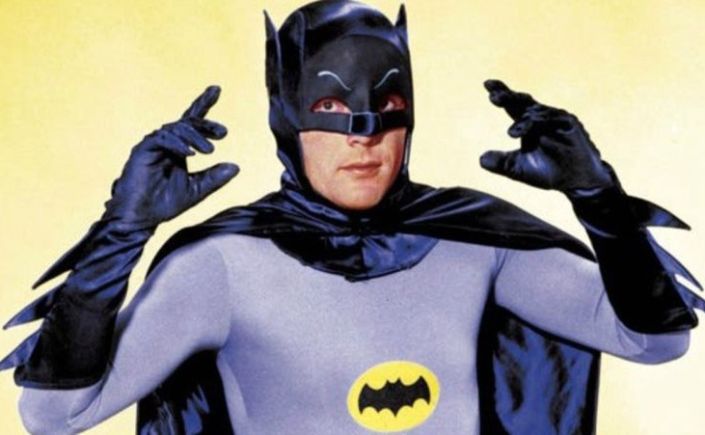
Holding out for a Hero

When writing about James Joyce last month, I got to thinking about the word hero. Two things made me think about it: the fact that an early draft of A Portrait of the Artist as a Young Man was known as Stephen Hero, and how often I referred to Leopold Bloom as the hero of the novel Ulysses.

On the surface, it seems like a fairly straightforward word. You can think of its meaning pretty easily, I’m sure: someone brave, with exceptional abilities. Someone we can look up to. And this has always been the meaning of the word. It comes from the Greek ἥρως (hērōs), meaning protector or defender, and was often specifically used in Ancient Greek myths to refer to heroes of divine ancestry such as Heracles. So, not so different from how we use it today. Except, as I alluded to in the first paragraph, when we use it as a literary term.

Continue reading

I’ll Learn you Good!

Isn’t that just the classic signifier or a stupid, or at least uneducated, person? How could they possibly confuse these two antonyms? And of course this mistake is especially ironic as it’s related to education and learning. However, if you’re the type of person who likes to make themselves feel smarter by noting how people make this mistake but you don’t, perhaps you need to rethink how wrong these people actually are.

Continue reading

Happy Belgian National Day!

Exactly one week after Bastille Day, it’s the Belgian National Holiday!

Yay!

Ok, so you probably weren’t aware of that fact. The holiday hasn’t really entered the public consciousness the way Bastille Day, or other national holidays like St. Patrick’s Day or the Fourth of July have. And I think that’s mainly because Belgium is a small country that doesn’t have such a distinctive national identity compared to other countries. And I think that in turn has a lot of to do with the fact that it’s a complex little country, linguistically.

Continue reading

Liebster Award

I have to say a big thank you to Liz for nominating me for this lovely award. It’s a great honour, and before I say anything else, I highly recommend you check out her great blog at Do the Thing, as she recounts her experiences crossing items off her bucket list.

I believe I’ve done this before, but it’s nice to have a different style of post from my usual. Plus, this will likely be a little shorter, and I don’t have so much time to write this evening, though I do still have the itch.

Ok, the rules.

Continue reading

Can you Trademark a Word or Phrase?

I’m surprise to find that the article I read the other daythe article I read the other day has inspired a second article by me, but here we are. Something else that interested me in the article was the fact that Michael Buffer, has become a millionaire by licensing the trademark for the phrase Let’s Get Ready to Rumble. It’s probable that you read that in your mind in a very specific voice, and that voice is Michael Buffer’s. Buffer, a boxing and wrestling ring announcer, became famous for his catchphrase, delivered in his unique style. In 1992 he registered the phrase as a trademark, and since then has earned about $400 million from it.

Continue reading

I React to: YouTube English!!

Earlier this afternoon, on my lunch break, I came upon the following article: “21 Insane Ways Celebrities Get (and Stay) Rich.” I can’t really recommend it. Some of the items are mildly interesting, but could hardly be described as insane, unless you consider selling a business at a profit insane. I did find one thing curious though, and that was the following sentence about Jake Paul, who is apparently a YouTube star:

Continue reading

She Could Steal, but she Could not Rob

It was a lovely sunny evening in the west of Ireland today, which made me feel like Abbey Road would be a good accompaniment to my walk home. Probably because it features “Here Comes the Sun,” but I think it’s a generally positive album anyway, suitable for a balmy evening. As I was listening, I was struck by a line in “She Came in through the Bathroom Window” which I’d heard many times before, but never really thought much about:

She could steal, but she could not rob.

It’s a clever, cute line, and if you’re interested in the possible meaning behind it, you can look here. This evening though, it made me think about the difference between those two verbs: steal and rob.

Continue reading