Film or Movie?

Do you want to catch a movie? Or maybe you’d prefer to watch a nice film? Of course they’re the same thing, objectively, but they’re not really the same, are they?

Strictly both movie and film are synonyms, but in reality, the word film has a much greater sense of sophistication than movie. Why is that? Continue reading

Trump’s Triumph?

So Donald Trump is being hailed in some quarters as “presidential” for his address to Congress last night. And fair enough. Though there didn’t seem to be much substance to it, his tone was noticeably more measured than any of his public appearances to date. Not that that was particularly hard mind you. When you think about it though, describing his as presidential seems like something of a back-handed compliment, and at best damning him with faint praise. The word presidential means like or related to a president, so isn’t that the least that would be expected of him? Surely he should be presidential by default? But I understand people being pleasantly surprised. Regardless of whether you agree with his policies or not, it’s hard to deny that he’s had a very direct, blunt style, in contrast to his predecessors. Continue reading

Right to the Heart

Affairs of the heart are always complex; I think that goes without saying. The English language has a few words which demonstrate this complexity. Bittersweet is a fairly straightforward, literal one. Another similar word is poignant, meaning evoking a keen sadness and regret. Even that definition doesn’t quite convey all of its connotations, as it refers to a nostalgic, gentle kind of sadness. It’s not exactly positive, but it’s a soft, contemplative type of sadness. Continue reading

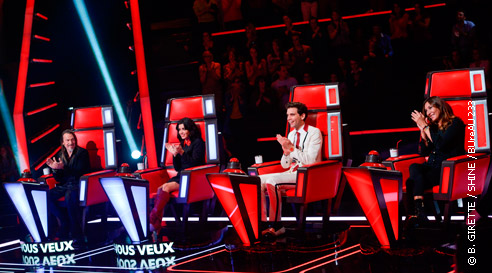
Je Vous Veux!!

I’m generally not a fan of TV talent shows. I find that they tend to look for people who sing in an identical, overwrought style; and they can be quite exploitative of people who seem to have mental-health issues (The X-Factor particularly). Lately however, I’ve seen a few episodes of both the French and Walloon editions of The Voice. Continue reading

By the Book

What do you need to teach a language lesson? Some students of course, and preferably a whiteboard, or a flipchart at a pinch. And, probably, a textbook, or an extract from one. A textbook is something that both students and teachers often take for granted. Many students like to have a trusted source of exercises to improve their English, and provide them with lots of new vocabulary and grammar rules. New teachers often cling to a textbook as a crutch. It’s comforting to know that you’ve got some interesting activities to keep the students busy, and save you having to find different exercises and figure out how they work together. And it helps to get rid of that awful fear newer teachers have that they’ll run of material long before the end of the lesson. Even if you finish your planned exercises before the end of the lesson, a few more pages in the book can feel like a welcome safety net. But how much do you really need a textbook? Continue reading

The

The is such a simple word that you probably never think about it. You use it many times everyday, but what exactly is it? Continue reading

Sokath, His Eyes Uncovered!

One of my favourite fictional examples of communication issues between two people speaking different languages is in the 1991 Star Trek: The Next Generation episode “Darmok.” A quick synopsis: the Federation wants to open dialogue with a secretive race known as the Tamarians, but when they arrive at their planet they run into the slight problem of neither understanding the other’s language. Captain Picard is beamed down to the planet, and together with his Tamarian counterpart, they must find some way to communicate to survive in a harsh environment. Continue reading