The Dotard Vs. Rocket Man

Dotard (n.) an elderly person suffering from senility or other mental infirmities

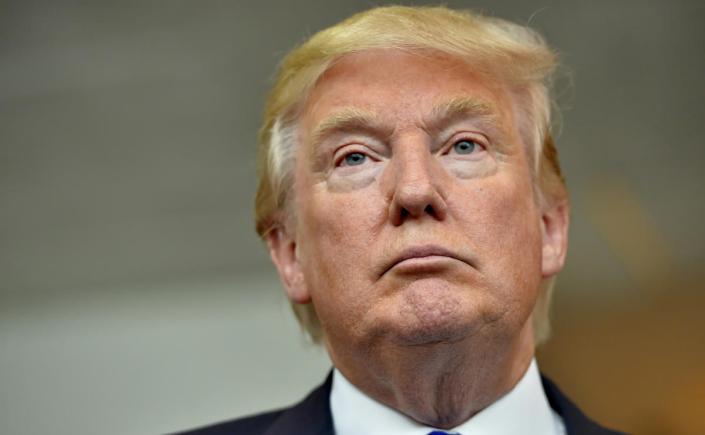
By now you’re probably well aware that a few days ago, Kim Jong Un called Donald Trump a dotard, in the long-running name-calling spat between the two obnoxious, hateful children, which could also lead to the deaths of millions.

Continue reading

Calling a Nazi a Nazi

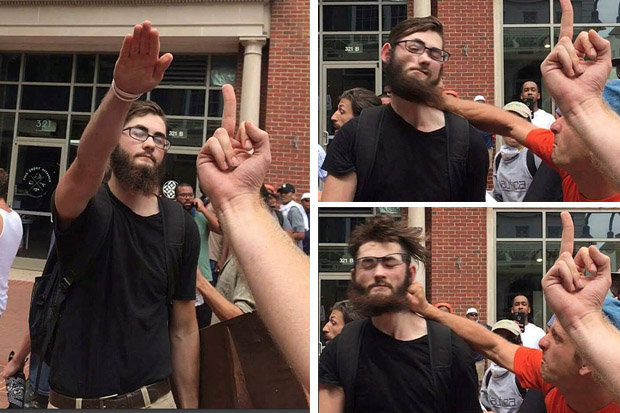
Following the violence (from armed Nazis, and the one side they represent) in Charlottesville, some people have suggested that the perpetrators only acted like brutal, thuggish Nazis, because people had been calling them brutal, thuggish Nazis for so long. Of course they’re going to act like Nazis if you keep calling them Nazis! Obviously it’s an attempt to take the blame away from the actual Nazis committing the violence. It’s an attempt to say, Look, these are just troubled young men not happy with the way they’re country’s going. But they’ve been demonized by SJWs, and that’s made them lash out in frustration! What do you expect when you call someone a Nazi!

There a couple of assumptions being made here. The first is that if you label someone with a negative name often enough, they’ll become what you call them. And that seems logical enough. Imagine how angry it would make you to unfairly labelled as something as terrible as a Nazi!? Except, that only really works when the label is applied unfairly, doesn’t it? So let’s take a moment to have a look at some of the people being called Nazis:

Continue reading

Why We Call the Planet Earth, and  What I’ll Miss about It

You might be aware that we could all be killed soon. Or else the planet will be rendered uninhabitable for a few survivors. I don’t think it’s very likely, but at least if we are all killed there’ll be no future generations left to wonder how we could let two immature, insecure babies destroy us all because of their thin skins and senses of inadequacy.

It probably won’t happen, and even if it does does, the planet will probably survive. Still, the news has got me thinking about how much I’ll miss the planet, and wondering where it got the name Earth

Continue reading

Just How Bad is Donald Trump’s English? (Putting him to the Test)


It’s easy to say that Donald Trump has poor English. It’s easy to say that the level of English that he uses, in terms accuracy and tone, is far below the minimum expected of any public speaker. And of course the reason it’s so easy to say these things is that Donald Trump actually has really bad English. So inspired by a colleague’s idea, I’m going to test him, to see exactly what level of English he has. Specifically, I’m going to assess Trump’s spoken English using the assessment criteria of the spoken section of the IELTS exam.

Continue reading

Mugwumps, Bailiwicks, and Pregnant Chads: The Vocabulary of Politics

Today is Election Day for my neighbours across the Irish Sea (not to mention a day of infamy for Donald Trump as James Comey testifies), and it looks like child’s-drawing-of-a-parent’s-description-of-a-nightmare-about-Margaret-Thatcher Theresa May will win. Not too surprising though. What was surprising for some people though was when Foreign Secretary and rejected-Monty-Python-sketch-character Boris Johnson called Labour leader Jeremy Corbyn a mutton-headed mugwump early on in the election. By mugwump, Johnson meant someone who remains aloof or independent from party politics. The term has a long history, originating from a Massachusett Native-American word for war leader. The term was applied to Republican Activists in the 1884 American Presidential Election who supported the Democrat nominee Grover Cleveland. They were rejecting the political corruption of Republican candidate James G. Blaine, and were ironically nicknamed mugwumps to imply that they were sanctimonious in their removal of themselves from party politics. Mugwump is just one of the many interesting words associated with the world of politics and elections, such as:

Continue reading

Covfefe

By now you might be aware of Donald Trump’s latest addition to the English language: covfefe. If you haven’t heard yet, at 12:06am Washington time last night, the President of the United States tweeted:

Despite the negative press covfefe

…and that was it! Obviously he was deliberately tantalising us with this new word he’d coined, throwing it out into the world and waiting for us to figure out its meaning based on subtle clues he’s left, while he slept soundly. Here are some of my ideas:

Continue reading

Using Apostrophes and the Future of English in Europe

English has long been fashionable to use in other languages. For teenagers and young adults, it’s the language of a lot of their pop culture, as well as being an international lingua franca, that can help one connect with people all around the world. That’s why, especially across Europe, you’ll find little bits of English peppered throughout people’s speech.

Naturally, this isn’t always going to be accurate in terms of native speakers’ usage, but that’s not so important. I’ve noticed recently though, an apparent trend in how non-native speakers use English that’s a little bit curious, because it reflects one of the ways in which native speakers make mistakes in English.

Continue reading