Scapegoat

An innocent person deliberately blamed for wrongdoing, usually by the guilty parties.

This always seemed like a strange word to me: why a goat? The concept originally comes from the Bible, from the Book of Leviticus, when a goat is designated to take on the sins of the people and be cast out into the desert, thus freeing the people from their sins.

The actual word scapegoat seems to have entered the English language in the 16th century, with scape deriving from escape, i.e. the scapegoat allows the guilty to escape punishment. Continue reading

Sorry Seems to be the Easiest Word

Yesterday evening I bought myself some Hammerite Kurust rust converter (we all need a treat on a Friday). When the sales assistant forgot to give me my €1 change I instinctively said Sorry, could I get my change please?

Why did I say sorry? What did I do to him? It took him a few moments to open the till, but apart from that I didn’t inconvenience him that much. English can be quite polite at times, but it does seem a little bizarre that our first instinct is to apologise  in a lot of situations. Continue reading

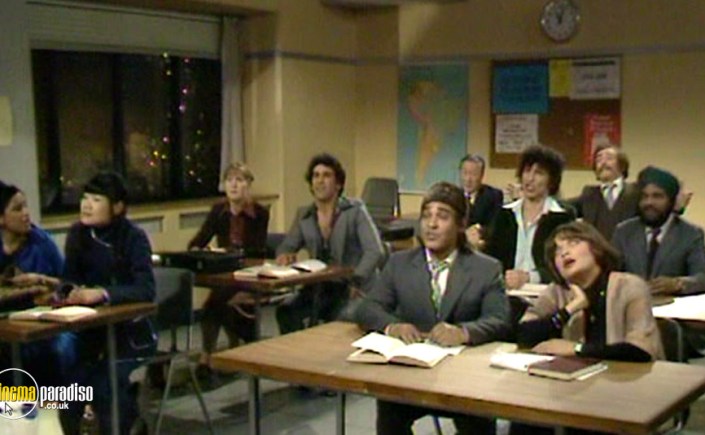
Teaching on TV

9am:

Teacher: Good morning class!

Class: Good morning!

*teacher writes Hello, my name is Niall. on the board*

*teacher points to self, says Hello, my name is Niall*

Teacher: Now Saud, you!

Pedro: Hello, my name is Saud.

Teacher: Very good! Now Anna, you.

Anna: Hello, my name is Anna.

Teacher:Yes Anna, very good! Now Chen, you.

Chen: Hello, my name is Anna.

*everyone laughs*

Teacher: Ha ha, no Chen, your name is Chen!

Chen: Ah sorry! Hello, my name is Chen!

Teacher: Excellent!

9.02am:

*bell rings*

Teacher: Ok everyone, before you go, I want you to write Hello , my name is… 50 times on a suitably blank surface. Class dismissed!

I think the above is pretty representative of most of the depictions of English-language classes I’ve seen in films and TV programmes. I know everyone gets annoyed when their profession is depicted on screen and it’s quite inaccurate. We can’t expect film and TV writers to be experts in a job that might appear briefly in only one scene. But what annoys me about the way English classes are shown is that it’s indicative of a lot of people’s misconceptions of English-language classes.

Let’s look at what’s wrong with the lesson above.

Continue reading

No Swearing

What the frak!?

He’s also Irish, which again, weirdly, a plus point, if you like swearing. He’s often on his show: Feckin’ dis and Feckin’ dat. Some Irish people say Feck off isn’t as bad as F*ck off, but I think that’s b*llsh*t.
Or bellsh*t.Alan Partridge

She fuppin’ would too, and so would I you fuppin backsterd!!

English is of course not without a healthy number of swearwords. Though I personally try to avoid using some of the worse ones, I do appreciate the power they have to emphasise a point when used appropriately.

Continue reading

Capital Idea

One of the most common corrections an English-language teacher has to make is when a student uses a lower-case letter instead of a capital letter.

For a language you need to use a capital letter.

When you’re talking about a nationality you need to use a capital letter.

A person’s name always begins with a capital letter.

You have to start a sentence with…etc. etc.

Mistakes with capital letters are common and understandable.

Continue reading

My Baby Don’t Care for Shows…

My love don’t cost a thing.

She don’t love you (like I love you).

If you don’t understand him, an’ he don’t die young, He’ll prob’ly just ride away.

She don’t know.

He don’t deserve you anymore.

She don’t let nobody.

She don’t like the lights.

Your inner (or, indeed, outer) grammar pedant may have cringed at the recurring word in the lyrics and song titles above: don’t.

Doesn’t! that shrill little voice inside shouts, doesn’t!!

Continue reading

Me Fail English? That’s Unpossible!

In recent years, some news stories have emerged from Australia of would-be Irish immigrants failing the English test required for entrance, the IELTS General-Training exam.

One of the most common responses to such stories is to laugh: Ha, serves them right, how can they not even pass a basic English test if they’re English speakers!

But the situation is a little more complex than that.

Continue reading