Brilliant!

Shine bright like a diamond,

– Rihanna, 2012.

How do you feel about the adjective brilliant? It seems to be a bit divisive. Like the word awesome, there are those who feel that it’s cheapened by being used as a general adjective of quality, to indicate that something is very good.

I understand that point of view, and I’ve argued previously that sometimes a strong adjective is just too strong for the situation, and a nice simple adjective often works well. That being said, the sheer positivity of words like awesome and brilliant can be infectious.

And while brilliant is now firmly established as a synonym for great, this is actually a fairly recent development.
Continue reading

Did you Watch Strictly at the Weekend?

No, I didn’t, sorry, I never watch it.

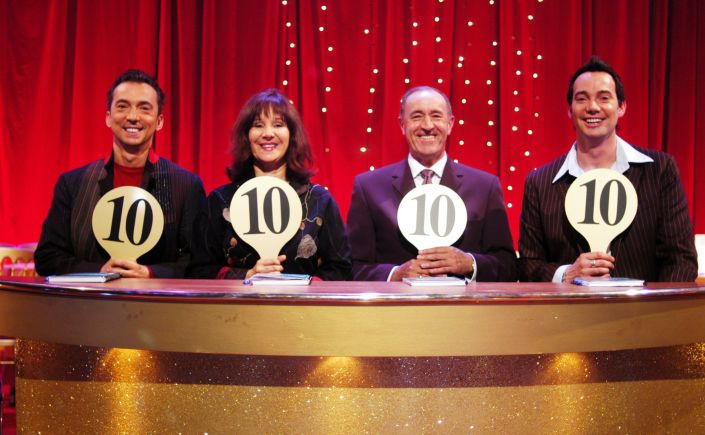
I’m referring here of course to popular BBC Saturday-evening dance programme Strictly Come Dancing (translated into American English as Dancing with the Stars). It’s often referred to simply as Strictly, but if you step back and think about it, isn’t that a little odd?

Continue reading

What do the Birdman of Alcatraz and Golf Have in Common?

Albatrosses!

See, I told you I’d have more amazing albatross facts for you. 

Continue reading

An Albatross Round your Neck

“God save thee, ancient Mariner!

From the fiends, that plague thee thus!-

Why looks’t thou so?”-With my cross-bow

I shot the ALBATROSS.

This is one of the more unusual English idioms. It means a very heavy, psychological burden.

But why an albatross?

Continue reading

What’s Good for the Goose…

…is good for the gander.

A gander of course, being a male goose. And what’s the term for a female goose?

Continue reading

How’s Trix?

Continuing a vague theme about gender in language, I want to look a little at the few gendered words we have in English.

I mentioned recently that actor/actress is still a distinction we often make. There’s waiter/waitress too. And that’s basically it.

There are some specifically female forms that have relatively recently fallen out of favour. Stewardess and manageress, for example. Generally though, we’ve been content to use gender-neutral terms.

Continue reading

Armistice Day

Today is 11 November, Armistice Day, on which we commemorate the end of the First World War. Or, World War I. That’s how we refer to the conflict now, but it’s actually had surprisingly many names.

Continue reading