Addictive or Addicting?

So Twitter has been trying to entice me recently, with fake profiles following me which look semi-legit, until I follow them back and they send me messages about these online games. And doubtless the links just lead to horrible viruses (I’m still trying to figure out Twitter’s angle by the way. It usually takes me a few months to figure out each social medium, and how to use it properly. I’m not there with Twitter yet).

Anyway, what intrigued me most about these dodgy ads was their use of the word addicting. This is normally the point where I get quite reasonable and say something like, Well, you might think it’s correct to say addictive, and that addicting is wrong, but actually it’s ok to use both.

To be honest though, I hate addicting. Both my heart and my brain tell me that it’s wrong, and that addictive is right, and that’s it. Addicting looks stupid, it sounds stupid, and it doesn’t seem to make much sense, linguistically. That being said, people do say addicting, so I’m at least going to investigate why they might do that.

Continue reading

Why don’t we usually Pronounce the Letter B after an M?

Good question, I’m very glad you asked. There are about ten words in English that end in –mb, but have a silent B. Off the top of my head, I can think of:

  • Bomb
  • Thumb
  • Lamb
  • Plumb
  • Limb
  • Tomb
  • Womb
  • Climb
  • Dumb
  • Jamb
  • Comb
  • Crumb

As you can see, it’s a fairly common phenomenon, but what’s the story behind it?

Continue reading

The Versatile Blogger Award

Thank you Lise for nominating me for the Versatile Blogger Award! You should head to her blog Lushtivity to read her great variety of posts on books, beauty, games, and lifestyle. With all those different topics, she’s a worth winner of this award! I’m not sure how versatile I am, except perhaps in the sense that I might sometimes write about different words, or different grammar points.

Regardless, here I am, so, per the rules of the award, I’ll endeavour to think of seven interesting facts about myself:

Continue reading

What Makes a Superhero Super?

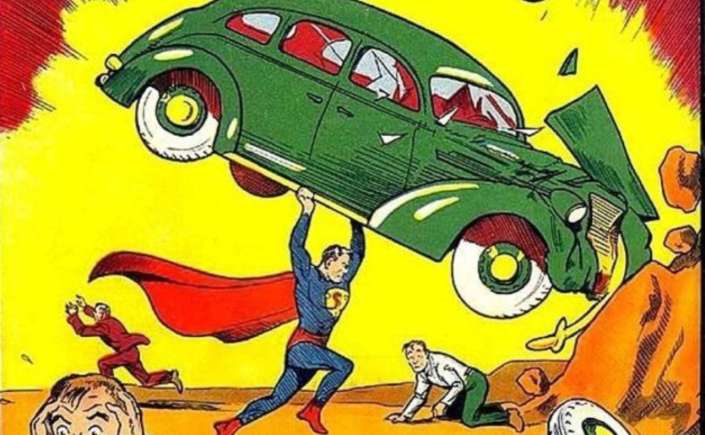
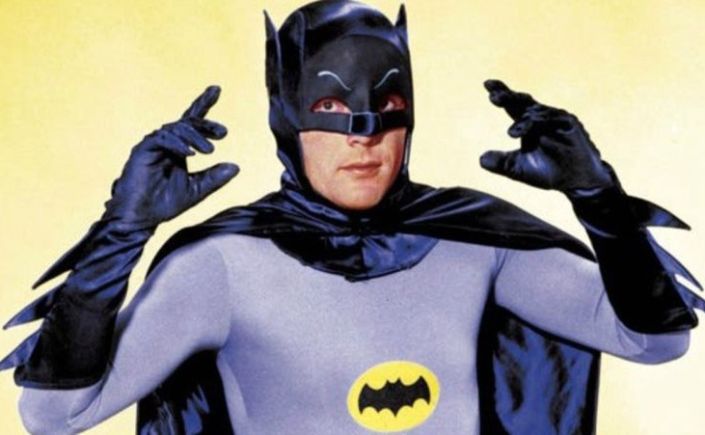
As I alluded to yesterday, I recently saw Spider-man Homecoming with my nephews. It made me think again about superhero names. I touched on them briefly before, thinking about how straightforward they are. The majority of the most popular ones are simple compound nouns, featuring an adjective or noun that defines the character, followed by man or woman (or girl). Spider-man. Batman. Superman. Wonder Woman, etc. The practical, pragmatic explanation for this is to make the characters easily recognisable, and not confused for a rival publisher’s characters. That’s why, after all, Spider-man has his hyphen.

Continue reading

Holding out for a Hero

When writing about James Joyce last month, I got to thinking about the word hero. Two things made me think about it: the fact that an early draft of A Portrait of the Artist as a Young Man was known as Stephen Hero, and how often I referred to Leopold Bloom as the hero of the novel Ulysses.

On the surface, it seems like a fairly straightforward word. You can think of its meaning pretty easily, I’m sure: someone brave, with exceptional abilities. Someone we can look up to. And this has always been the meaning of the word. It comes from the Greek ἥρως (hērōs), meaning protector or defender, and was often specifically used in Ancient Greek myths to refer to heroes of divine ancestry such as Heracles. So, not so different from how we use it today. Except, as I alluded to in the first paragraph, when we use it as a literary term.

Continue reading

I’ll Learn you Good!

Isn’t that just the classic signifier or a stupid, or at least uneducated, person? How could they possibly confuse these two antonyms? And of course this mistake is especially ironic as it’s related to education and learning. However, if you’re the type of person who likes to make themselves feel smarter by noting how people make this mistake but you don’t, perhaps you need to rethink how wrong these people actually are.

Continue reading

Happy Belgian National Day!

Exactly one week after Bastille Day, it’s the Belgian National Holiday!

Yay!

Ok, so you probably weren’t aware of that fact. The holiday hasn’t really entered the public consciousness the way Bastille Day, or other national holidays like St. Patrick’s Day or the Fourth of July have. And I think that’s mainly because Belgium is a small country that doesn’t have such a distinctive national identity compared to other countries. And I think that in turn has a lot of to do with the fact that it’s a complex little country, linguistically.

Continue reading