What do a Chauffeur and Dracula Have in Common?

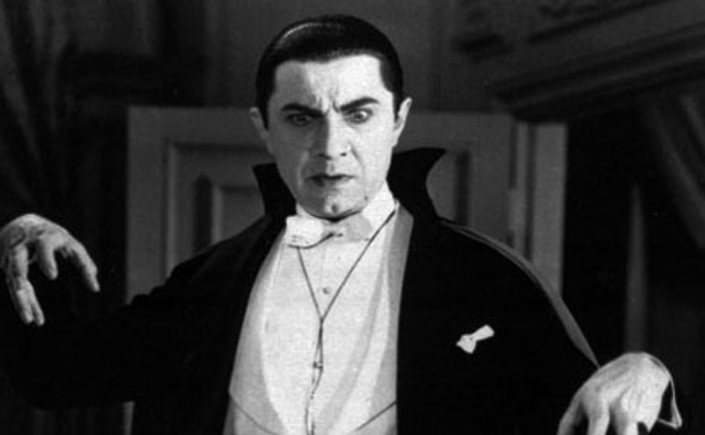
Stokers, that’s what. Let me explain…

Continue reading

Your Word of the Day: Kerning

Kerning refers to the process of adjusting the space between letters in typesetting and graphic design.

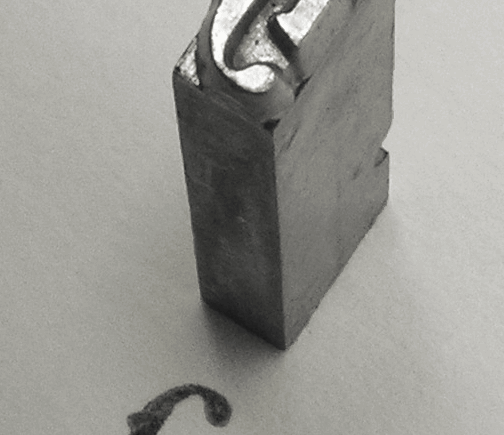
The word originally comes from the French carne, meaning projecting angle or quill of a pen. In the days of manual typesetting, letters were placed on individual metal blocks known as glyphs. If a letter overlapped the following letter (e.g. a capital T before a capital A), the overlapping parts (the bars of the T), would protrude over the edge of the glyph, and these exposed parts of the letter were known as kerns.

You might not think kerning is important, especially because most digital text is automatically kerned for your pleasure. Here’s a nice example from Wikipedia of the benefits of kerning:

Continue reading

Sunshine Blogger Award

Well, I know I said I’d write something about grammar or etymology, but then, how can one turn down the Sunshine Blogger Award? And there are plenty of more days ahead in which to indulge myself in the riches of English, so why not have a little break, eh, to enjoy a little sunshine? I probably won’t have to use so many italics on this one, and formatting all of those can be tiring.

So, I have to say a big thank you to Parvathy Sarat for her nomination. It’s an honour, and I strongly recommend you check out her blog, Trust Me, You’re Alive. How could you resist such a fascinating variety of topics as written by a scribbler, dancer, dog-lover, and an overthinker? Certainly three of those four describe me (I’ll let you decide which), so obviously her posts are great reading.

Let’s do this then.

Continue reading

Bloomsday

Today is Bloomsday, which is perhaps not the best-known day of celebration. It’s a celebration of all things James Joyce, and more specifically, his great novel Ulysses (1922). Bloomsday always falls on 16 June, because that’s the day on which the book is set (in 1904). And it’s named Bloomsday in honour of the novel’s hero, Leopold Bloom. And of course his wife Molly Bloom too, who has a very important part to play in the book. Why though, would we have a day of celebration for a single book?

Continue reading

The Passive Voice

Let’s imagine you’re writing an essay about your favourite writer. You might decide to begin by mentioning your favourite of his books, like so:

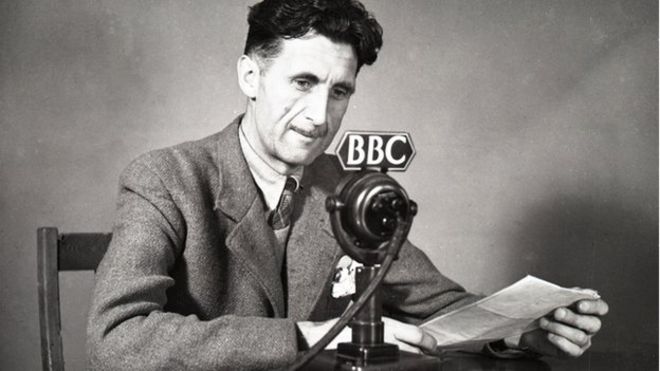
George Orwell wrote Nineteen Eighty-Four in 1949.

Now, let’s imagine you’re writing an essay about your favourite novel. A logical start would be to mention who wrote it, like so:

Nineteen Eighty-Four was written by George Orwell in 1949.

What’s the difference between these two sentences? I’m sure you’ll agree that both contain the same information. But the focus is different, isn’t it? In the first we’re focussing on the writer, and in the second, on the novel. And we change focus by changing focus – between the active voice and the passive voice.

Continue reading

Synecdoche, Anywhere

Synecdoche (the E is pronounced like in recipe) is a literary device in which a part of something is used to refer to the whole (or vice versa). It’s mainly considered a poetic device, and most examples that people provide are from poems. In this passage from Samuel Taylor Coleridge’s “The Rime of the Ancient Mariner,” for example, the word wave stands in for the sea:

The western wave was all a-flame.
The day was well was nigh done!
Almost upon the western wave
Rested the broad bright Sun

We use the word wave similarly when we use the phrase on the wave. Similarly, we can say a bird is on the wing when it’s flying. These are the two examples I was given when I was introduced to the term, back in, I believe, my final year of primary school. I was intrigued by this strange-sounding and -looking word, and wanted to think of other examples, though nothing really came to mind. I soon came to think of it as a purely literary device that was interesting, but not hugely relevant to my life. But now wiser and with a wider vocabulary, I can see that synecdoche is actually fairly common.

Continue reading

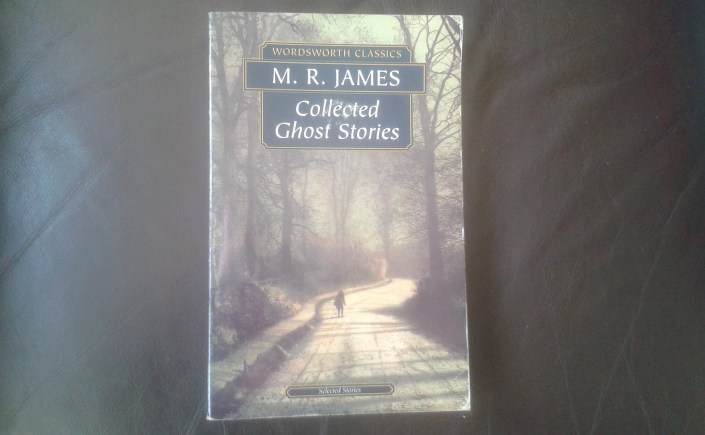
Hallowe’en Reads: M.R James – Collected Ghost Stories

Like humour, horror doesn’t always age well. What we find scary can change over time, largely because surprise is usually one of the main elements of horror. If something comes out of nowhere, and we don’t understand it and could never expect it, it’s scary. The first time we hear of a vampire, and read about them or see them, it’s a terrifying idea. But with repetition, it becomes known. We know what vampires do, know all the rules. So either you need to play around with people’s expectations about vampires, or you do something else.

You can this effect with lots of older ghost stories. I remember quite a few years ago buying an anthology of Victorian ghost stories, and giving up on it after a while. Some of the stories were interesting and undoubtedly well-written, but none of them was scary. Usually they involved someone staying at an old house reading about some old murder, or seeing someone they don’t recognise around the house. Then at the end they see a ghost and that’s it! Just featuring a ghost was novelty enough to shock readers, especially because most of the stories wouldn’t have been initially presented as ghost stories.

So when I picked up a cheap second-hand copy of M.R James’ Collected Ghost Stories, I wasn’t expecting too much from them. Mostly written in the first 25 years of the 20th century, I thought they would simply be far too polite and gentle to be scary. And beginning the first story, my assumption seemed to be confirmed. Most of his stories involved awkward academics puttering around quaint English villages, searching for old ecclesiastical manuscripts. And yet… Continue reading