
Hi there! Would you like a pepperoni pizza? Of course you would! Well, here you go…
The Strange History of Pepperoni

Hi there! Would you like a pepperoni pizza? Of course you would! Well, here you go…

Yesterday, I mentioned that I expect other languages to have an increasing influence on English due to the fact that there are more non-native speakers of English in the world than native speakers. I’ve already noticed this happening a lot with one specific word. Let’s see if you can guess what it is:
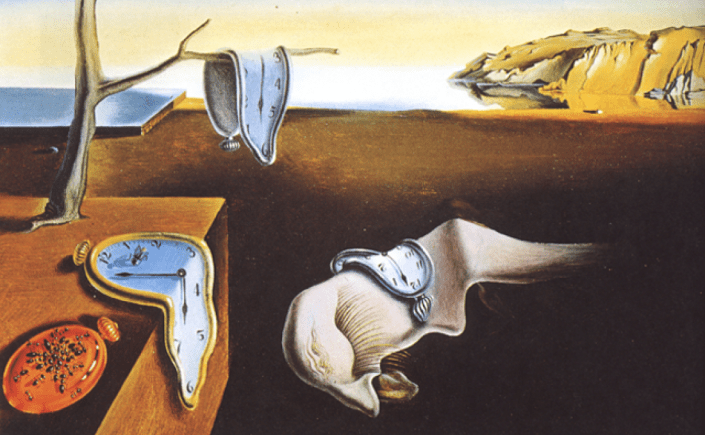
Do we talk about the past more in English, compared to other languages? This is something I was thinking about yesterday, when talking to someone in French about something that happened over the summer. I’ve always found using the main past tense (passé composé) in French a little cumbersome. Talking about the present is quite straightforward once you know the verbs you want to use, and structurally is quite similar to the present simple in English.

Well, never, of course. But these two words are quite often confused by English-language learners. It makes sense really. The two words obviously sound similar, and that’s particularly true for speakers of languages which don’t make such a distinction between the ch (/ʧ/) and k (/k/) sounds. And of course it’s logical to create an association between the two things: where else are you going to keep your chicken?

I read this article recently, suggesting that Italian is the most beautiful language in the world. I was intrigued, thinking that obviously the idea of beauty in any terms is going to be subjective, but I could also see why many people would choose Italian, so I read on.

English has long been fashionable to use in other languages. For teenagers and young adults, it’s the language of a lot of their pop culture, as well as being an international lingua franca, that can help one connect with people all around the world. That’s why, especially across Europe, you’ll find little bits of English peppered throughout people’s speech.
Naturally, this isn’t always going to be accurate in terms of native speakers’ usage, but that’s not so important. I’ve noticed recently though, an apparent trend in how non-native speakers use English that’s a little bit curious, because it reflects one of the ways in which native speakers make mistakes in English.

This post is inspired by two common and related questions I often see posed online:
Before answering (and mercifully, the answer to both questions is the same, and quite simple), let’s have a look at what word stress actually is. Continue reading
 English-Language Thoughts