
While checking that I knew what I was talking about when writing about the words venomous and poisonous, I came across an interesting term: true bug. Continue reading
True Bug Waits

While checking that I knew what I was talking about when writing about the words venomous and poisonous, I came across an interesting term: true bug. Continue reading

You wore a shirt of violent green, uh-huh
R..E.M, “What’s the Frequency, Kenneth?” 1994
I thought about the title of this song this morning when it came on my iPod while running. There’s an interesting story behind which I remember hearing a few years ago. First, in case you’re unfamiliar with it, here’s the song:

It’s a pretty straightforward answer actually: one of those cases where when you see the steps between A and F, it makes sense.

Poisonous, definitely poisonous. That is, I’d much rather encounter a poisonous animal than a venomous one. Why? Let me explain…

This was a common refrain of my childhood. From my lips, anyway, for you might recognise this as a mondegreen. Anyone familiar with 80s and 90s children’s cartoons/toys might know that I was mishearing the lyrics to the Transformers cartoon. The line of course should be robots in disguise.
Which makes a lot more sense. I mean, that’s the whole point of the Transformers. They’re in disguise. They’re robots, and they’re in disguise. In my defence, some of them could fly, so my interpretation made sense to six-year-old me. Still, on paper, in the skies and in disguise are fairly distinct. Th doesn’t sound like D, E doesn’t sound like I, and K doesn’t sound like G. How could I make such a mistake?

–How’s your beautiful mother?
A common error for French speakers, and one I think I heard fairly recently. It’s not just a mistake in that it’s generally inappropriate, but linguistically too. If a French speaker ever asks you a question like this, or asks about your beautiful daughter/sister, or handsome father/brother/son, there’s a good chance they’re asking about your in-laws.
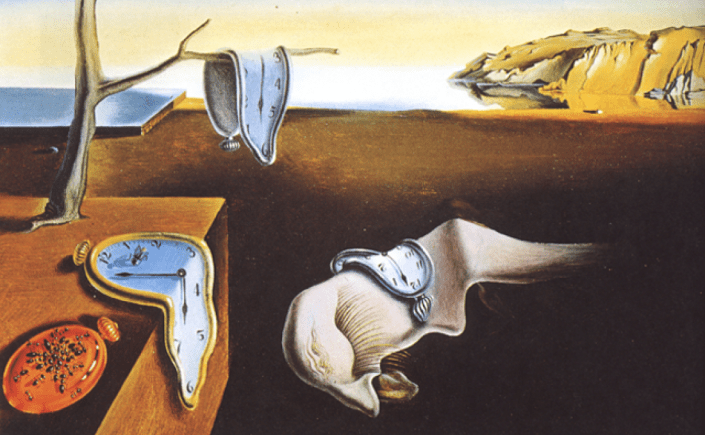
Do we talk about the past more in English, compared to other languages? This is something I was thinking about yesterday, when talking to someone in French about something that happened over the summer. I’ve always found using the main past tense (passé composé) in French a little cumbersome. Talking about the present is quite straightforward once you know the verbs you want to use, and structurally is quite similar to the present simple in English.
 English-Language Thoughts