Sic Burn!

If you’ve read enough, you’ve probably come across sic. And you probably also have a good idea of how it’s used. If you’re not familiar with it, or you’ve seen it used but aren’t sure what it means, no worries. It’s not something that’s taught much in schools, and it’s not something most of us ever need to use in our lives. It might be mentioned in a style guide at university, especially on a course with a strong focus on writing, such as journalism. But generally, it’s not talked about much. Which is a bit of a pity, as it can be quite a powerful weapon. Continue reading

Isn’t She Lovely?

Isn’t she wonderful?

The radio seems to be inspiring me a lot at the moment. While listening to the above Stevie Wonder classic this morning, the phrasing of the title struck me as a little odd. It might not initially seem too strange, as all native speakers at least are quite used to it. But performing the slight change of doing away with the contraction, makes it seem quite different:

Is she not lovely? Is she not wonderful?

Is it not a lovely day?

Is that not a great idea?

First of all, it now feels a lot more negative, because we can see and hear the full not. And to me, it seems a lot more like a question. When we use the normal, contracted phrase, it’s technically a question, but of course that’s not what we actually mean. What we’re basically saying is: She’s lovely. She’s wonderful. We don’t really expect disagreement. Why use a question then? And more specifically, why use a negative question? Continue reading

Cover Version

No matter how well you’re learning a language, and how confident you feel in handling the basics, encountering it in a natural context will always throw something at you that you just can’t figure out. You can look at it, try to figure out its meaning from the context, guess at its meaning from its spelling and similarity to other words, but it simply defies understanding. This is of course especially difficult if you hear the word or phrase spoken, when you don’t have the luxury of analysing it to any great degree.

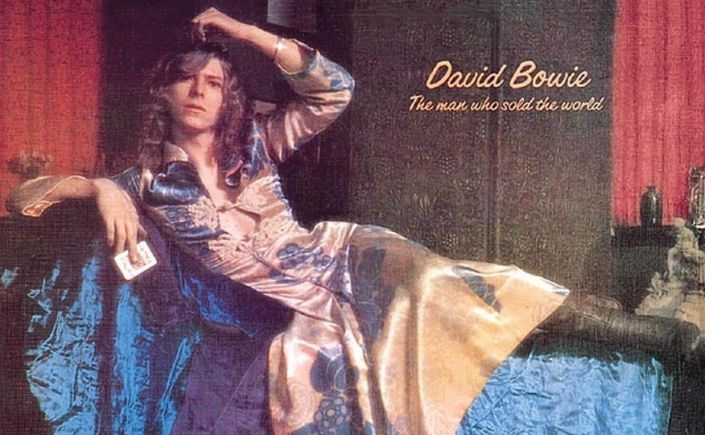
I was thinking about this this morning in the car on the way back from a lesson. I was listening to “The Man Who Sold the World” by David Bowie, and thinking about the fact that the cover version by Nirvana on MTV Unplugged is probably better known. So much so, that people might assume that it’s the original version. In this regards it’s similar to other songs such as “All Along the Watchtower” (Bob Dylan – 1967, The Jimi Hendrix Experience – 1968), and “Tainted Love” (Gloria Jones – 1964, Soft Cell – 1981).

This time though, I didn’t think too much about this. Instead, I was more concerned with that term – cover version. Continue reading

Quintessential

Recently I read something or other which featured the word quintessential, and was struck by that prefix. Quint-, as in five. The word doesn’t seem to have an obvious link to the number, so I went looking for more information. Continue reading

Doing Dutch with Duolingo: Klomp!

I feel like it’s been ages since I started using Duolingo, but it’s really become part of my daily routine. The only real gap was last week when I was on holiday last week. Overall, things are still going ok, but I’m beginning  to feel much more like a typical learner of English feels, and my complaints are really starting to mirror theirs. Continue reading

Restored to Your Former Glory

You may know the feeling: you’re on holiday and you’ve been walking around sightseeing all day. You’re tired, you’re hungry, and need to stop to eat. So, you pop into a little restaurant, and you feel satisfied and re-energised. Restored. And it’s no surprise really, because that’s what a restaurant’s for. Continue reading

What’s Black and White and Read All Over?

A newspaper!

Ha!

I’m sorry, I can’t resist a classic bad joke. But have you ever wondered why the past simple and past participle forms of the verb to read look identical to the present form, but sound different (“red”)? Continue reading