Father’s Day

It’s Father’s Day today in many parts of the world. I hope you’re being well treated if you’re one of the men honoured by the day. You really never can have too many pairs of socks. Like Mother’s Day and Valentine’s Day, it’s quite an artificial day, but I don’t mind too much really, as sometimes maybe we need a little push to be grateful. Or to at least express our gratitude.

The word father, like mother, isn’t one we actually use all that much of course, instead preferring works like dad, pop, papa et al. These words, like so many of our words to refer to our mothers, are derived from our first babblings as a child.

Continue reading

Who’da Thunk it!?

The English language has a complicated relationship with rules. Almost every major grammar rule you can think has at least a few exceptions. But then there are a few unwritten rules that English speakers adhere strictly to, even when we’re not aware of it. Still, English isn’t generally a stickler for the rules, which makes sense considering it’s quite a mongrel language. This is why I prefer to think of English as having patterns and trends, as opposed to rules. Today, I want to look at one of those trends. To do so, I’ll begin by asking you to consider what the following words have in common:

Continue reading

Hacked!

The verb to hack, in a computer-related sense, has been around since the 80s, though it seems to be more prevalent recently, thanks mainly to the hacking scandals surrounding last year’s American Presidential Election, as well as the many less important scandals which pop up on the news fairly regularly. It’s not surprising really that nowadays, hacking is synonymous specifically with computer hacking, given how integrated computers are into every aspect of life.

Of course you’re probably aware that that’s not the original meaning of the word.

Continue reading

The Mummy, Mammy, and Mommy

Q: What did the Ancient Egyptian postman say to the boy?
A: “Hey, fellow, is your mummy home?”

Christmas-cracker-joke writers and unfunny uncles have long delighted in the double meanings of the word mummy. I thought about this coincidence a little recently with the release of the bland new Tom Cruise mummy film.

Unsurprisingly, there’s no link between mummy in the Ancient-Egyptian sense, and to refer to a mother. Mummy in the shambling-around-in-bandages sense is derived from the Persian word mūm  which referred to both an embalmed corpse and the embalming substance involved in the process of mummification. The other sense of the word mummy though, I find much more interesting.

Continue reading

Mugwumps, Bailiwicks, and Pregnant Chads: The Vocabulary of Politics

Today is Election Day for my neighbours across the Irish Sea (not to mention a day of infamy for Donald Trump as James Comey testifies), and it looks like child’s-drawing-of-a-parent’s-description-of-a-nightmare-about-Margaret-Thatcher Theresa May will win. Not too surprising though. What was surprising for some people though was when Foreign Secretary and rejected-Monty-Python-sketch-character Boris Johnson called Labour leader Jeremy Corbyn a mutton-headed mugwump early on in the election. By mugwump, Johnson meant someone who remains aloof or independent from party politics. The term has a long history, originating from a Massachusett Native-American word for war leader. The term was applied to Republican Activists in the 1884 American Presidential Election who supported the Democrat nominee Grover Cleveland. They were rejecting the political corruption of Republican candidate James G. Blaine, and were ironically nicknamed mugwumps to imply that they were sanctimonious in their removal of themselves from party politics. Mugwump is just one of the many interesting words associated with the world of politics and elections, such as:

Continue reading

Colourful Surnames

Black, White, Grey, Green, Brown, Gold/Golden. Niall, I hear you ask, why have you capitalised all those colours!? Surely you’re not going to tell us that there’s some obscure English rule that says that you have to use capital letters with colours, and we’ve all been doing it wrong all this time? God I’d love to, but no, those words are capitalised because, yes, they’re colours, but in this case I’m using them as surnames.

I’ve written before about surnames, and what they mean. Most of them have fairly mundane origins, describing people’s jobs or their birthplaces. This is because in the grand scheme of things, surnames are fairly new. Many of the earliest English surnames were attached to people to differentiate them from other people in the village with the same first name (e.g. that’s John Miller the miller, not John Taylor the tailor). If you think about a lot of common English surnames, it’s probably not too hard to imagine where they came from. But why is it that colours are so common as surnames?

Continue reading

Boot or Trunk? Hood or Bonnet?

One of the strangest areas of difference between British and American English is that of cars. In many ways, the general differences between words in both main forms of English are small and superficial. Things like removing a U from a word like colour, or swapping an R and an E around at the end of a word. Other differences are based on old uses and forms of words, and are understandably caused by 200 years or so of drift. And there’s sports.

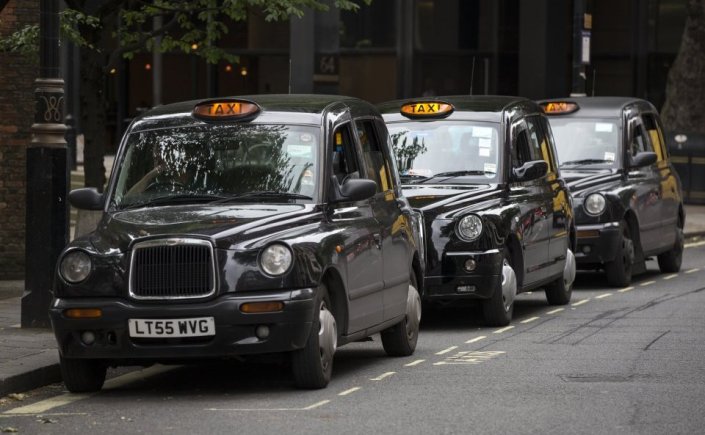
But cars are such a relatively new invention that it always seemed strange to me that American and British English would have such different words to refer to their different parts. Specifically why a boot in British English is a trunk in American English, and a bonnet is a hood.

Continue reading