Commonly-Confused Words

One of the downsides to the richness of the English language’s vocabulary is that there are so many words that are similar in appearance and sound, yet with distinct meanings. The result of this is that it can be very easy to confuse the meaning of two different words. Generally this isn’t such a problem, as most confusing words are similar enough in meaning that it doesn’t really make a difference if you mix them up. Still, using the wrong word can often change one’s meaning, or even lead to embarrassment, so here are some of the most commonly-confused words in the English language: Continue reading

One Pun! Ah Ah Ah! TWO Puns, Ah Ah Aaaah!!

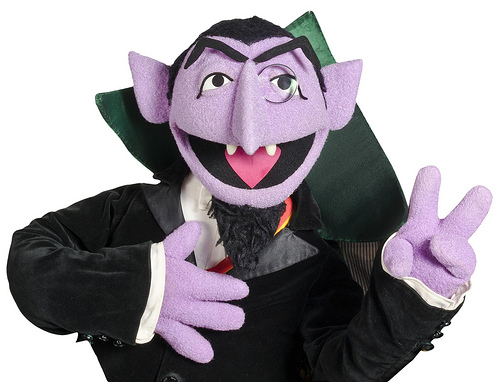
It seems I’m still thinking about monsters. I was reminded of an interesting fact recently. Many of you will have been aided in learning mathematics by Sesame Street’s The Count (or Count von Count, to give him his full name). The number-loving muppet was obviously a parody of popular images of vampires in general, and especially Count Dracula as portrayed by Bela Lugosi. Hence the name: obviously a pun on Count Dracula, and the fact that the Count… counts. But there may be another layer of meaning to his name… Continue reading

A Monster Calls

I went to see A Monster Calls on Friday night, and really enjoyed it. Without spoiling much, it was a tougher watch than I expected, but still quite beautiful and touching at the same time.

I’ve been ruminating on the word monster since then. While the meaning hasn’t changed greatly in the many years its been in use, I’ve been interested in its complexity and layers of meaning since learning something of its etymology a few years ago. It comes from the old Latin monstrum, meaning divine omen or portent. The appearance of hideous figures was believed to indicate the arrival of some great event. Monstrum is derived from the verb monere, which means both to warn and instruct. From this root also came the verb monstrare, meaning to show or point out. This word gained the prefix de-, with demonstrare meaning to demonstrate, with the prefix meaning entirely.

So while the words demonstrate and monster might seem quite different on the surface, there are some basic similarities in their individual meanings. The appearance of a monster was believed to demonstrate that something momentous was going to happen, and throughout all the time we’ve been telling stories, monsters have been used to demonstrate one thing or another, and instruct us in some important life lessons. Continue reading

Top Ten of 2016!

As it’s a new year (and it’s Sunday and I’m feeling lazy), I thought it would be an appropriate time to look back on my 10 most-viewed posts from last year, including my thoughts on why they might have been more popular. Continue reading

Little Christmas

In most Christian traditions, today is the last day of Christmas. The most common name for this day is The Epiphany (meaning a moment of sudden realisation or revelation). It’s so called because it was believed to be the day that Jesus revealed his divinity, when the three magi arrived to see him.

As well as religious celebrations, the day is marked in different ways around the world. If you’re lucky enough to be Spanish or Italian, you might get extra gifts on 5th or 6th January. Despite the various traditions throughout Continental Europe though, in the UK and Ireland, we don’t do too much to celebrate the end of Christmas, unless you count taking down the tree and decorations. For most people here, the Christmas period lasts until New Year’s Day, and then life for most people goes back to normal. At least when I was a child the school holidays didn’t end until the 6th (although that changed a few years ago) and I could still enjoy the first few days of January playing with my new toys, though there was always a creeping dread as it got closer to going-back-to-school time.

In the past though, the Epiphany was quite a big deal. Continue reading

Honeymoon

Have you ever stopped to think about how strange the word honeymoon is? Why would honey and moon combine to create a compound noun meaning a holiday after getting married? Continue reading

Turkey: International Bird of Mystery

Since most of us probably won’t be eating it for another 11 or 12 months, I think it’s time to give the turkey its due before we forget about it again.

The word turkey (used to refer to the bird) has a surprisingly convoluted etymology. And no, it’s not a coincidence that it’s also the name of a country… Continue reading