A Moot Point

This phrase is probably one of the most misused in the English language. Often, people will say a mute point instead. There are a few reasons for this, I believe:

  1. It’s used more in discussions than in written English, so many people don’t know how to spell the word.
  2. Mute is a much more common word, and kind of makes sense in the context: if a point is moot, it doesn’t need to be mentioned, so it’s mute, or silent.
  3. What the bloody hell does moot mean anyway?

That’s an interesting question actually, because it’s not quite as simple as you might imagine. The Oxford English Dictionary’s second listed meaning for moot is having little or no practical relevance, which is how it’s commonly used, e.g.

Whether  they were the better team or not is a moot point: the match is over and they lost.

But the first meaning in the OED is subject to debate, dispute, or uncertainty. Which of course is the exact opposite of how we mostly use the term. How on earth could this be? To solve this mystery, we have to delve deep into the origins of the word mootContinue reading

Cover Version

No matter how well you’re learning a language, and how confident you feel in handling the basics, encountering it in a natural context will always throw something at you that you just can’t figure out. You can look at it, try to figure out its meaning from the context, guess at its meaning from its spelling and similarity to other words, but it simply defies understanding. This is of course especially difficult if you hear the word or phrase spoken, when you don’t have the luxury of analysing it to any great degree.

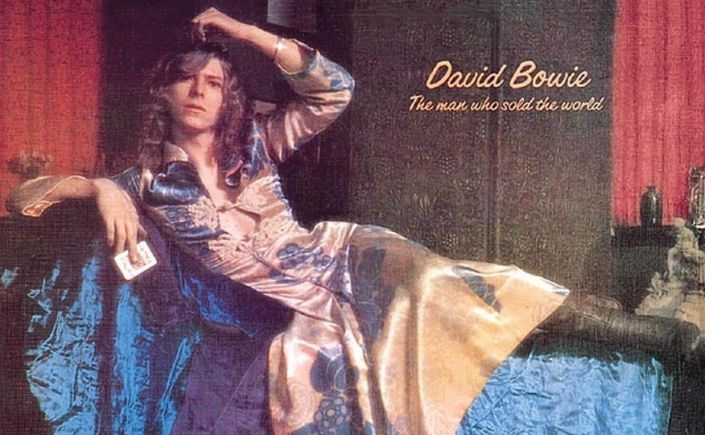
I was thinking about this this morning in the car on the way back from a lesson. I was listening to “The Man Who Sold the World” by David Bowie, and thinking about the fact that the cover version by Nirvana on MTV Unplugged is probably better known. So much so, that people might assume that it’s the original version. In this regards it’s similar to other songs such as “All Along the Watchtower” (Bob Dylan – 1967, The Jimi Hendrix Experience – 1968), and “Tainted Love” (Gloria Jones – 1964, Soft Cell – 1981).

This time though, I didn’t think too much about this. Instead, I was more concerned with that term – cover version. Continue reading

Quintessential

Recently I read something or other which featured the word quintessential, and was struck by that prefix. Quint-, as in five. The word doesn’t seem to have an obvious link to the number, so I went looking for more information. Continue reading

Restored to Your Former Glory

You may know the feeling: you’re on holiday and you’ve been walking around sightseeing all day. You’re tired, you’re hungry, and need to stop to eat. So, you pop into a little restaurant, and you feel satisfied and re-energised. Restored. And it’s no surprise really, because that’s what a restaurant’s for. Continue reading

Battering Ram

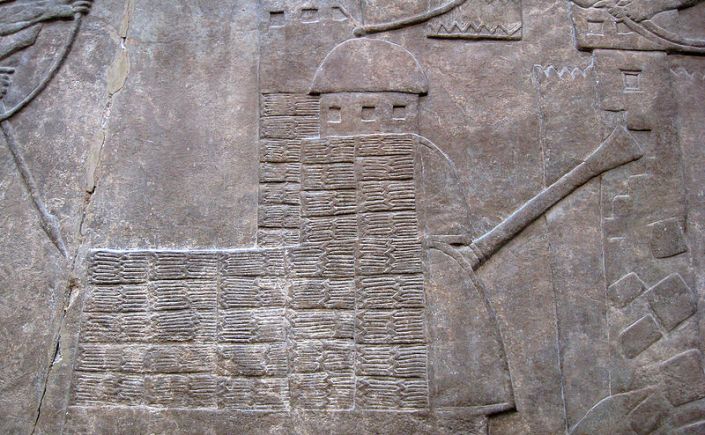
Have you ever had those moments when you realise the etymology of a word you’d never thought about before? I had a good one recently, while visiting Fort-la-Latte in Brittany. Outside the main gate, there was a replica medieval battering ram, with the tip in the shape of a ram’s head (a ram being a male sheep). As soon as I saw it, the lightbulb went off: ram! Continue reading

A Whole Other Kettle of Fish

Yesterday I used this idiom in my post, and then got wondering about it’s origin. Why would this phrase come to mean a completely different situation, and more importantly, who would put fish in a kettle in the first place? Continue reading

Great Brittany

I’ve been away for a few days, and found myself unexpectedly without reliable WiFi. I was in Brittany which, if you’ve never been, is a really beautiful part of France with great landscape, food, and drink. As a travel destination it’s great, but it’s also linguistically very interesting. Continue reading